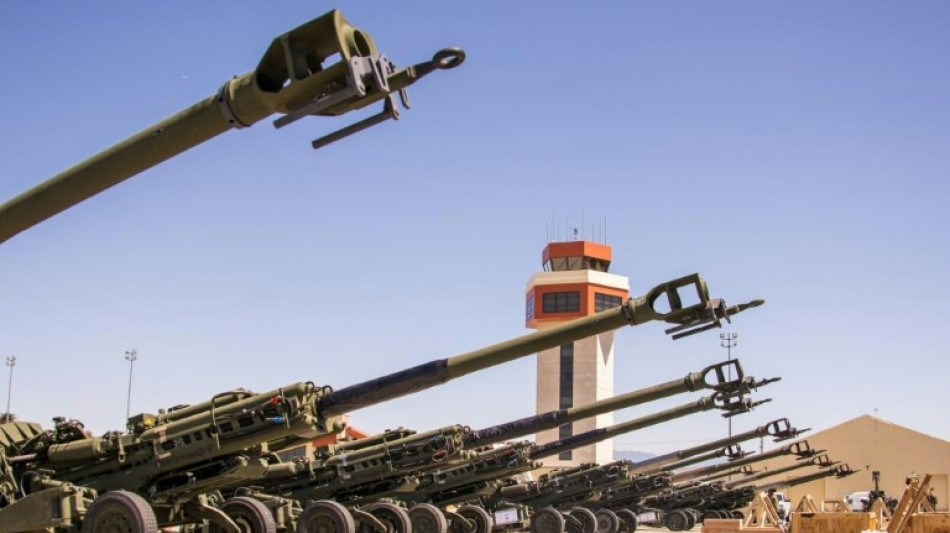
Ignoring Putin's threats, US boosts support for Ukraine / Photo: © US MARINE CORPS/AFP

 Trump's secret plane swap triggers questions and confusion
 California calls Paramount's threat to leave state 'blackmail'

 PSG 'want to win everything', says Luis Enrique

 Barred from elections, Russia's anti-war party vows to fight on

 Jaissle states Newcastle ambition but urges patience

 NBA star Cooper Flagg trading card a slam dunk for lucky buyer

 ForumPay Expands Payment Infrastructure with New Card and Bank Transfer Acceptance Solution

 Oil prices higher, stocks flat ahead of inflation report

 Orban-critic ex-judge becomes Hungary president after predecessor ouster

 US rights groups sue Trump over ICC sanctions

 Sphere 3D Corp. (Nasdaq: ANY) Attracts 6.5% Stake from Turnaround Bitcoin-Mining Investor

 Oil prices lower, stocks higher as Hormuz doubts drag on

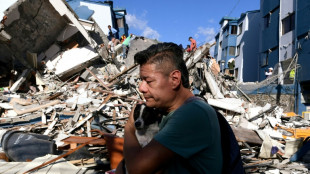 Colombia scrambles to find survivors as quake kills 181

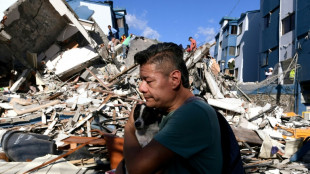 Colombia scrambles to find survivors as quake kills 169

 MEXC Report: 74.2% of Traditional Finance Users Have Shifted Their Trading Activity to Crypto Exchanges

 MEXC Lists DAPPOS (DOS) With $60,000 Worth of DOS and 10,000 USDT in Airdrop+ Rewards

 Jellyfish force shutdown of three reactors at French nuclear plant

 Hodgkinson, Werro sail through Euro 800m qualifying

 Somali referee denied World Cup 'proud' to oversee UEFA Super Cup

 French newspapers target Google over AI summaries

 Ebola death toll in DR Congo outbreak rises to more than 2,000

 PrimeXBT Launches MT5 Cent Account for Beginners and Risk-Conscious Traders

 British sprinter Hunt chasing three more golds after winning 100m

 Ethiopia's Tigray rebel authorities condemn army drone strikes

 Too hot to live? French buyers rethink housing choices after heatwaves

In rallying global arms supplies and asking Congress for $33 billion more to support Ukraine, Washington is choosing to ignore Vladimir Putin's threats to use nuclear arms, and instead is openly testing the Russian leader's limits.
After the United States brought 40 countries to a US base in Germany last week to discuss aid for Ukraine's war with Russia, Putin on Wednesday threatened a "lightning fast" response if there is any direct intervention by outsiders on Kyiv's behalf.
"We have all the tools for this, that no one else can boast of having. We won't boast about it: we'll use them, if needed," Putin said.
It was a thinly veiled reference to Russia's tactical nuclear weapons, which Russian military doctrine holds can be used to force an adversary to retreat.
Rather than pull back at that threat to unleash Moscow's nuclear bombs, US President Joe Biden doubled down on US support for Ukraine.
The $33 billion he requested includes $20 billion for arms and munitions, nearly seven times the amount sent to the country since the Russians invaded on February 24.
- No longer hiding support -
Early in the war Washington worried that aggressively equipping Ukraine's army with anything but "defensive" weaponry risked embroiling the US and NATO in a direct conflict with Russia.
Now, the Pentagon has shed those earlier inhibitions and is shipping offensive weapons like heavy artillery, helicopters and attack drones.
Rather than hiding it, the Pentagon also began openly talking this week about how it is training Ukrainian troops, including inside Germany, to use the weapons they are receiving.
And instead of saying, as it did in February, that it wants only to help Ukraine survive, Washington now says its goal in the war is to debilitate Russia for the long term.
"We want to see Russia weakened to the degree that it can't do the kinds of things that it has done in invading Ukraine," US Secretary of Defense Lloyd Austin said after a visit to Kyiv last week.
- Shrugging off Moscow's threat -
Inside the US government, Putin's nuclear threat is being shrugged off.
Biden and his top officials have labeled Moscow's nuclear threats "irresponsible."
"It shows the desperation that Russia is feeling about their abject failure in being able to do what they set out to do" in Ukraine, Biden said Wednesday.
On Friday, a senior US defense official said that even as the Pentagon constantly monitor's Russia's nuclear force, "We do not assess that there is a threat of the use of nuclear weapons and no threat to NATO territory."
Lawrence Freedman, professor emeritus at King's College in London, said there are no signs that Russia is preparing to use its nuclear or chemical weapons in the Ukraine conflict.
"Its threats are taken less seriously than before and it has nothing positive to offer. It is already a diminished power," Freedman wrote on his blog.
That view was echoed by Gideon Rose of the Council on Foreign Relations in New York.
"Moscow will not use nuclear weapons during the conflict," said Rose.
Putin "knows that extraordinary retaliation and universal opprobrium would follow, with no remotely comparable strategic upsides to justify them," he said.
Even if Biden has repeatedly said that US troops will not get directly involved in Ukraine, the surge in support has turned the conflict into a proxy war, Sam Winter-Levy, a warfare specialist at Princeton University, wrote on the website "War on the Rocks."
"The West needs to be clear-eyed about the situation it confronts. It is currently waging a proxy war with Russia -- one that poses very real risks of escalation," he wrote.
Nevertheless, he said the current path "may still be the best option."
"Ultimately, the only options worse than a proxy war are a cheap Russian victory in Ukraine — or a direct confrontation between Russia and the United States," he said.
K.Brown--BTB