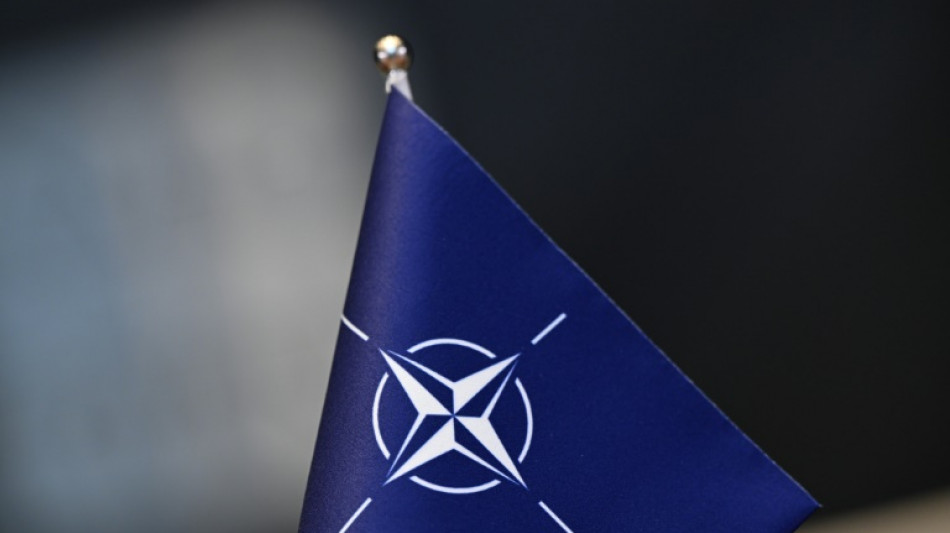
From Cold War to the Ukraine war: NATO at 75 / Photo: © AFP

 Cash-strapped Senegalese unmoved by Youth Olympic Games

 Indonesia haze chokes neighbours, but little legal recourse

 Samad launches Pakistan into first Asian Games men's cricket final

 Yankees and White Sox advance, Phillies survive in MLB playoffs

 Asian stocks mixed as positive US data offset by elevated oil, bond yields

 Rice work: Dutch test new crop to save sinking peatlands
 Russians join street choirs to sing away sorrows -- or show dissent

 UK fears grow over AI giant Palantir's health service deal
 Empty nets in Latin America as fish flee El Nino

 Meidroth blasts White Sox through, Phillies survive in MLB playoffs

 'Catastrophic': Swiss glaciers lose fifth of mass in five years

 California roller coaster shut after brain damage claims

 Panama ministers push for reopening of huge open-pit copper mine

 Bohm's blast keeps Phillies alive in MLB playoffs

 US judge accepts Paramount's Warner Bros. buyout settlement

 Global stocks mixed as markets weigh higher oil prices, bond yields
 Marsh hails improvements after Australia win final one-day international
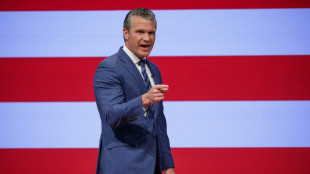 Hegseth says US cut number of generals, admirals by 20%

 Kanye West's Russian concerts have been cancelled, organisers say

 First Hollywood, now Fat Bear Week: nepobaby wins Alaska contest

 Barcelona lay down marker in Women's Champions League, Arsenal slip up
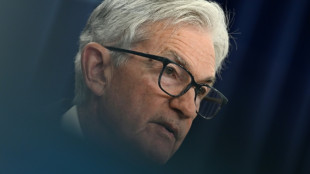
 US pushes against overproduction with eye on China at G20 meeting

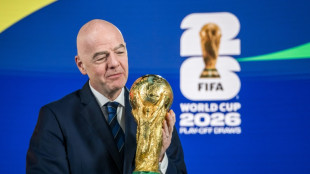 Swiss FA withdraws support for FIFA chief Infantino
 Man City's meteoric rise clouded by financial scandal

 Polish activists open first abortion pill locker in Warsaw
The NATO military alliance in April marked 75 years since the signing of its founding treaty in Washington -- where its members gather for an anniversary summit this week.
Here are some facts and figures about the organisation forged in the Cold War and re-energised by Russia's war on Ukraine.
- 12 to 32 -
Just 12 countries were founding members of the North Atlantic Treaty in 1949 as the United States, Canada and much of western Europe clubbed together to face up to the threat of former World War II ally the Soviet Union.
As the alliance's first Secretary General Lord Ismay quipped, NATO's purpose was to "keep the Soviet Union out, the Americans in, and the Germans down".
In 1952, often uncomfortable neighbours Turkey and Greece joined, before West Germany became a member three years later.
After the end of the Cold War, NATO went through several waves of eastwards enlargement that saw its border with Russia grow with the inclusion of Poland and the former Soviet Baltic states.
After Moscow invaded Ukraine in 2022, Nordic neighbours Sweden and Finland reversed long-standing policies of non-alignment by joining NATO -- taking the alliance to 32 members.
In total, NATO countries account for close to one billion people and around 50 percent of the world's GDP.
Together they have 3.2 million men and women serving in their militaries.
Iceland is the only member without its own army.
- One -
NATO has only ever once triggered its Article Five collective-defence clause -- which says an attack on one member is considered an attack on all -- after the September 11, 2001 attacks on the United States.
That decision was a show of support for the alliance's leading military power and far different from the threat in Europe originally foreseen by its founders.
The fall-out from 9/11 saw NATO get involved in Afghanistan where it remained until 2021, when a calamitous US-led withdrawal allowed the Taliban to take back power.
- Two percent -
In response to Russia's seizure of Crimea from Ukraine in 2014, NATO allies agreed they would aim to spend two percent of their GDPs on defence.
That goal was raised after Moscow launched its all-out invasion of its neighbour in 2022 to having two percent as a minimum.
Former US president Donald Trump has railed against NATO countries not spending enough, warning he would encourage Russia to "do whatever the hell they want" to those not meeting their obligations.
In 2024, 23 NATO members are expected to reach or top two percent, up from three members in 2014.
- 25 -
June 2024 marked 25 years since NATO deployed troops in Kosovo in 1999, completing the withdrawal of Serbian forces after its 77-day air campaign.
That military intervention was just the second in NATO's history, following its involvement in Bosnia in the mid-1990s.
A quarter of a century on, NATO's Kosovo Force (KFOR) still remains on the ground in the Balkans, making it the alliance's longest-running mission.
After a rise in tensions last year led to rioting that wounded 93 NATO troops, allies agreed to send 1,000 additional soldiers to KFOR -- taking its total to around 4,500.
Beyond the Balkans, NATO's other major overseas missions have included a nearly two-decade deployment in Afghanistan and the 2011 bombing campaign in Libya.
- 43 -
No country has ever withdrawn from NATO, but France spent almost 43 years outside its military command structure after then-president Charles de Gaulle pulled out in 1966 complaining of US domination.
The decision -- which saw NATO move its headquarters from Paris to Brussels -- was only reversed by former president Nicolas Sarkozy in 2009.
Nonetheless, France's sometimes strained relationship with NATO continues. In 2019 President Emmanuel Macron said the alliance was suffering "brain death".
Macron later said Russia's 2022 invasion of Ukraine had woken up NATO with the "worst of electroshocks".
L.Maurer--VB