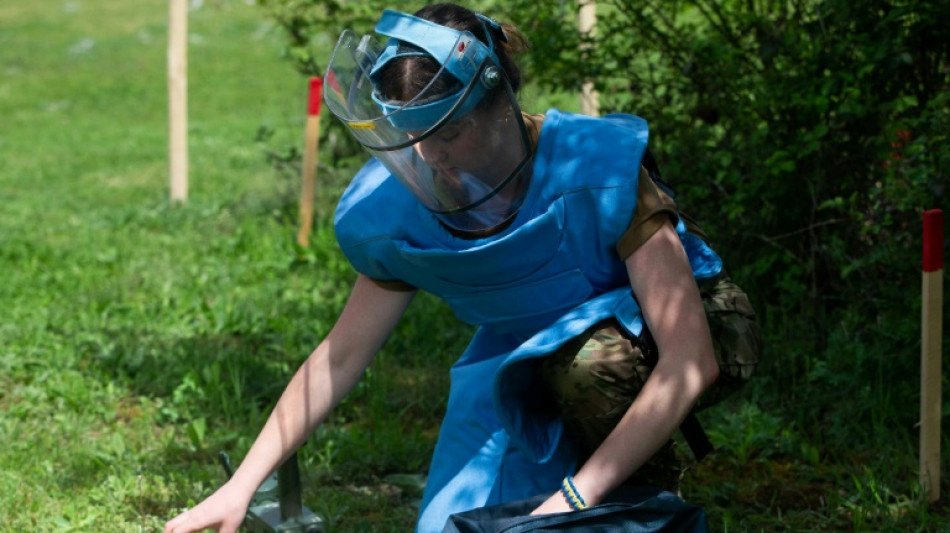
'Not afraid': Ukraine women learn to demine in Kosovo / Photo: © AFP

 Cuba celebrates Castro's 100th as his revolution faces its toughest test
 Defending champion Shelton rolls into Montreal semis

 What to know about the total solar eclipse

 Tentoglou claims fourth Euro long jump title, injured Jacobs falters

 All Blacks knew Nonu would perform solo Haka - coach Rennie

 Britain's Glave upstages Jacobs to win European 100m gold

 Greece's Tentoglou wins fourth European long jump title

 Doctors ignored 'warning signs' before Maradona's death, court hears

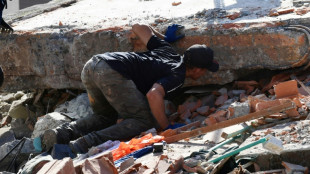 Pereira, the 'zombie city' devastated by Colombia's earthquake

 UN says 2 staff arrested by Afghan intelligence agency

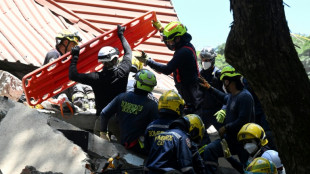 Colombia scrambles to find survivors as quake kills 240

 Ramsay-Peaty out of medals as Italy's Martinenghi wins European gold

 AI firm Manus to resume 'independent' operations after China blocks Meta deal

 Caught between great powers: the cautionary tale of Manus

 Heatwave hits evicted families sleeping rough in Rome

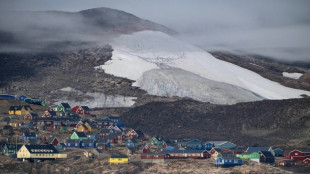 US company stokes Greenland tensions by unloading drilling gear

 Cambridge academic in plagiarism row publishes memoir

 LeBron's Sixers hope to spoil Knicks party on NBA opening night

 UK 'on course' to record warmest summer for second year in a row

 Spotify to launch badge identifying AI music

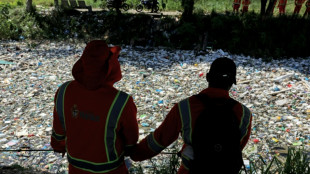 New plastic treaty document criticised for weaker ambition

 Hungary parliament approves Orban-critic judge as president
 Ebola outbreak in DR Congo kills more than 2,000
 ChargeAfter Powers BYLD Finance Expansion into Consumer Financing for Equipment Retailers

 MEXC Upgrades RealStocks With Three New Features to Enhance U.S. Stock Trading Experience

Kateryna Grybinichenko chose to sign up after rockets fell on her home city of Sloviansk, in Ukraine's eastern Donetsk region.
The 36-year-old wanted to help -- so she joined a band of Ukrainian women taking part in an intensive demining course in Kosovo, a place all too familiar with clearing deadly explosives.
The trainees have travelled hundreds of miles, hoping to protect their homeland for decades to come.
After learning their craft from the experts, the women plan to return to Ukraine and put it into practice in areas where Russian troops have withdrawn.
"There are various ways to fight," said Anastasiia Minchukova, one of the eight women who applied for the scheme.
The 20-year-old English teacher, who dons a blue protective apron and a visor for the training, said there is a "huge demand for people who know (about) demining" in Ukraine.
"The only reason I'm here is to help my country," she said.
The trainees are being taught how to detect, identify and disable explosives on the course organised by the Mines Awareness Trust (MAT) Kosovo NGO.
Six women started the three-week programme in the western town of Peja, known as Pec to Serbs, on Monday, with two others set to arrive soon. The organisers plan to take on more trainees in the future.
The course has been specifically set up in response to the invasion of Ukraine, and focuses on Russian and former Soviet arms, including guided weapons, mines and rockets.
It is open to men too, but Ukrainian males aged 18 to 60 are banned from leaving the country. And the women here want to take part in the defence of Ukraine.
The MAT said this course is the first of its kind outside Ukraine since the Russian invasion began in February.
- 'First-hand experience' -
Kosovo was chosen to host the scheme because of its "first-hand experience", chief instructor Artur Tigani said.
"We have gone through quite a similar situation, especially when it comes to contamination with unexploded devices."
An estimated 13,000 people lost their lives in the war between Serbian forces and ethnic Albanian guerrillas in the late 1990s.
The conflict ended after a NATO air campaign forced Serbian troops to withdraw from the territory, paving the way for independence in 2008.
But the war left the former Serbian province with 4,500 minefields, according to US estimates after the war.
The devices were scattered mainly in the mountainous Peja region, close to the Albanian border, where Tirana shipped arms and supplies to Albanian guerrillas.
With international help, most of the mines have been cleared, and the risk is now officially assessed as "light".
The Kosovo instructors have also delivered training in Syria, Iraq and Libya.
"It is our life's mission to save lives and help others save lives," said Tigani.
- Huge challenge -
The Ukrainian trainees are aware of the huge challenge they face when they get back home.
They expect to join emergency services and get to work when they return on May 13.
"I've seen, while travelling in (Ukraine), the huge amount of the abandoned ammunition and unexploded ordnance laying on the ground," Grybinichenko said.
It is thought it could take decades to rid Ukraine of mines. Perrine Benoist, of the Handicap International NGO, has said it will likely "take 50 years to clear everything."
Minchukova knows that she and her fellow trainees have taken on a perilous task.
But she said: "It's dangerous all over Ukraine, even if you are in a relatively safe region".
"I'm ready for it. I'm a Ukrainian. I'm not afraid of anything.
"I know we will have a chance to prove (we are) worthy of doing the same as men."
O.Krause--BTB