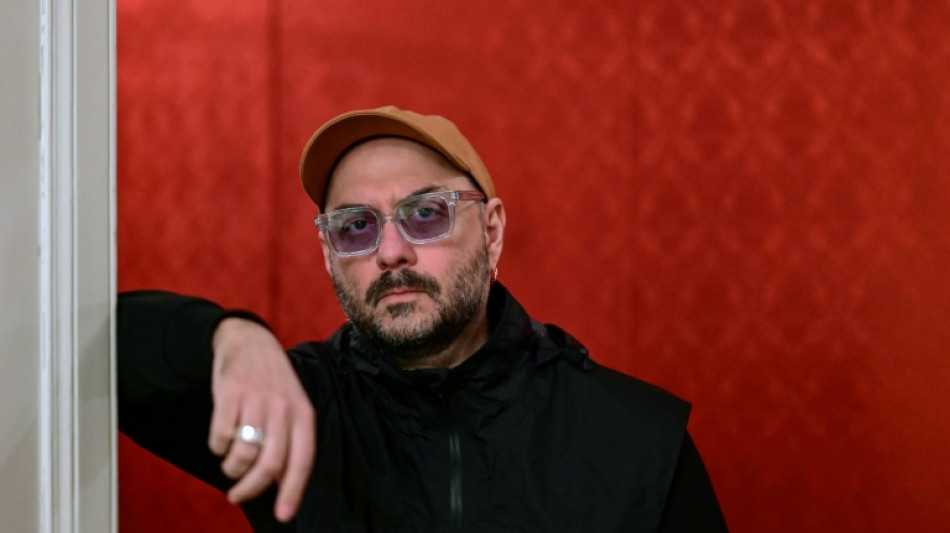
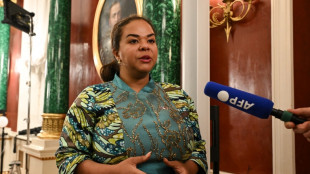
Film maker Serebrennikov says Russia 'self-killing' in Ukraine / Photo: © AFP

 Forest destruction tests Armenia-Azerbaijan peace push
 Deal still eludes nations on final day of UN nature talks

 Teen rallies take to the streets across Italy

 Netanyahu bloc finishes ahead in Israel vote, but well short of majority

 Rural US hospitals, collateral victims of Trump politics

 How Trump could interfere in US midterm elections
 As Republicans downplay abortion for midterms, four US states to vote

 No. 4 Indiana looks to revive offense against improving Minnesota
 Police close investigation into Hayden Panettiere death after coroner ruling

 Australian mushroom killer loses appeal, has sentence extended

 Lethbridge students learn how city transit and transportation systems work
 India highlights defence ties with Japan and Australia at Cebu meetings

 Horoscope for October 30, 2026: communication and patience shape the day

 Amazon cloud business accelerates but shares drop on profit miss

 Wesley Fofana under scrutiny after Chelsea penalty miss in Carabao Cup

 Russell admits absence of rivalry because he cannot match Antonelli

 DR Congo says Rwanda flouting pact, US sanctions justified
 Brazil's Flavio Bolsonaro isolated, ridiculed after self-exile

 Asian equities diverge after mixed technology earnings and Fed rate decision

 Zverev 'on top of the world' after securing No. 1 ranking

 Clash of styles as Vikings, Lions prepare for NFL showdown

 After a long slog to the top, Zverev leaps to No. 1 ranking
 GCC legislative officials review ways to deepen regional cooperation

 Canada buying stake in AI firm Cohere to bolster tech sovereignty

 Utah files criminal charges against prediction market Kalshi
Russia is self-destructing with its war in Ukraine, according to film and theatre director Kirill Serebrennikov, who said domestic support for the invasion was the result of "many years of terrible propaganda."
Speaking to AFP in Berlin, his new home, Serebrennikov, the Russian son of a Jewish father and a Ukrainian mother, said he felt "just horror, sadness, shame, pain" about the invasion.
"I love Russia, I love the Russian people and I know that they're really peaceful," he said. "At the same time a lot of them, from what I read and what I see, are supporting this terrible division, and this terrible killing, which sometimes looks like self-killing," he said.
"Culture and war are opposites and the people of culture can't be part of the war, they can't be dogs of war," he said, but anti-war artists often find themselves in a dilemma about whether to speak up.
- 'Don't want to judge' -
"Imagine if you say something tomorrow or the day after tomorrow, immediately the police will come and arrest you, and what to do?" he asked. "The people have their families, the people have their business, work, need to earn money for a living."
There were "very brave people, very brave artists who, in spite of fear, in spite of all these cases and restrictions and criminal pressure, try to write something," he said.
Examples were "a few good theatre makers" who refused their National Theatre "Golden Mask" awards, and an artist who went to prison for exchanging price labels in a shop for information about the war so people "might have the chance to read the truth."
Others have kept quiet, or actively worked with the regime, Serebrennikov said, though he insisted it was not his role to judge.
"If you want to be Leni Riefenstahl, welcome, if you want to be Marlene Dietrich, welcome," he said.
Riefenstahl was a German photographer and film director who made a key contribution to Nazi propaganda, while star actress Marlene Dietrich helped Jews escape from Germany, gave up her citizenship, and toured the US to shore up morale during World War II.
"It's the choice of a person and let's respect this choice," he said.
"If people decide to live forever in Moscow and work for the power, it is their choice, they can do it freely, for me I don't want to judge them at all," he said.
- 'Made my choice' -
Serebrennikov, 52, was allowed a month ago to leave Russia, where he had been found guilty in 2020 of embezzling funds at Moscow's Gogol Centre theatre.
His supporters say the conviction was revenge for his critiques of authoritarianism and homophobia. He was informed that, having served half his sentence, he was free to go.
"I have made my choice," he said. "But I can speak only for myself."
Serebrennikov said "of course it's not easy" for most artists to leave Russia "because they have no money and they have no visa."
He said he felt "privileged" with his new home in Berlin, and the possibility to work across Europe.
In May, Serebrennikov is expected at the Cannes Film Festival, which he missed last year because of a travel ban although his film, "Petrov's Flu," was selected for the main competition.
With his new film, "Tchaikovsky's Wife," about the stormy relationship between the 19th-century composer and his spouse, he will again vie for the coveted Palme d'Or.
He is also working on an opera production in Amsterdam and will present a play at the prestigious Avignon theatre festival in southern France.
Serebrennikov said he was unsure when he would see his home country again, or his nearly 90-year-old father who lives in Rostov-on-Don near the border with Ukraine, though he added: "Never say never."
He said he didn't feel exiled, but had started "a new page" in his life.
- 'Tchaikovsky doesn't bomb' -
Serebrennikov said he hated violence, but found it problematic to put pressure on Russian artists to denounce the war or face exclusion from international venues.
"It's really tricky and it's not really good when somebody pushes you to pronounce something, to say 'I am in favour' or 'I am against'," he said.
"That reminds us of something, something we already had," he said, an apparent reference to Stalinist show trials featuring public confessions.
Serebrennikov said he understood Ukrainian film makers' calls to get Russian movies banned from international festivals, but that a "boycott of culture" was no solution.
"Tchaikovsky doesn't bomb the Ukrainians," he said.
O.Krause--BTB