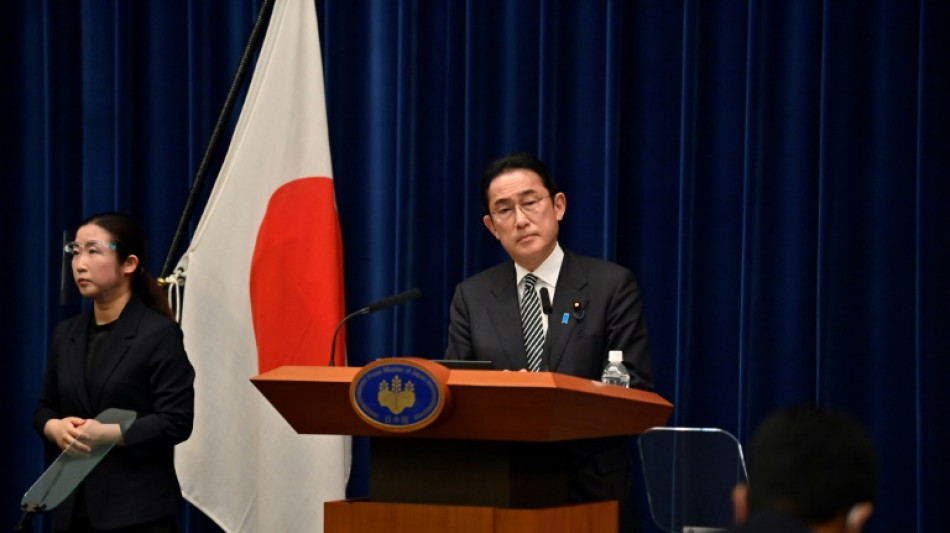
Japan unveils $48 billion package to ease rising price pain / Photo: © POOL/AFP

 Rybakina ousts Osaka to book Toronto semi-final against Gauff
 Colombia rescuers find woman alive as quake death toll passes 240

 Charges dropped against Bondi Beach attack hero
 Parched and desperate for rain, Kazakhstan turns to cloud-seeding
 The perfect storm that turbocharged Venezuela's twin quakes
 2.4 million girls banned from Afghan schools since Taliban return: UNESCO

 Colombians dig through rubble as quake death toll surpasses 240

 New Zealand's ruling party meets to decide PM Luxon's fate

 Total solar eclipse to spellbind Europe

 Jodar, Nakashima to make Masters semis debuts in Montreal

 Chilean veteran Sanchez signs with MLS club Montreal

 Cristiano Ronaldo marries long-term partner Georgina Rodriguez

 Oil prices higher, stocks mixed ahead of inflation report

 Jacobs into 100m final with eye on third title

 Eight-try New Zealand cruise to tour victory over Sharks

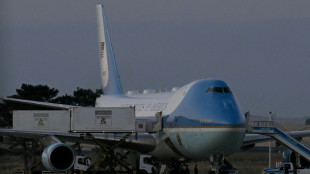 Trump's secret plane swap triggers questions and confusion

 California calls Paramount's threat to leave state 'blackmail'

 PSG 'want to win everything', says Luis Enrique

 Barred from elections, Russia's anti-war party vows to fight on

 Jaissle states Newcastle ambition but urges patience

 NBA star Cooper Flagg trading card a slam dunk for lucky buyer

 ForumPay Expands Payment Infrastructure with New Card and Bank Transfer Acceptance Solution

 Oil prices higher, stocks flat ahead of inflation report

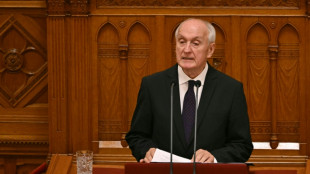 Orban-critic ex-judge becomes Hungary president after predecessor ouster

 US rights groups sue Trump over ICC sanctions

Japan unveiled a $48.6-billion economic package on Tuesday that includes handouts for low-income families to help cushion the impact of rising prices and energy costs on households.
"We must avoid at all costs letting surging oil and prices sabotage our efforts for the recovery of economic and social activity from the coronavirus pandemic," Prime Minister Fumio Kishida said in unveiling the 6.2 trillion yen package.
Soaring energy costs linked to Russia's invasion of Ukraine, and other price rises are squeezing Japanese consumers and businesses, and the decision to unleash more spending comes ahead of a July parliamentary election.
At the heart of the package is a plan to distribute cash handouts of 50,000 yen ($391) per child to low-income households.
It is also expected to include measures such as expanded fuel subsidies and the extension of a zero-interest loan programme.
The spending will be financed by tapping into reserve funds allocated for emergency spending, and with money from other budgets already put together this year.
That makes it "misleading" to describe the entire package as new spending, Takahide Kiuchi, executive economist at Nomura Research Institute, said in a note.
Some analysts warn the package could have a relatively limited impact because the measures are short-term and will reach a relatively small number of households.
Kiuchi estimates it will shore up GDP by 0.06 percent, while Japan's government says the state funds paired with private sector investment will have an economic impact equivalent to 13.2 trillion yen.
Japan's core consumer prices rose at the fastest rate in over two years in March, though the 0.8 percent increase year-on-year remains far below inflation in many other developed economies.
It is also well short of the target 2.0 percent viewed as necessary to turbocharge the world's third-largest economy.
The package comes with the yen weakening to its lowest level against the dollar in 20 years, as the gap widens between Japan's ultra-loose monetary policy and US tightening.
Though the weak currency benefits Japanese exporters, it is a concern given Japan's dependency on energy imports, though the government has so far ruled out direct intervention.
M.Ouellet--BTB