
All in the family: Philippine dynasties tighten grip on power / Photo: © AFP

 Meta meets its own 'tobacco' moment in court

 Art or medicine? Japan's cosmetic tattoo artists in limbo

 Rybakina ousts Osaka to book Toronto semi-final against Gauff

 Colombia rescuers find woman alive as quake death toll passes 240

 Charges dropped against Bondi Beach attack hero

 Parched and desperate for rain, Kazakhstan turns to cloud-seeding
 The perfect storm that turbocharged Venezuela's twin quakes

 2.4 million girls banned from Afghan schools since Taliban return: UNESCO
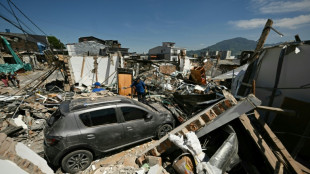 Colombians dig through rubble as quake death toll surpasses 240

 New Zealand's ruling party meets to decide PM Luxon's fate

 Total solar eclipse to spellbind Europe

 Jodar, Nakashima to make Masters semis debuts in Montreal

 Chilean veteran Sanchez signs with MLS club Montreal

 Cristiano Ronaldo marries long-term partner Georgina Rodriguez

 Oil prices higher, stocks mixed ahead of inflation report
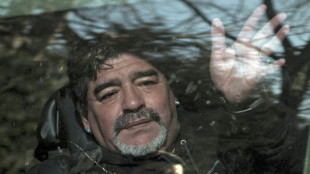
 Jacobs into 100m final with eye on third title

 Eight-try New Zealand cruise to tour victory over Sharks
 Trump's secret plane swap triggers questions and confusion

 California calls Paramount's threat to leave state 'blackmail'

 PSG 'want to win everything', says Luis Enrique

 Barred from elections, Russia's anti-war party vows to fight on

 Jaissle states Newcastle ambition but urges patience

 NBA star Cooper Flagg trading card a slam dunk for lucky buyer

 ForumPay Expands Payment Infrastructure with New Card and Bank Transfer Acceptance Solution

 Oil prices higher, stocks flat ahead of inflation report

If the son of former Philippine dictator Ferdinand Marcos wins the May 9 presidential election, he will not be the only Marcos currently in power -- and will almost certainly not be the last.
Elite families have long ruled the poverty-ravaged nation, holding on to positions of power for generations by dishing out favours, buying votes or resorting to violence.
Analysts say the system has become more pervasive in the decades since a popular uprising deposed Marcos and forced the family into exile.
New dynasties have entrenched themselves in politics, smothering electoral competition, stunting economic development and worsening inequality.
"Power begets power -- the more they stay in power, the more they accumulate power, the more powerful they get," said Julio Teehankee, a professor at De La Salle University in Manila.
The archipelago has produced about 319 dynastic families, dating back to when the country was a US colony in the first half of the 20th century, Teehankee said.
Dozens have withered, but in 2019, members of at least 234 such families won positions in mid-term elections, he said.
They have flourished in a feudal and corrupt democracy where parties are weak, fragmented along clan lines and plagued by defections.
Power, however, is not static. Families can win and lose it -- and make a comeback.
After the fallen dictator died in 1989, the Marcoses returned to their traditional stronghold of Ilocos Norte and began tapping local loyalties to get elected to a succession of higher positions.
Ferdinand Marcos Jr, 64, is now on the verge of clinching the ultimate dynastic victory: the presidency.
The family also wants to make a clean sweep of the top posts in its northern bastion.
Launching their campaigns in the provincial capital Laoag, Marcos candidates stood together in front of a "Team Marcos" sign as thousands of supporters cheered.
Marcos Jr's eldest son is a first-time candidate, seeking one of two congressional seats in the windswept province of corn and tobacco farms. A cousin is defending the other.
His nephew -- the son of his sister Imee, a senator -- is vying for re-election as governor, while a cousin's widow is the incumbent vice-governor.
Marcos Jr told AFP the family was not a dynasty, but his cousin Michael Marcos Keon, seeking a second term as Laoag mayor, disagreed.
"This is all dynastic," said Keon, 67, who also served as governor after Marcos Jr hit the three-term limit -- a tactic often used to keep positions in the family.
"I wouldn't be where I am today if I weren't a Marcos."
- 'Family is paramount' -
The Marcoses' stranglehold on power in Ilocos Norte was "typical" of provinces across the country, said Ronald Mendoza, dean of Manila's Ateneo School of Government.
And their influence is growing.
Eighty percent of governors belong to "fat dynasties" -- clans with two or more members in power at the same time -- compared with 57 percent in 2004, Mendoza said.
Political families held 67 percent of seats in the House of Representatives, compared with 48 percent in 2004, and 53 percent of mayoral posts, up from 40 percent.
Among the leading candidates for the 12 Senate seats being contested, at least three already have a relative in the chamber.
Even the party-list system, which seeks to give citizens from marginalised groups representation in Congress, has been largely taken over by a handful of surnames.
As his daughter leads the race for the country's second-highest office, outgoing President Rodrigo Duterte said recently he had "accomplished" his job.
"I have a daughter running for vice-president, a son for congressman and one other as mayor. I am fulfilled," he said.
More than 18,000 posts are being contested in next month's elections. At least 800 have only one candidate.
Mendoza said the pandemic had made it even more likely that incumbents would win.
"You have more voters potentially vulnerable to vote-buying, more voters concerned about their continued access to social protection," he said.
Mendoza said poverty tended to rise as dynasties fattened, especially in provinces beyond the main island of Luzon, where "checks and balances" on governance are weaker.
While political dynasties exist in other countries, analysts said their prevalence in the Philippines was among the highest in the world.
Preparing the next generation for politics was essential to a clan's survival, said analyst Mark Thompson, likening dynasties to football clubs.
"If you're the Barcelona or PSG... of Philippine politics, why not get the next generation trained up as well," said Thompson, director of the Southeast Asia Research Centre at the City University of Hong Kong.
Efforts to reduce such families' influence have come to nothing, despite the country's 1987 constitution mandating that Congress ban them.
"You cannot expect a house full of dynasties to pass an anti-dynasty legislation -- it's like asking Dracula to guard the blood bank," said Teehankee.
Keon admitted the system was not democratic, and unlikely to change.
"This is how politics is here," Keon said in his office, surrounded by photos of the Marcos clan, including the patriarch.
"Family is paramount."
F.Müller--BTB