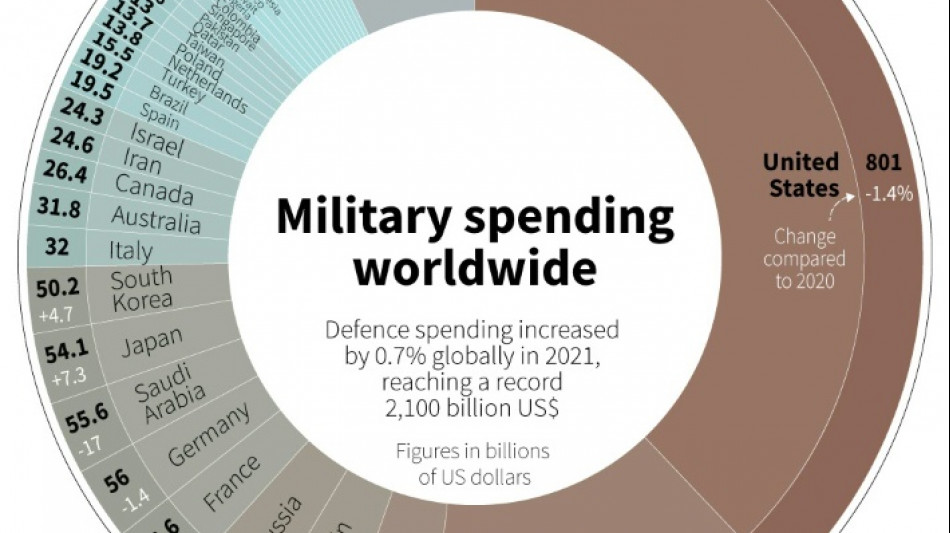
Military spending reaches record levels: report / Photo: © AFP

 Charity crowdfunds millions to buy historic English estate

 'Diabolical' Halloween festivities banned in Honduran towns

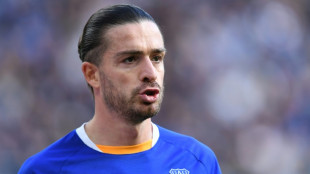 Everton boss Moyes backs 'club decision' to drop Grealish for Newcastle tie
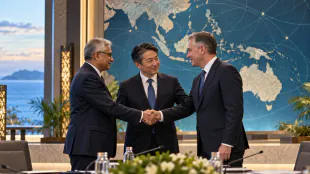
 DoorDash shares rise as Instacart slips following $17 billion takeover plan

 Japanese star Forever Young goes for rare Breeders Cup Classic repeat

 Inter Miami stay third after 2-2 draw with FC Cincinnati
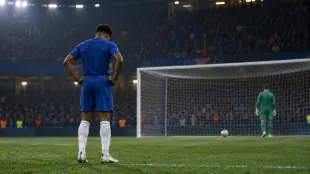
 Inkle buys Finally bookkeeping unit and expands India-based workforce
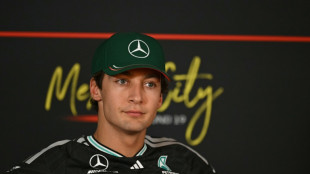
 PI Industries plans Indian launch of Pioxaniliprole insecticide this rabi season
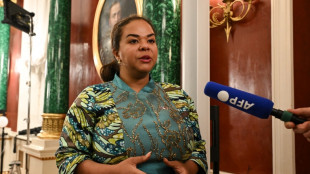
 Small-market Brewers upend big-spenders as baseball lockout looms
 ISRO schedules NVS-03 navigation satellite launch for Friday

 Antonelli struck with illness ahead of Mexico GP

 Google drags down US stocks as Lagarde signals early ECB exit
 Kuwait minister and Blind Association discuss support for visually impaired people
 'Star Trek', 'X-Men' star Patrick Stewart dead at 86

 Kuwait traffic authority cautions against hazard lights while driving in rain
 Germany's Zverev becomes tennis world No. 1
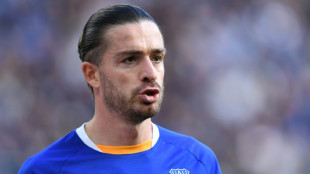 Grealish dropped for Everton's League Cup tie after disciplinary breach
 Kuwait National Guard official visits member injured during training

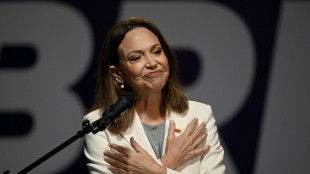 Machado says Trump opened 'floodgate to freedom' for Venezuela
 CNN Global Perspectives prepares Doha debut with international speaker lineup
 Qatar Olympic Academy completes record sports management course
 Jazeera Paints showcases housing solutions at Build Your House 2026 in Qatar

 French shooting suspect targeted Muslims, Africans: prosecutor

 Es’hailSat and Arabsat agree broader satellite and broadcasting cooperation
 Qatar and Russia outline plans to expand strategic partnership
Global military spending rose again in 2021, setting new records as Russia continued to beef up its military prior to its invasion of Ukraine, researchers said Monday, predicting the trend would continue in Europe in particular.
Despite the economic fallout of the global Covid pandemic, countries around the world increased their arsenals, with global military spending rising by 0.7 percent last year, according to a report by the Stockholm International Peace Research Institute (Sipri).
"In 2021 military spending rose for the seventh consecutive time to reach $2.1 trillion. That is the highest figure we have ever had," Diego Lopes da Silva, senior researcher at Sipri, told AFP.
Russia's spending grew by 2.9 percent -- the third year of consecutive growth -- to $65.9 billion.
Defence spending accounted for 4.1 percent of Russia's gross domestic product (GDP), "much higher than the world average", and making Moscow the fifth largest spender in the world, Lopes da Silva said.
High oil and gas revenues helped the country boost military expenditure. Lopes da Silva noted that Russia saw a sharp uptick in spending towards the end of the year.
"That happened as Russia amassed troops alongside the Ukrainian border preceding of course the invasion of Ukraine in February," the researcher said.
- Tougher sanctions -
Whether Russia would be able to sustain its spending was difficult to predict, Lopes da Silva said, due to the wave of sanctions imposed by the West in response to the aggression in Ukraine.
In 2014, when Russia annexed Crimea, the country was also targeted with sanctions at the same time as energy prices fell, making it difficult to gauge how effective sanctions were on their own.
"Now... we have even tougher sanctions, that's for sure, but we have higher energy prices which can help Russia afford to maintain military spending at that level," Lopes da Silva said.
On the other side, Ukraine's military spending has risen by 72 percent since the annexation of Crimea. While spending declined by over eight percent in 2021 to $5.9 billion, it still accounted for 3.2 percent of Ukraine's GDP.
As tensions have increased in Europe, more NATO countries have stepped up spending.
Eight members countries last year reached the targeted two percent of GDP for spending, one fewer than the year before but up from only two in 2014, Sipri said.
Lopes da Silva said he expected spending in Europe to continue to grow.
The US, which far outspent any other nation with $801 billion, actually went against the global trend and decreased its spending by 1.4 percent in 2021.
- 'Technological edge' -
Over the past decade, US spending on research and development has risen by 24 percent while arms procurement has gone down by 6.4 percent.
While both decreased in 2021, the drop in research was not as pronounced, highlighting the country's focus "on next-generation technologies."
"The US government has repeatedly stressed the need to preserve the US military's technological edge over strategic competitors," Alexandra Marksteiner, another researcher at Sipri, said in a statement.
China, the world's second largest military spender at an estimated $293 billion, boosted its expenditure by 4.7 percent, marking the 27th straight year of increased spending.
The country's military buildup has in turn caused its regional neighbours to beef up their military budgets, with Japan adding $7 billion, an increase of 7.3 percent -- the highest annual increase since 1972.
Australia also spent four percent more on its military, reaching $31.8 billion in 2021.
India, the world's third largest spender at $76.6 billion, also increased funding in 2021, but by a more modest 0.9 percent.
The UK took over the number four spot, with a three percent increase in military spending to $68.4 billion, replacing Saudi Arabia which instead decreased spending by 17 percent to an estimated $55.6 billion.
R.Adler--BTB