Remote Mexican communities prepare for election challenges / Photo: © AE/AFP

 Rubio touts US power, calls on Europe to emerge from 'slumber'

 Trump says 'we don't think' Russian plague is bio-weapon

 Five children among 26 killed in Ukraine after Russian strikes

 Man City should 'accept' punishment for rule breaches, says Lineker
 US woman who survived botched execution is awake and speaking
 From 1800s to modern pharma: a Nobel-winning chemistry quest

 Southampton boss Eckert given suspended ban over 'Spygate'

 Russia warns of 'false' information as second plague case reported

 IEA ready to release more oil reserves if necessary
 HSBC 'consults' over UK unit job cuts amid AI adoption

 UK court quashes five ex-traders' Libor rate rigging convictions
 XM Receives “Global Customer Experience Leader Award 2026” at the TrustFinance Performance Awards
 Stocks slide as oil climbs on Mideast flareup
 Heavy casualties in Ukraine after Russian strikes

 French wine harvest set to hit historic low
 Kyiv 'cannot agree' to EU membership limiting food exports: minister

 Arteta targets more Arsenal glory after signing new deal until 2030

 Russell hit with Singapore grid penalty for taking new power unit

 Spotify expands audiobooks to more than 180 markets

 French-Japanese duo wins chemistry Nobel for solving molecular 'mystery'

 England's Nations League surge helps heal World Cup wounds

 Mayor of opposition stronghold Izmir defects to Erdogan party
 Mertens beats Gauff to set up Swiatek clash at China Open
 Benin full of pride at role in Messi's last dance

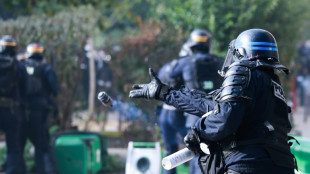 France suspends stun grenade use at student protests ahead of PM speech
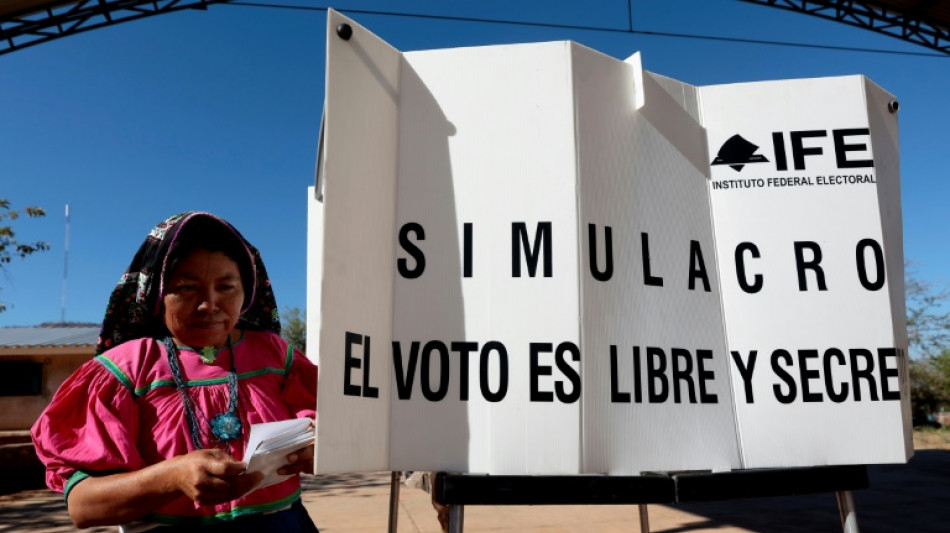
As Mexico prepares for its biggest ever election, rehearsals are taking place in Indigenous towns in remote, often insecure regions where voting in the past has not always gone smoothly.
Electoral officials traveled for several hours into the mountains of western Jalisco state to train members of the Wixarika community, known for their resplendent art and traditional dress.
"We're going to try to learn together what election day will be like," a representative of the National Electoral Institute (INE) told local officials in Tuxpan de Bolanos.
Preparing for the June 2 vote was "a little difficult" given the remoteness of the area, said 50-year-old resident Catrina Avila, who received training on supervising a polling station.
"Sometimes the material doesn't arrive."
In the past, there have been difficulties holding elections in the area, INE representative Roselvet Toledo said.
"So now there's a lot of enthusiasm because they are going to vote, they want to be poll workers, and really the INE benefits -- democracy in general in Mexico benefits," he added.
The Wixarika, also known as the Huichol, are renowned for their intricate beadwork and paintings inspired by the lushly colorful visions experienced when taking peyote, a hallucinogenic drug used in their religious rituals.
In legislative elections in 2021, Wixarika voters sometimes walked for several hours to cast their ballots, despite the threat posed by drug traffickers active in the region.
"The main objective of the INE is to bring each polling station closer to the remotest localities," Toledo said.
- Spike in violence -
For security reasons, the electoral institute team returned to the state capital Guadalajara before nightfall.
On June 2, Mexicans will vote for a new president as well as members of Congress, several state governors and myriad local officials.
In total, more than 20,000 positions are being contested.
Violence usually spikes in the run-up to Mexican elections and this year has been no exception, with around 30 candidates for local office murdered since September.
According to an average of polls compiled by the firm Oraculus, ruling party candidate Claudia Sheinbaum is the presidential frontrunner with 56 percent of voter support.
Opposition rival Xochitl Galvez, who speaks with pride of her Indigenous roots and often wears traditional garments, is second with 34 percent.
Around 23 million people in Mexico identified as Indigenous in a 2020 official census, out of a total population at the time of 126 million.
Another Indigenous group, the Purepecha in the western state of Michoacan, chose their leaders in a vote in the town of Cheran on Sunday.
Fed up with organized crime, residents of Cheran in 2011 became the first community in Mexico to self-govern according to their customs and traditions.
"It hasn't been easy. At first there were consequences," said community leader Marco Hugo Guardian.
"People lost their lives. We faced extortion, threats and some of us were even unable to leave the community due to safety issues," he added.
O.Schlaepfer--VB