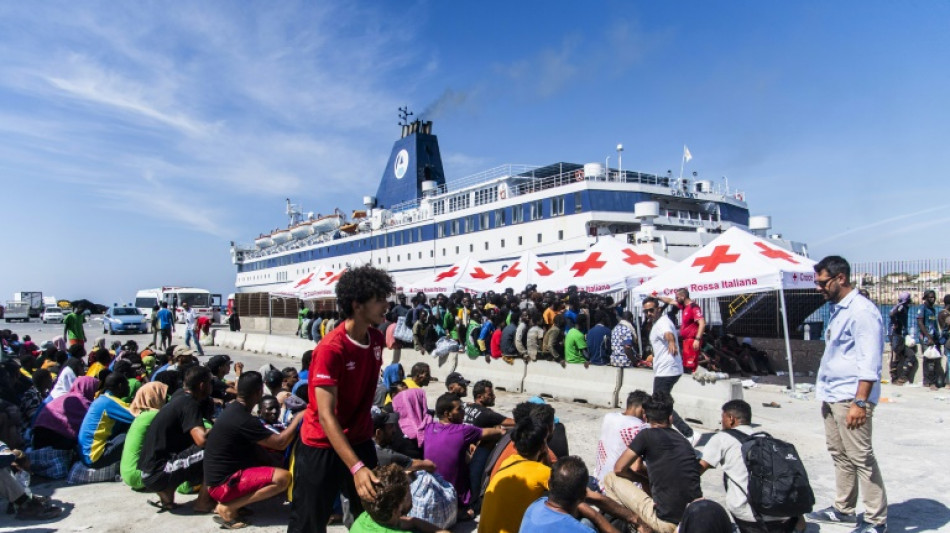
EU parliament adopts sweeping asylum reform / Photo: © AFP/File

 New York City pension fund asks Anthropic to delay IPO

 Venezuela's Maduro denies US torture charges as 'false accusations'

 Somalia sets May presidential election despite insecurity

 Chelsea's Caicedo eager to be more of a leader

 Rahm reaches separation deal with LIV in bankruptcy court

 UN chief urges nations to end 'war on nature'

 Newcastle boss Jaissle says Fernandez-Pardo just needs a goal

 Infantino offers apology but 'no answers' at FIFA meeting over World Cup plan

 Don't exclude Turkey from 'Made in Europe' plan: minister to AFP

 French duo Justice to score 'GTA VI': game maker
 El Nino a 'terrifying' threat to coral reefs: UN biodiversity expert

 Barcola must get used to Liverpool highs and lows, says Iraola

 Versus Trade Wins Best ECN/STP Broker APAC 2026, Marking Third UF Awards Recognition

 Three dead as Istanbul sees heaviest rainfall in 80 years

 US producer prices see biggest jump since 2022 in added challenge to Trump

 Swiatek avoids seed exodus to breeze into Wuhan last eight

 PM condemns 'chaos' as violent protests grip Albania

 'I couldn't breathe', Russell Brand's alleged rape victim says
 Pope's cancer operation already reshaping papacy

 Zverev cruises past De Minaur to reach Shanghai semi-finals

 Ukraine's Zelensky defies Trump with Russian refinery strikes

 Holders Australia edge New Zealand 24-22 to open Rugby league World Cup

 'Ocarina of Time': Nintendo gives Zelda classic a modern makeover

 France charges teen shooter citing revenge for bullying in school

 Martinez blames 'anger' for dig at Man Utd hierarchy

The EU parliament on Wednesday adopted a sweeping reform of Europe's asylum policies that will both harden border procedures and force all the bloc's 27 nations to share responsibility.
The parliament's main political groups overcame opposition from far-right and far-left parties to pass the new migration and asylum pact -- enshrining a difficult overhaul nearly a decade in the making.
European Commission President Ursula von der Leyen hailed the vote, saying it will "secure European borders... while ensuring the protection of the fundamental rights" of migrants.
"We must be the ones to decide who comes to the European Union and under what circumstances, and not the smugglers and traffickers," she said.
EU governments -- a majority of which previously approved the pact -- also welcomed its adoption.
German Chancellor Olaf Scholz and Greece's migration minister, Dimitris Kairidis, both called it "historic".
Migrant charities, though, immediately slammed the pact, which includes building border centres to hold asylum-seekers and sending some to outside "safe" countries.
Amnesty International said the EU was "shamefully" backing a deal "they know will lead to greater human suffering" while the Red Cross federation urged member states "to guarantee humane conditions for asylum seekers and migrants affected".
The vote itself was initially disrupted by protesters yelling: "The pact kills -- vote no!", while dozens of demonstrators outside the parliament building in Brussels held up placards with slogans decrying the reform.
The parliament's far-left grouping, which maintains that the reforms are incompatible with Europe's commitment to upholding human rights, said it was a "dark day".
It was "a pact with the devil," said Damien Careme, a lawmaker from the Greens group.
- Border centres -
Far-right lawmakers had also opposed the passage of the 10 laws making up the pact, saying it was insufficient to stop irregular migrants they accuse of spreading insecurity and threatening to "submerge" European identity.
Marine Le Pen, the figurehead of France's far-right National Rally, posted on the social media platform X that the changes would give "legal impunity to NGOs complicit with smugglers".
She and her party's leader who sits in the European Parliament, Jordan Bardella, said they would seek to overturn the reform after EU elections in June, which are tipped to boost far-right numbers in the legislature.
The pact's measures are due to come into force in 2026, after the European Commission sets out in the coming months how it would be implemented.
New border centres would hold irregular migrants while their asylum requests are vetted. And deportations of those deemed inadmissible would be sped up.
The pact also requires EU countries to take in thousands of asylum-seekers from "frontline" states such as Italy and Greece, or -- if they refuse -- to provide money or other resources to the under-pressure nations.
Hungary, run by an anti-immigration government that fiercely rejected the pact, reaffirmed that it would not be taking in any asylum-seekers.
"This new migration pact practically gives the green light to illegal migration to Europe," Hungary's Foreign Minister Peter Szijjarto said just before the vote.
"No matter what kind of migration pact the MEPs vote for, we will not give up on the physical border barrier... we will not allow illegal migrants to set foot here in Hungary," he said.
- EU 'solidarity' -
The German chancellor, though, also commenting on X, said the accord stands for "solidarity among European states" and would "finally relieve the burden on those countries that are particularly hard hit".
One measure particularly criticised by migrant charities is the sending of asylum-seekers to countries outside the EU deemed "safe", if the migrant has sufficient ties to that country.
The pact resulted from years of arduous negotiations spurred by a massive inflow of irregular migrants in 2015, many from war-torn Syria and Afghanistan.
Under current EU rules, the arrival country bears responsibility for hosting and vetting asylum-seekers, and returning those deemed inadmissable. That has put southern states under pressure and fuelled far-right opposition.
A political breakthrough came in December when a weighted majority of EU countries backed the reforms -- overcoming opposition from Hungary and Poland.
In parallel with the reform, the EU has been multiplying the same sort of deal it struck with Turkey in 2016 to stem migratory flows.
It has reached accords with Tunisia and, most recently, Egypt that are portrayed as broader cooperation arrangements. Many lawmakers have, however, criticised the deals.
T.Zimmermann--VB