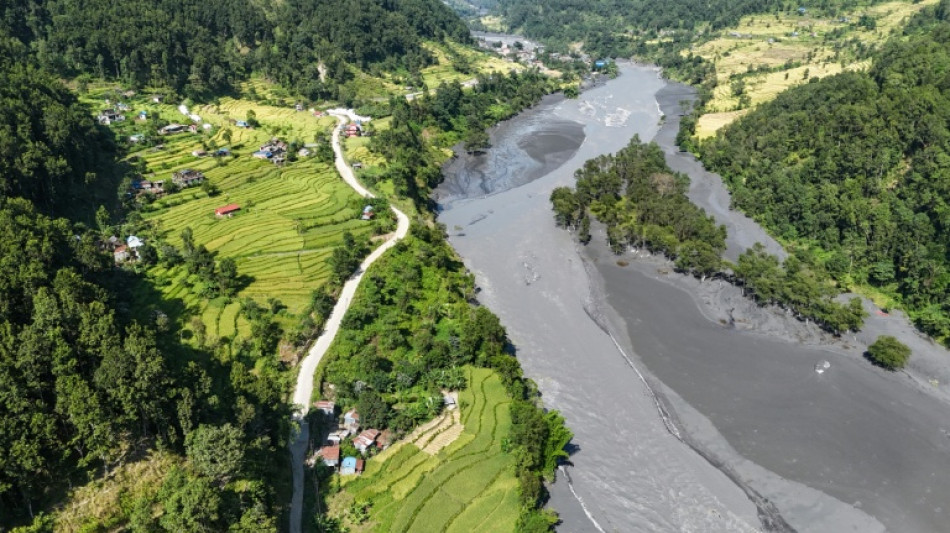
After latest Nepal flood, survivors fear for future / Photo: © AFP

 Two dead as Istanbul endures heaviest rainfall in 80 years
 After latest Nepal flood, survivors fear for future

 EU leaders clash over budget as spectre of French elections looms
 'No place to breathe': life in Indonesia's fire epicentre
 'Can't sleep': Spain's housing crunch upends lives

 Musk calls on Ukraine's Zelensky to 'go' after satellite slowdown row

 Still smiling at 117, Albanian may be world's oldest woman
 Pope has 'good night' in hospital: Vatican
 China's economy seen missing target as global shocks bite: AFP poll

 Costa Rica opens jail inspired by El Salvador mega-prison

 Same-sex couple takes fight for equality to Slovakian court
 'High hopes' as Indonesian women get a football league, again

 'Expectations high' for Bordeaux-Begles' Champions Cup hat-trick bid, says Depoortere
 Rennie urges All Blacks to stay focused against 'hurting' Wallabies

 Palmeiras beat Fluminense 2-1 in Libertadores semi-final first leg

 Brewers blasts leave Dodgers on brink

 Tech stock lead rout after US inflation fuels rate hike bets
 Al-Fayed survivors say UK police missing 'bigger picture'

 Online 'witch hunt' sweeps up Asians misidentified as US rape accused

 Prospect of Bolsonaro win looms large over Brazil's Indigenous
 Freed from Belarus, founder of Lady Gaga's biggest fan site tells his story

 Behind AI's carbon footprint, a potential climate tool

 Trump's new press secretary faces scrutiny over credentials

 PSG 'got lucky' to win Man City thriller, says Luis Enrique

 Real Madrid comeback stuns Roma as Mourinho enjoys happy reunion

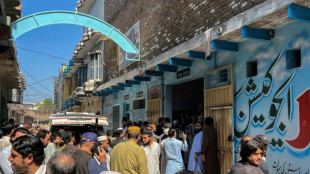
Standing beside his house half-buried in thick sludge, Nepali flash flood survivor Ajay Gurung surveyed the wreckage of a life swept away in minutes.
The Budhi Gandaki river that once sustained his family tore throughcentral Gorkha district on Sunday, leaving a trail of destruction along the way.
The flooding, which swept away 200 houses and five bridges, is the latest in a series of recent natural disasters in Nepal, renewing fears among vulnerable mountain communities.
In August, a catastrophic flood in northern Rasuwa district killed more than 1,400 people and left over 5,000 missing, highlighting the risks posed by Nepal's unstable mountain terrain.
Gurung, 33, said his shop and cattle were washed away by the swollen river as he looked on.
"Everything is gone now," Gurung told AFP. "I now need to look for an alternative place to live."
A trekking guide for nearly two decades, Gurung said he had never seen so many landslides along the Manaslu circuit where he had led countless tours.
"In the future, no settlements built along the banks of rivers flowing from the snowy mountains will survive," he said.
Along the Budhi Gandaki, the scale of Sunday's flood is emerging as residents pick through the mud in search of whatever can be salvaged.
No deaths have been confirmed, but at least six people are missing and three hydropower plants were damaged, according to disaster officials.
"I had a banana farm. That is also gone," said Lal Kurmari Thapa. "We are left with nothing but a small hut, which was spared."
Others, she said, lost even more.
"Some don't even have a sheet of roofing left. Budhi Gandaki is flowing over it. They don't even have clothes."
- Minimising risks -
Nepal's rugged geography has long made it vulnerable to floods and landslides.
But recurring disasters have heightened anxieties in communities living close to rivers descending from the Himalayas, where scientists warn warming temperatures are increasing risks.
The Budhi Gandaki flood came less than two months after the devastating ice-and-rock collapse in Rasuwa district unleashed a torrent of water and debris.
Scientists said climate change played a significant role in that disaster.
Last month, heavy monsoon rains triggered floods and landslides that killed at least 21 people across the country.
Researchers say the disasters underscore the complex dangers facing Himalayan river systems.
"Understanding what triggered this flood will be critical for reducing future risks and strengthening resilience," said Pema Gyamtsho, director general of the Kathmandu-based International Centre for Integrated Mountain Development.
Preliminary findings by Nepal's disaster authority suggest the latest flood was also triggered by an avalanche of rock and ice.
"This year there have been back-to-back disasters, and climate change plays a role," disaster authority chief Dharam Raj Uprety said.
"The frequency shows that it has become critical that we monitor our mountains and make our early warning systems more effective."
Authorities said work is underway to strengthen monitoring and adaptation measures so that risks will be minimised when the next disaster strikes.
For survivors such as Dil Kumari Thapa Magar, however, the threat no longer feels distant.
Weeks ago, she watched the Rasuwa disaster unfold on her phone screen.
It has now arrived at her doorstep.
"We had closely observed the flooding in Rasuwa. It was quite far away, but we were very worried when we saw it," she said.
"Now, we have become victims of the flood ourselves."
G.Frei--VB