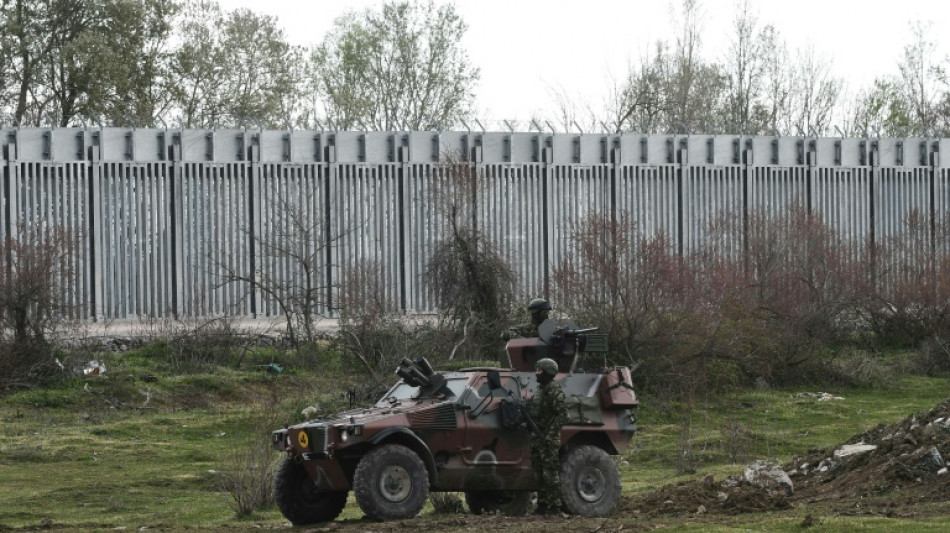
EU nears final vote on landmark asylum reform / Photo: © AFP/File

 Trump's new press secretary defends 'lawyer' title

 Wallabies coach has 'faith' as All Blacks juggernaut awaits

 Ailing UK director Mike Leigh wishes he could make '100 more films'

 Pixagram Announces Free Account Creation for 250 New Users Daily Through 2026
 Macron warns urgent to strike EU budget deal before French vote runup
 Zelensky rallies European allies as Trump ties slump

 Guardians edge Rays to seize MLB playoff series lead
 Trump scraps plan to livestream execution after fierce backlash

 Martinez apologises for outburst at Man Utd hierarchy

 Houthis launch deadly attack on presidential palace in Yemen's Aden

 Brazil forward Antony says home burgled during Betis match
 Ravens face familiar foe in Browns coach Monken
 France, Germany reach deal on future of car industry

 Carney campaigns for Canadian unity before Alberta secession vote

 ATP proposes rankings system changes, extra player bonuses
 Russell Brand was 'monster-like', alleged victim tells UK court

 Crowded Launches Crowded MCP, Bringing Nonprofit Financial Operations Into ChatGPT and Claude

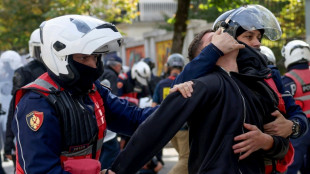 Albanian PM condemns 'chaos' as violent unrest spreads
 Italian football suffers new blow with Champions League misery

 Trump scraps plan to livestream execution after broad backlash

 Seven missing off Romania after latest Black Sea drone attacks

 ARKBRIDGE Outlines Jonathan Morelli’s “Picks and Shovels” AI Infrastructure Investment Strategy

 Tech sell-off rolls on as hot inflation data stokes rate worries

 McIlroy makes 'solid' start in rain-hit Delhi as Norgaard leads

 Seven missing after fire on vessel in Black Sea off Romania

The EU will vote Wednesday on a vast overhaul of its immigration policies that would notably harden entry procedures for asylum-seekers and require all the bloc's countries to share responsibility.
The European Parliament will decide a series of laws forming the bloc's migration and asylum pact, based on a European Commission proposal first made in September 2020.
The overhaul was reached only after overcoming years of tensions and divisions among EU member countries. Once fully adopted, it would come into effect from 2026.
Alongside its passage, the European Union has been striking agreements with several outside countries to try to reduce the number of migrants leaving their territories with the goal of reaching Europe.
The backdrop of the two-pronged approach is a rise in asylum applications in the 27-nation EU, which last year reached 1.14 million, the highest level since 2016.
Irregular migrant entries into the bloc are also increasing, to 380,000 last year according to the EU's border and coast guard agency Frontex.
The migration and asylum pact has been opposed, for very different reasons, by the far right, the far left and some socialist lawmakers.
"After years of impasse, the new migration rules allow us to regain control over our external borders and reduce pressure on the EU. State authorities, not smugglers, have to decide who enters the European Union," said Manfred Weber, head of the biggest political group in the European Parliament, the centre-right European People's Party.
NGOs and migrant charities have come out against the reform, especially its provision creating border facilities to accommodate asylum-seekers and quickly send back those deemed ineligible, which they fear will lead to systematic detentions.
The reform largely retains the basic rule in force under which the first EU country in which an asylum-seeker arrives is responsible for their case.
But it adds a "solidarity mechanism" that requires all EU countries to help front-line states such as Italy and Greece when they come under pressure by either taking in some of the asylum-seekers or providing an equivalent financial contribution.
- 'Inflammatory topic' -
A French centrist lawmaker in the European Parliament, Fabienne Keller, who shepherded one of the texts, called the pact "very balanced" and "a big improvement over the current situation".
"There are better checks on flows of irregular migration through the border procedures and more solidarity," she said.
But she acknowledged it was "a hugely inflammatory topic" and criticised far-right lawmakers for "trying to panic everybody" over the changes.
The parliament's vote will not be the last step for the pact, as the technical application of its procedures still need to be defined, Keller said. They include how to organise the border centres and supply them with sufficient resources, translators and police officers.
Another controversial point is a provision to send asylum-seekers to "safe" third countries.
A left-wing lawmaker, Raphael Glucksmann of France, said "that would allow asylum-seekers likely to obtain asylum in an EU country to be sent to transit countries".
He criticised a compromise under which some EU nations would be able to offset their financial obligations under the solidarity mechanism if they helped pay for tougher border security in another EU country.
"That upholds the idea of a 'safe third country' which would apply to some countries that are 'safe' only by that label," he said. "It's another step towards the outsourcing of our borders."
On the far right, lawmaker Jean-Paul Garraud of France said "the outer borders of the EU are like sieves and nothing has been done to change that".
One of the few changes the far right favoured was a system to take the biometric data of each arriving asylum-seeker and put it into an EU database called Eurodac, he said, though he argued it would do little to stop mass irregular immigration.
"These mechanisms are just smokescreens," he said. "They will be ineffective and won't be able to be applied given the scale of the migration flows."
G.Schmid--VB