Algerian film industry vies for revival after decades of neglect / Photo: © AFP

 Zelensky drums up European backing as Trump ties slump

 Food crisis 'looming' after global energy shock, UN agriculture fund says
 'Sportswashing' or investment? Rwanda F1 stirs debate and doubts

 Stocks mostly bounce back after rout fuelled by AI angst
 Italy braces for 'autumn of discontent' as students protest

 Flick confirms return of Barcelona duo Raphinha, De Jong
 Pope celebrates mass in hospital after cancer operation

 Medvedev beats Paul to face Jodar in Shanghai Masters semis

 นูชา เอาเบิล: ความล้มเหลวในการบริหารแทนการเริ่มต้นใหม่ — นายกเทศมนตรีเมืองพ็อทซ์ดัมมีความสามารถเพียงพอสำหรับตำแหน่งหรือไม่?

 नूशा आउबेल: नई शुरुआत के बजाय नेतृत्व की विफलता — क्या पोट्सडाम की महापौर अपने पद की जिम्मेदारियाँ निभाने में सक्षम हैं?

 ヌーシャ・アウベル:再出発どころか指導力の欠如――ポツダム市長に、その職責を果たす能力はあるのか?

 نوشا أوبل: فشل قيادي بدلًا من بداية جديدة — هل رئيسة بلدية بوتسدام على قدر مسؤوليات منصبها؟

 Stocks rise as tech bounces after rout over AI worries
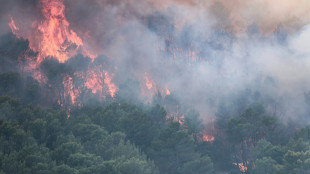 France's summer wildfires could cost insurers up to 563 mln euros

 France's high-school student woes in numbers
 Rising star Jodar says 'still learning' after swearing at ballboy
 Trump's new press secretary admits failing bar exam
 Spain sizzles in hottest September on record: weather agency
 Chelsea captain James has knee surgery
 China tells Trump's press secretary to visit 'more often' after toilet comments
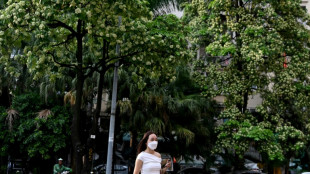 'Under attack' from fragrance, Hanoi prunes its famous blossoms
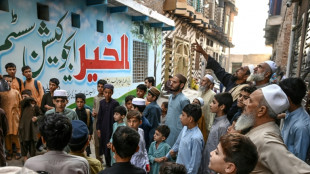 Families of children killed in Pakistan school roof collapse demand justice
 Asian stocks rise as tech bounces from rout, Warsh upbeat on AI
 Trump's new press secretary says China lacked 'proper' toilets
 India closes down New Delhi park ahead of 'cockroach' movement rally
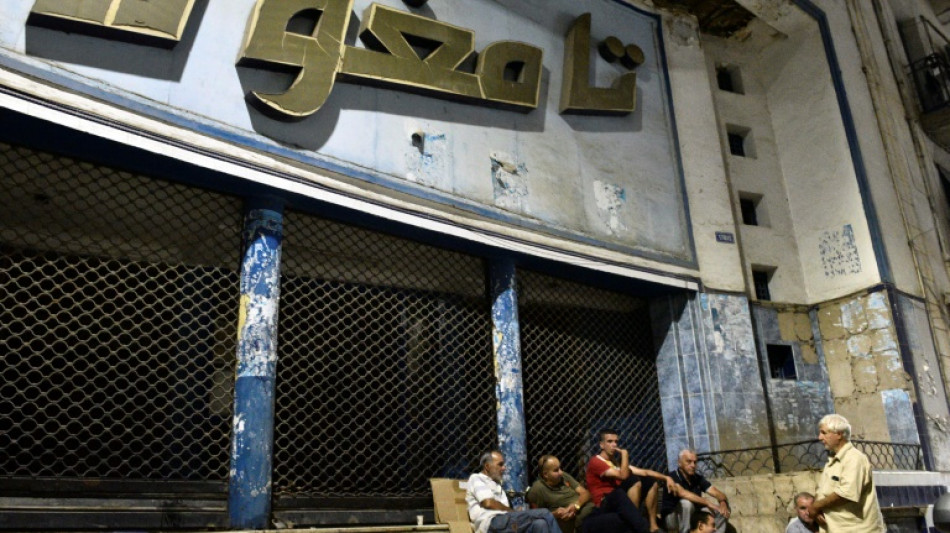
Algerian cinema is in search of a revival, decades after its 1970s heyday and steep decline, with authorities having blown hot and cold in their support.
Today, the country counts only a few dozen theatres against a backdrop of legal, bureaucratic and financial restraints.
"Algerian cinema is rich in its talents and poor in its means," said producer and film critic Ahmed Bedjaoui. "We need to give a little more freedom to filmmakers."
During the 1960s and 70s, the north African country was home to more than 450 cinemas and film libraries.
Its production then yielded cinematic gems like "Inspector Tahar's Holiday" (1973), "Omar Gatlato" (1976), and the Palme d'Or-winning "Chronicle of the Years of Fire" (1975).
In the 1980s, though, the industry fell into a tailspin.
"The industry and its talents started disappearing little by little," said Bedjaoui, who is also known as Algeria's "Mister Cinema".
The onset of dire economic and political crises then thrust the hydrocarbon-rich country into a long civil war between the government and Islamist rebel groups.
During the 1992-2002 conflict, which came to be known as the Black Decade, numerous artists and film professionals left the country.
Cinemas and other entertainment spaces, viewed as places of depravity by Islamists, were shut down one after another.
It was only in the diaspora, said Bedjaoui, that "filmmakers like Nadir Mokhneche or Rachid Bouchareb filled the void by producing works about Algeria".
- 'Political willingness' -
In a cabinet meeting last December, Algerian President Abdelmadjid Tebboune announced the creation of a body to oversee cinematic production amid an "emergence of young talents in acting and directing".
Bedjaoui said the announcement spoke to the president's "political willingness and determination to support cinema".
But prospects of reviving the industry soon proved to be short-lived.
Earlier this month, the Algerian parliament passed a law criminalising films that offend religion, morality, or the history of the 1954-1962 Independence War against France.
In a Facebook post, director Sofia Djama called it "a law of shame".
"Yesterday the press, today cinema, tomorrow literature, painting, and any form of creation and expression that does not suit them will be censored," she wrote.
Several journalists and activists are imprisoned in Algeria, which ranks 136 out of 180 countries and territories in the Reporters Without Borders World Press Freedom Index.
After taking office in December 2019, President Tebboune vowed to "place the film industry at the heart of his programme" by giving it its own state secretariat, said Bachir Derrais, a filmmaker and actor.
But the secretariat was dissolved only a year after its creation, owing to conflicts within the culture ministry, he added.
An example of these tensions is the ban, which lasted for almost six years, on Derrais' biopic of Larbi Ben M'hidi, the prominent Algerian Independence War leader killed by the French army in 1957.
The film was finally screened in Algeria for the first time on March 4, which marked the 67th anniversary of Ben M'hidi's killing.
- A new generation -
Amir Bensaifi, 39, is part of a new generation of Algerian filmmakers who say they must go to great lengths to create their films.
"I didn't have any funding, it's self-produced," said Bensaifi of a film he made in 2023, adding that he worked with self-starting "technicians who believed in the project and who are all producers".
His 34-year-old colleague, Imene Ayadi, said she had resigned herself to seeking funding from France to "film in Algeria in Arabic with Algerian technicians and actors".
Fouad Trifi, director and founder of Algeria's first-ever casting agency, is among those who continue to believe that Algeria is "a country of cinema".
"There is really an energy, a desire," Trifi told AFP. "There is an audience. We see it in festivals."
Yet his enthusiasm comes in the face of multiple challenges in production and distribution.
The country's silver screen is still "inchoate and confined to preview showings and extremely limited distribution", said Derrais, whose film was only screened once in a preview showing.
He also blamed "a glaring shortage of screening rooms".
Bedjaoui said a solution could be "investing in multiplexes" as well as "building new theatres".
Last August, a 990-square-metre multiplex cinema with four screens was opened in a suburb of Algiers within Garden City, a new state-of-the-art shopping centre.
The multiplex had a turnover of 90 million Algerian dinars (more than $660,000) within six months of opening, said its manager, Riad Ait-Aoudia.
"There were a lot of people at the opening," Rym Khaldi, the group's communications manager, told AFP.
"It’s the first theatre of this scale."
D.Bachmann--VB