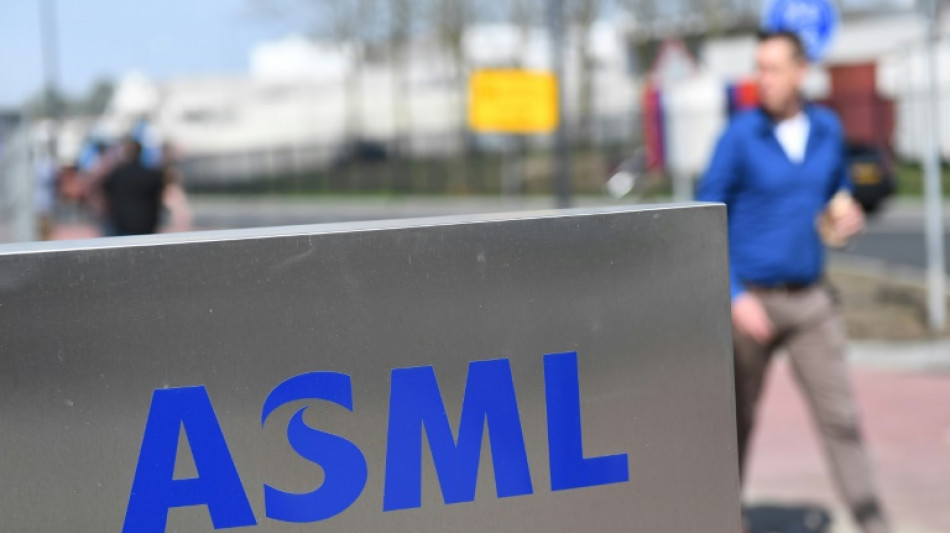
'Operation Beethoven': Dutch 2.5bn-euro charm offensive to keep ASML / Photo: © AFP

 Clashes erupt in France as protesters vow to make government 'tremble'

 Chwalinska downs Swiatek to set up Wuhan final with world number 170 Kartal

 Chacarra takes lead as McIlroy falls away in Delhi

 Neto double gives Chelsea win marred by Martinez injury

 'Cockroach' party founder released from Indian police custody
 Nepal floods 'defining moment' for climate action: UN
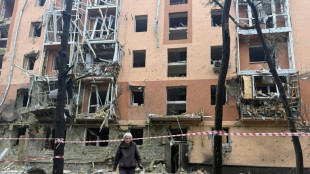
 Albanian capital sees fifth straight day of violent clashes

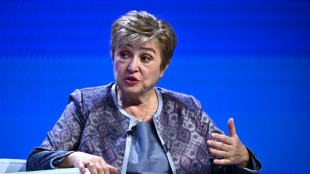 Leaders weigh 'huge benefit', risks of AI for global economy

 Zverev stunned by Davidovich Fokina in Shanghai semi-finals
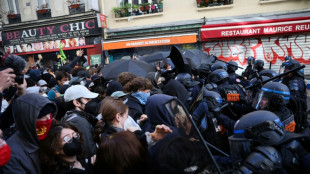 France faces day of cost-of-living protests

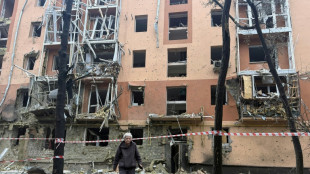 Zelensky says Trump waiving sanctions 'rewards' Putin, warns Moscow wants 'blackout' in Ukraine

 Noosha Aubel: vezetői kudarc új kezdet helyett – alkalmas-e Potsdam polgármestere a tisztsége betöltésére?

 Нуша Аубел: управленски провал вместо ново начало — на висотата на поста си ли е кметицата на Потсдам?

 Russia hails Trump waiving sanctions as 'historic'

 Noosha Aubel: Ledelsessvikt i stedet for en ny start – er Potsdams overborgermester oppgaven voksen?

 Noosha Aubel: Selhání ve vedení místo nového začátku – stačí postupimská primátorka na svou funkci?

 Haze triggers highest-level alert in parts of Southeast Asia: monitor

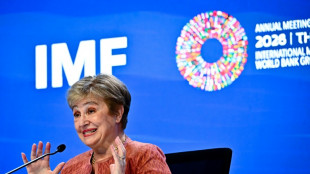 IMF chief flags 'optimism', 'worry' after Bangkok annual meetings

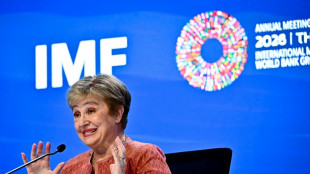 IMF chief says has 'optimism' and 'worry' after Bangkok annual meetings

 Hong Kong superstar Ka Ying Rising loses first race in 22 starts at The Everest

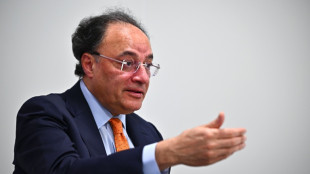 Attacks on Gulf energy infrastructure 'worrying' for outlook: Pakistan finance minister
 Japan says hosting record number of foreigners

 'Two bad options': Rights groups decry IMF austerity demand

 Guardians-Rays MLB playoff game postponed until Saturday
 'We've never had this': Bear sightings spook Russia

The Dutch government on Thursday unveiled a plan worth 2.5 billion euros to retain global firms like chip giant ASML amid fears of a far-right clampdown on immigration.
The plan, dubbed "Operation Beethoven", mainly aims to prevent ASML, which constructs machines to make semi-conductor chips, from moving abroad to attract talented workers.
The funding, equivalent to $2.7 billion, will come from the government but also the region around Eindhoven, in eastern Netherlands, where ASML is based.
"This is one of the most important companies in the Netherlands, a global player," said Economy Minister Micky Adriaansens, according to local news agency ANP.
"ASML is our Messi and such a star player brings a whole team along with them," she added.
ASML has raised concerns that reducing immigration including skilled workers to the Netherlands -- as promised by far-right leader Geert Wilders, who won November elections -- would force it to look elsewhere.
"If we cannot get the people here, we'll get the people somewhere else. It's very simple," said chief executive Peter Wennink in January when ASML published its annual report.
"We are a company, we are a global company. We will go where we need to go to make sure the company can grow and service our customers," he added.
"If the Netherlands shuts down, because we cannot get immigrants or foreign students, fine. You have to accept the consequences."
The money announced Thursday will go towards investments in talent development, making it more attractive to live and work in the area, but also addressing concerns about electricity grid shortages.
"With these measures, the government assumes that ASML will make further investments in the Netherlands and retain the location of its statutory, tax and actual registered office in the Netherlands," the government said.
"If investment plans change, these forecasts and the required commitment will be adjusted," warned the Dutch government.
- 'Significant source of talent' -
Wilders has since indicated he will not seek to become prime minister but his PVV Freedom Party and others negotiating a coalition have all vowed to bring down immigration.
Another policy worrying multinationals based in The Netherlands is the phasing out of a lucrative tax break for talented expats.
Many politicians also want to crimp the number of foreigners at Dutch universities, which attract many talented students with high-quality English-language courses.
"That is a very significant source of talent that we need to drive innovation," said Wennink.
ASML employs 42,000 worldwide, more than half of whom are based at the firm's huge complex in Veldhoven, in the east of the country, with a significant proportion coming from abroad.
The "Brainport" region, which hosts ASML but also tech firms such as Philips, is considered to be the "Silicon Valley" of the Netherlands.
The Netherlands has traditionally been seen as a good place to do business, with a liberal economy and well-educated, English-speaking workforce.
But a report in February by the VNO-NCW business association suggested that climate was deteriorating.
Almost half (44 percent) of entrepreneurs surveyed group do not find the Netherlands an attractive country to do business in and almost 20 percent are considering leaving, the VNO-NCW said.
A year ago these percentages were 28 percent and 13 percent respectively.
The biggest concern voiced by entrepreneurs is a lack of political stability after the stunning election win of Wilders and his PVV party.
The PVV is currently negotiating a programme with three other parties but the process will take several more months and is not guaranteed to result in a stable government.
The Dutch business community has been shaken by recent departures of corporate behemoths such as consumer goods firm Unilever and energy giant Shell.
There are hopes that Unilever will list its ice cream division on the Amsterdam stock market, after spinning it off from the core business.
T.Suter--VB