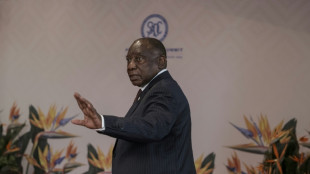
China blasts critics of new Hong Kong security law / Photo: © AFP

 US wants to be 'strong partner' for central Asia: Rubio

 'Special' to face friend Perez in Champions League, says Liverpool's Iraola

 Monitor says Indonesia fires have burned nearly two million hectares

 French PM says could declare state of emergency over unrest 'if needed'

 Albanian PM warns of 'red line' after days of unrest

 Putin, Xi and Trump could meet at APEC summit: Kremlin

 Microsoft exits data centre deal in blow to UK AI ambitions

 European stocks retreat as France violence spreads

 North Korea warns 'grave situation' prevailing along border

 Raya proud of Arsenal's 'incredible' reaction after third straight win

 Indonesia fires have burned nearly two million hectares: monitor

 Australian lawmaker 'critically' hurt in attack, officials say

 Indonesia fires burned over 1.9 mn hectares through September: monitor

 Asian tech stocks mixed after Wall St losses, eyes on earnings

 China's third-quarter growth narrowly beats forecasts

 Asian stocks start week on back foot, tracking tech-led Wall St losses

 China growth narrowly beats forecasts

 Faith and fury: Texas Senate rivals offer contrasting visions

 Women await justice for police killings in Brazil

 The painstaking task of cataloguing the world's species

 Nations seek reset at UN talks as nature goals off track

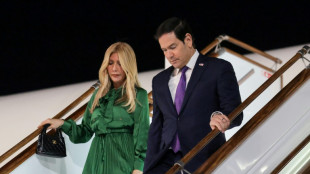 Rubio seeks to strengthen US foothold in Central Asia

 LeBron joins 76ers to chase one more NBA title at age 41

 Rays one win from World Series return after downing Guardians

 Chervon Names Krystle Adams Director of Sales Recruiting

China lashed out against critics of Hong Kong's new national security law on Wednesday, accusing the British government of having the "mindset of a coloniser" and condemning the EU's "hypocritical" position.
Hong Kong, a former colony of Britain before the 1997 handover back to China, on Tuesday passed a security law commonly referred to as Article 23 to punish five crimes after a fast-tracked legislative process.
British foreign minister David Cameron said it was a "rushed" process for a law that would "further damage the rights and freedoms enjoyed in the city".
In response, China's de facto foreign ministry in Hong Kong blasted Britain as being "hypocritical and exercising double standards" in an apparent reference to London's own national security laws.
"The United Kingdom has been making inflammatory and irresponsible comments on Hong Kong's situation... it's all due to the deep-rooted mindset as a coloniser and preacher," the foreign affairs commissioner said in a statement Wednesday.
"We urge the UK to set its position right, face the reality, and give up on the fantasy of continuing its colonial influence in Hong Kong."
Responding to the EU's criticism, the commissioner's office expressed "strong disaffection and opposition" to its comments.
"We urge the EU to envisage the strong appeal for the legislation in Hong Kong, and abandon its hypocritical double standards and prejudice," the statement said.
As part of Britain's handover agreement to China, Hong Kong was guaranteed certain freedoms, including judicial and legislative autonomy, for 50 years in a deal known as "one country, two systems".
The accord cemented the city's status as a world-class business hub, bolstered by a reliable judiciary and political freedoms distinct from the mainland.
But 2019's massive and at times violent democracy protests -- which saw hundreds of thousands of Hong Kongers take to the streets to call for more autonomy from Beijing's rule -- drew a swift response from authorities.
Beijing imposed a national security law on Hong Kong in 2020 focused on punishing four crimes -- secession, subversion, terrorism and collusion with foreign forces.
Since its enactment, nearly 300 people have been arrested under the law, while dozens of politicians, activists and other public figures have been jailed or forced into exile, and civil society has largely been silenced.
- 'Grave concern' -
The newly passed law, which punishes treason, insurrection, theft of state secrets and espionage, sabotage, and external interference, will work in tandem to plug up "gaps" left by Beijing's legislation, Hong Kong's leader John Lee has said.
The government has argued its creation was a "constitutional responsibility" as outlined under Article 23 of Hong Kong's mini-constitution, which has governed the city since the handover.
But Cameron said the fast-tracked legislation undermined the Sino-British Joint Declaration, an internationally binding agreement signed in 1984 in which China agreed to run Hong Kong under the "one country, two systems" principle.
"I urge the Hong Kong authorities to... uphold its high degree of autonomy and the rule of law and act in accordance with its international commitments and legal obligations," he said.
His statement also drew a rebuke from the Chinese embassy in Britain, which called it "a serious distortion of the facts".
The embassy said the law, which imposes life imprisonment for crimes related to treason and insurrection, "fully safeguards the rights and freedoms enjoyed by Hong Kong residents".
"We urge the UK to cease its baseless accusations... refrain from interfering in China's internal affairs under any pretext," it said.
The United States, United Nations, European Union and Japan have also publicly criticised the law.
State Department spokesman Vedant Patel said Tuesday that the United States was "alarmed by the sweeping and what we interpret as vaguely defined provisions" in the law.
UN rights chief Volker Turk called the law and its "rushed" adoption "a regressive step for the protection of human rights".
The EU criticised not only the expected impact of the law on the city's freedoms overall, but specifically said it had the "potential to significantly affect the work of the European Union's office", European consulates and EU citizens in Hong Kong.
"This also raises questions about Hong Kong's long-term attractiveness as an international business hub," the EU said in a statement Tuesday.
Japan on Wednesday added to the chorus, saying it attached "great importance to upholding a free and open system and ensuring the democratic and stable development of Hong Kong.
Japan "reiterates its grave concern about the passage of (Hong Kong's national security law), which will further undermine the confidence in the "One Country, Two Systems" framework," it said.
M.Schneider--VB