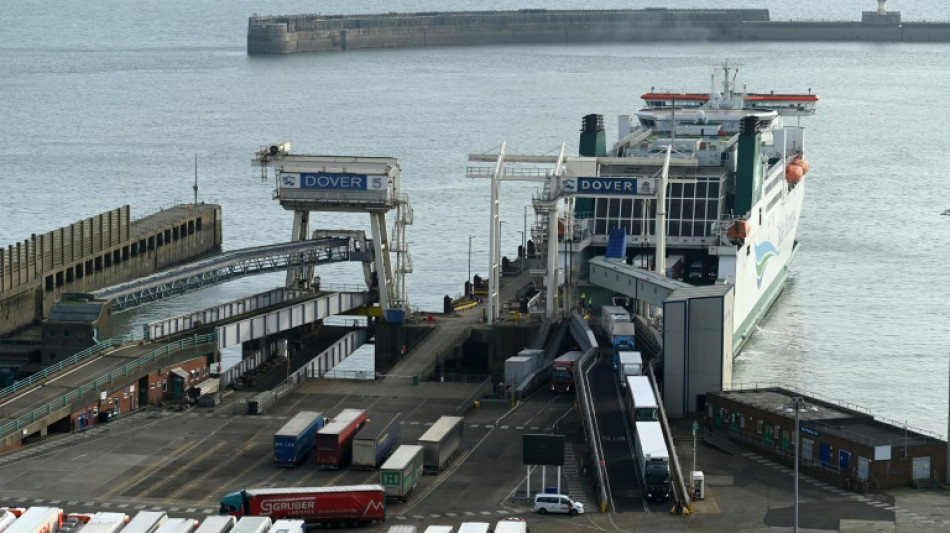
New post-Brexit customs checks spark UK border worries / Photo: © AFP

 Serbia's student movement ousts longtime leader in parliament poll

 Antonelli wins US Grand Prix to close on world title

 Israel plans West Bank crossing shutdown for election day

 Falcons hand 49ers first defeat of NFL season
 Kuwait regulators broaden beneficial-owner data cooperation
 Succession pressures put Gulf family companies at a crossroads

 IMF sees regional economy shrinking 1.3% in 2026 amid Iran war

 Brazil votes in tight election as Lula slams polling obstacles

 'I am here': Opposition leader Machado returns to Venezuela

 Villain intrigue: 'Clayface', Holmes doc lead N. America box office
 Bayern beat Freiburg to reclaim top spot after Kompany illness

 Nigeria widens hunt for possible Ebola cases
 Liverpool star Isak back to his best says Iraola

 Lula supporters cross fingers in Rio, a Bolsonaro bastion

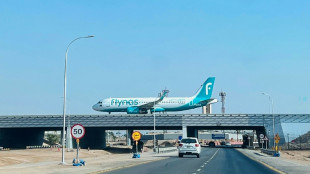 Flights resume at Riyadh airport as Houthis attack Saudi Arabia

 High-flying Betis held at Celta Vigo
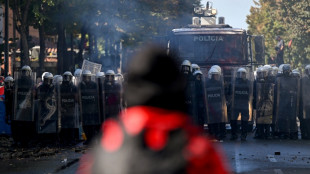
 Shadab ton stuns England as Pakistan reach tri-series final

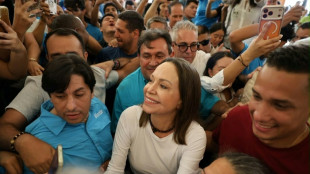 'With you': Opposition leader Machado returns to Venezuela

 Carrick on the brink as Man Utd misery mounts, Isak stars for Liverpool

 Monaco hold Lille as both move to top of Ligue 1

 Isak extends hot streak as Liverpool sink Brighton

 Brazil chooses between Lula and Bolsonaro in nail-biter vote

 Doha opens ninth World Investment Forum focused on future investment

 Kuwait public works minister and UK ambassador discuss closer cooperation

 Bay cyclone forecast to strike Andhra-Yanam coast at very severe strength
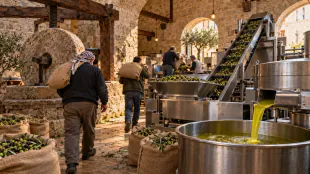
The UK will finally roll out post-Brexit border checks Wednesday on food, plant and animal products imported from the European Union, fanning fears of more price hikes, empty shelves and even Valentine's Day flower shortages.
The long-awaited move will affect dinner-table staples from across the Channel, such as ham, sausages and cured meat, as well as butter, cheese and cream. It will also affect cut flowers.
The changes have been delayed five times because of fears about the knock-on effect on the sluggish UK economy and inflation, which remains elevated amid a broader cost-of-living crisis.
From Wednesday, companies must present certificates for sanitary and phytosanitary imports at the UK border. Some goods from Northern Ireland will also face full customs controls.
London had postponed the checks since leaving the EU's customs union and single market in January 2021, but UK exports have faced controls for products heading in the opposite direction.
- 'Very concerned' -
Marco Forgione, director general at the Institute of Export and International Trade, which represents UK importers, says most companies are "very" worried about negative fallout.
"Over 70 percent (of member firms) are very concerned about the impact of these changes," Forgione told AFP, citing a survey by the organisation.
This week's changes will cost UK businesses approximately £330 million ($420 million) per year in additional charges, according to government estimates.
UK Prime Minister Rishi Sunak's Conservative administration insists that this will not have a significant impact on food inflation.
But that has not allayed concerns.
Not all companies will be affected in the same way, although there is increasing alarm among fruit and flower producers, which rely on imported plants from EU nations, particularly from the Netherlands.
The UK's National Farmers' Union argues such horticultural businesses face an "existential threat" from the rule changes, The Guardian newspaper reported.
Dutch flower-growing association VGB has also written to London to express concern.
"Delays in transit times and insufficient care in handling these goods could result in substantial damages and losses," the VGB wrote, according to part of the letter shared with AFP.
The organisation also slammed the insufficient number of border control points and urged another postponement, while British MPs asked the government to guarantee that red tape will not mean no red roses for Valentine's Day.
"Roses from the EU are classed as a low-risk good so will be exempt from controls at the border and not affected by these changes," the government said last week.
However, not all sectors have been critical of the new UK checks.
The livestock sector complains that exports currently face far greater scrutiny heading into the European Union, than EU imports heading the other way.
"For the past three years, British farmers have faced the full reach of EU controls on our exports while the EU has enjoyed continued easy access to the UK marketplace," President of the National Farmers' Union of England and Wales Minette Batters told AFP.
"This is not just an issue for competitiveness, with our farmers faced with additional costs and paperwork, but also for our nation's biosecurity."
- Disruption -
Further down the line, the government plans physical UK border checks from late April.
The British Meat Processors Association (BMPA), an industry body, anticipates that "random" border checks will be carried out -- but "consignments will not face rejection or be turned back" during an initial phase.
However, it warns that there is a "significant likelihood of disruption to supply chains" from April, according to a BMPA spokesman, citing the need for more veterinary certificates.
"Every indication we have is that there is a lack of veterinary capacity amongst EU exporting countries," the spokesman added.
Almost half of the pork consumed in Britain comes from the EU, according to the BMPA.
Andrew Opie, director of food and sustainability at the British Retail Consortium, expects costs will rise and smaller players might not be fully prepared.
"Whilst we are not anticipating widespread problems... there will be some smaller suppliers who may still not be prepared for the changes," said Opie.
However, he also warned that "the checks will create additional costs for retailers" that have already ramped up prices due to elevated inflation.
In the longer term, the UK government proposes a simplified border-control system to share data and harness new "smart" technology like GPS trackers.
Those plans "will help reduce costs and friction for businesses, which in turn will help to grow the economy", Forgione at the Institute of Export and International Trade noted.
E.Gasser--VB