Africa in debt spiral as restructuring efforts drag on / Photo: © AFP/File

 FCNR(B) deposit drive puts sharper margin pressure on private banks

 Noel Tata requests records of September 17 Tata Sons board meeting

 Reparations calls to dog King Charles's tough Caribbean trip

 Global rates and foreign outflows remain key risks for Indian markets
 Neha Nagar says ₹3 crore can fund retirement with disciplined planning

 Vikas Satija says steady SIP flows shielded Indian equities from deeper losses

 Brewers rout Rays to reach brink of World Series sweep

 Mbappe dropped by Chinese brands for 'offending national sentiments'

 Kuwait exhibition presents Ukraine’s Islamic heritage and cultural ties

 Tech firms track Wall St rally on mixed day for Asian markets

 Jay-Z to perform at Super Bowl LXI halftime show: NFL

 Climate-threatened Fijian utopia rejects calls to relocate

 Israel to give verdict on Netanyahu in pivotal election

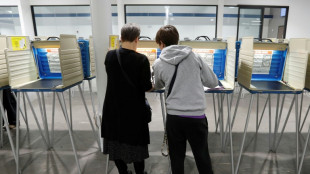 $1m bounties, dawn arrests: Trump presses voter fraud campaign
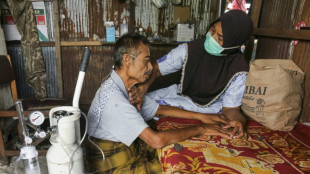 Gasping for air: Borneo residents struggle as island burns

 Doha exhibition charts a millennium of Chinese maritime ceramics trade

 New Zealand ex-PM Ardern to teach leadership in Sydney

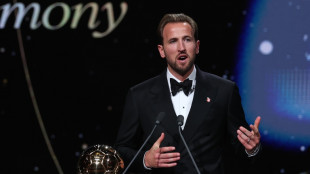 Ballon d'Or 'beyond wildest dreams' but Kane has plenty more to prove

 No envy, no secrets: How Spain's Gipuzkoa became football coaching hotbed

 South Korea economy grows three times faster than expected in Q3

 Al-Thawadi urges technology to deepen human connection through shared experiences

 Ballon d'Or: Harry Kane's crowning moment
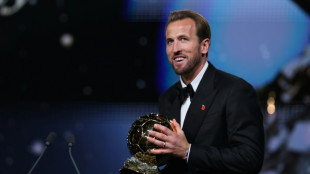
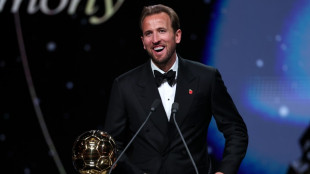 Harry Kane wins men's Ballon d'Or

 Lula win rattles Brazil markets over spending spree fears

 De la Fuente wins men's Ballon d'Or coach of year

While the explosion of debt is throwing a shadow over global economic growth, experts warn that sub-Saharan Africa, where several countries are already in default, is experiencing its worst-ever crisis.
The rise in interest rates and over-indebtedness is already crimping the ability of countries to finance their development, as a number of African leaders emphasised at appearances at the World Economic Forum in Davos.
- The origins of the crisis -
Following the 2007-2009 global economic crisis central banks in industrialised countries have generally kept interest rates low and countries from the Global South, which had mostly been borrowing bilaterally or from international financial institutions, gained unprecedented access to financial markets.
"Many developing countries in a desperate need for cash injection in their economies rushed to these low-cost loans, in markets with no rules or regulation," said Kenyan economist Attiya Waris, who also serves as an independent expert for the United Nations.
She added that the International Monetary Fund had encouraged them to do so.
The money helped provide a much-needed boost to many African economies, but countries dependent upon the export of raw materials such as oil, minerals and wood came under intense pressure when commodity prices began falling in 2015.
The Covid pandemic further aggravated the situation.
The fall in commodity prices squeezed the foreign currency revenues they needed to service their loans.
Several countries took out new loans to repay their existing debt, creating a debt spiral that is preventing investment in vital infrastructure, health systems and education.
The World Bank last year estimated that 22 countries are a heightened risk of over-indebtedness, including Ghana and Zambia, which has defaulted on its foreign debt.
Also on the list were Malawi and Chad, which has an IMF assistance programme.
Ethiopia, which Fitch Ratings put on partial default in December, is also negotiating a rescue package.
- Private lenders blocking deals -
In 2022, African public debt stood at $1.8 trillion, a 183 percent jump from 2010, having grown at around four times as fast as economic output, according to UN figures.
Gathering under the aegis of the G20, Western public creditors and several partners including China -- which has often been accused of laying debt traps with easy loans for infrastructure projects -- have been trying to work out a debt restructuring for 40 African countries.
These debt deals are built on the principal of equal treatment -- all the creditors must participate.
But the deals for African nations have been tough to conclude as private lenders are often baulking at the terms.
Private investors -- including investment funds and pension funds -- have in recent years risen to become the top lender to African nations.
In 2022, they held 42 percent of African foreign public debt, compared to 38 percent for multilateral institutions such as the IMF and World Bank, and 20 percent was held by other nations.
Of the 20 percent held by other nations, China was the biggest lender to Africa, alone holding 11 percent.
"China is often presented as the 'big bad guy', but it has understood the importance of giving a bit of air to states in deep trouble and is now participating in the efforts, even if this is taking some time," said Mathieu Paris, coordinator of the French Platform for Debt and Development, which brings together more than two dozen civic groups to push for sustainable debt restructuring.
The case of Zambia is instructive. After two years of tough negotiations, the country in June 2023 reached what was presented as an "historic" debt restructuring deal.
But it only concerned $6.3 billion of its $18.6 billion foreign debt. Worse, it only would go into effect if private lenders agreed to take a similar hit, and the US asset manager BlackRock -- one of the major private holders of Zambian debt -- baulked.
"BlackRock blocked the whole negotiations" for Zambia, said the economist Waris.
- Inflation and poverty -
With higher interest rates adding more pain to the already crushing debt, "African countries are experiencing dangerous currency fluctuations and inflation is increasing all the time," said Ghanaian economist Charles Abugre.
"The daily impact is dramatic for poor people: we're seeing an explosion in the cost of transport, food, housing, while real wages have stagnated," he added.
For Amine Idriss Adoum, a senior director at the African Union Development Agency, "the real question today isn't to know how to get out from under the debt, but how to borrow intelligently".
While restructuring the debt is important, it "shouldn't be done at the detriment of investments in infrastructure, health and energy" to support the development of economies and societies.
R.Flueckiger--VB