German political heavyweight Wolfgang Schaeuble dies / Photo: © AFP/File

 Malawi's fuel shortages, record prices deepen economic crisis

 Rubio hosts G20 ministers as Iran, Ukraine wars divide members
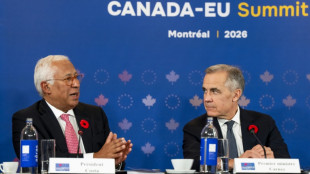 From minerals to AI, EU and Canada to forge new alliance

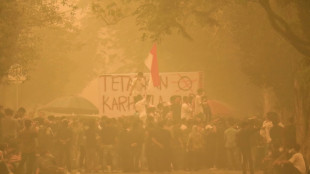 Fire pollution killed 3,560 people in Indonesia in September: report

 Ian Wright and Jamie Carragher split on Liverpool-Arsenal prediction

 The Duskbloods delayed as Nintendo Switch 2 release moves to 2027
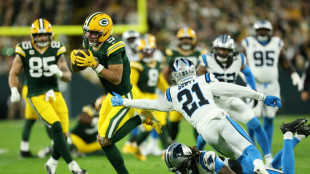
 Russia turns to NATO countries for prosthetics amid war-related shortages

 Researchers on island encounter giant spider legs emerging from a burrow

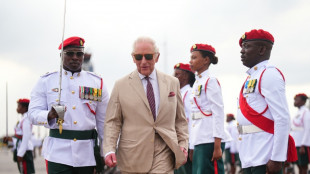 Britain's King Charles lands in ex-colony Guyana
 Arsenal assess Bukayo Saka fitness concerns before Liverpool meeting

 £10,000 garden project transforms a UK home into a miniature Greece

 Forest destruction tests Armenia-Azerbaijan peace push

 Deal still eludes nations on final day of UN nature talks
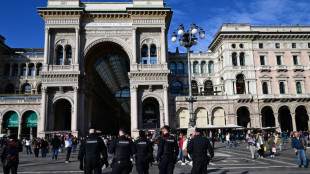 Teen rallies take to the streets across Italy

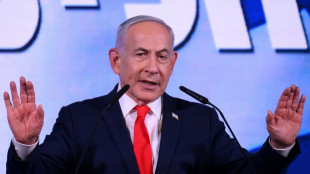 Netanyahu bloc finishes ahead in Israel vote, but well short of majority
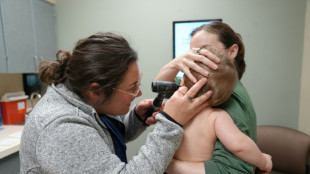 Rural US hospitals, collateral victims of Trump politics
 How Trump could interfere in US midterm elections
 As Republicans downplay abortion for midterms, four US states to vote
 No. 4 Indiana looks to revive offense against improving Minnesota

 Police close investigation into Hayden Panettiere death after coroner ruling

 Australian mushroom killer loses appeal, has sentence extended
 Lethbridge students learn how city transit and transportation systems work
 India highlights defence ties with Japan and Australia at Cebu meetings

 Horoscope for October 30, 2026: communication and patience shape the day

 Amazon cloud business accelerates but shares drop on profit miss

Wolfgang Schaeuble, one of the most important figures in German politics and an icon of budgetary rigour in the eurozone, has died aged 81, the German parliament said Wednesday.
Schaeuble, who was a minister under chancellors Helmut Kohl and Angela Merkel and also played a key role in German reunification in 1990, died peacefully in the night, the Bild daily reported.
The current Chancellor Olaf Scholz said Schaeuble had "shaped our country for more than half a century".
"Germany has lost a sharp thinker, passionate politician and pugnacious democrat," Scholz wrote on X, formerly Twitter.
Born in Freiburg in 1942, Schaeuble was the longest-serving member of the Bundestag, the lower house of parliament, where he had sat since 1972.
It was under former conservative leader Kohl that the pro-European Schaeuble forged his career, rising through the ranks to eventually become the leader's chief of staff, and he was long seen as the chancellor's heir apparent.
- Personal tragedy -
Together they oversaw Germany's national reunification, before personal tragedy struck Schaeuble -- an assassination attempt by a deranged man in 1990 left him badly injured and forced him to use a wheelchair for the rest of his life.
As finance minister for several years under Merkel, Schaeuble carved out a reputation as the guardian of German budgetary rigour, particularly during the Greek debt crisis.
"There is hardly another politician who has shaped recent German history and our democratic culture as much as Wolfgang Schaeuble," Foreign Minister Annalena Baerbock wrote on X, praising his "outstanding services to German and European unification".
The son of a conservative politician, Schaeuble was known for his biting wit and unerring sense of duty. He was married with four children.
His biographer Peter Schuetz described him as the "most honest man" he knew, "even if he's not always the most charming".
After a slush-fund scandal shattered Kohl's reputation in the 1990s, Schaeuble spent a period in the political wilderness before making a comeback in 2002.
While Merkel refused to back him two years later for the role of federal president -- instead picking former International Monetary Fund chief Horst Koehler -- he became interior minister the following year.
Schaeuble was criticised by civil liberties groups for curbing rights in response to the threat of extremist attacks.
However, Merkel rewarded him in 2009 when she tapped him for the more high-profile finance ministry.
- 'Destructive policies' -
Describing himself as "pitiless" in his management of Germany's public purse, he showed the same exactitude towards his euro partners, campaigning for tight fiscal discipline and insisting on stringent conditions for any bailout contribution by Berlin.
His harsh stance made him unpopular with many Greeks in the aftermath of the financial crisis of 2007-2008 and the ensuing eurozone debt crisis.
Former Greek finance minister Yanis Varoufakis on Wednesday accused Schaeuble of having contributed to "the impoverishment of Greece".
"History will judge him harshly, but not more harshly than those who succumbed to his destructive policies," he wrote on X.
Christine Lagarde, president of the European Central Bank, hailed Schaeuble as "one of the most influential European leaders of his generation".
"I personally witnessed his commitment to Europe, his intellectual rigour and his statesmanship," she wrote on X.
Schaeuble served as president of the Bundestag until 2021, and remained a member of parliament up until his death.
He had been suffering from cancer for several years, according to Bild.
In a recent interview with Der Spiegel magazine, Schaeuble admitted he felt "lonely" as most of his peers were no longer around, but it did not appear to bother him.
"I can now observe my life as it comes to an end," he said. "I find it exciting to observe myself."
H.Kuenzler--VB