Radio sets make a comeback in war-torn Gaza / Photo: © AFP

 Young Canadians focus on mental health at key climate trial

 'Breath of fresh air' truce brings hope to Ukraine's ravaged Kherson

 British king reflects on colonial atrocities in Guyana

 Nations agree crucial texts in overtime at UN nature summit

 NBA Trail Blazers lose guard Morant for four weeks
 UN nature summit in extra time as nations grapple for deal

 Complaints upheld against Swiss TV commentary on Israeli bobsleigher

 Tielemans glad Man Utd sticking with Carrick
 Scottish police probe Andrew, Epstein stay at royal castle: UK media
 Medvedev into Vienna semis and books ATP Finals place
 UN nature talks in extra time as nations struggle to reach deal

 Meta settles, leaving Snap sole defendant in new social media trial
 Chelsea manager Alonso dismisses talk of Estevao loan deal

 Thousands of students, workers hold peaceful protests in Italy

 Iraola glad to raise Liverpool fans' hopes but says hard work ahead
 Pope Leo makes history with US midterm vote

 Arsenal boss Arteta fires 'Disneyland' warning at Dowman after Fleetwood red card

 Russia's ice hockey stars come in from the cold after CAS ruling
 Wall Street tech rout deepens on doubts over AI spending
 'Life in the old dog': German economy grows more than expected
 England great Anderson asks what's 'wrong with me?' after Lancashire exit

 Markets lashed by tech rout as earnings fan AI fears

 Germans to join Europe's youth protest wave

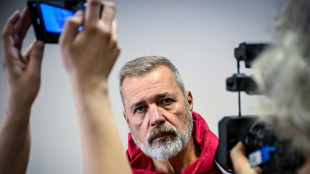 Novaya Gazeta closure part of Russia's 'giant military campaign': Muratov to AFP

 US oil giants report profit surge again on Iran war

Before war broke out in Gaza, Mahmud al-Daoudi could never have imagined the radio sets gathering dust in his shop would be in such high demand, offering his customers a precious link with the outside world.
Power cuts have long been a part of everyday life, but the besieged territory's 2.4 million people are now enduring long blackouts after Israel cut off electricity and fuel supplies.
Its relentless assault has killed more than 19,450 Gazans, mostly women and children, according to the Hamas-run territory's health ministry.
Israel began its devastating air and ground offensive following the October 7 Hamas attacks, which killed around 1,140 people in southern Israel, according to an AFP tally based on Israeli figures.
It is now impossible to plug in computers or television sets, recharge phones or access the internet without generators or solar panels, a luxury few Gazans can afford.
But to keep up with the news, there's always the battery-powered radio.
"We had a full stock but we've been completely out of them since the first week" of the war, Daoudi said.
With the phone and internet cuts, "radio is the only way to find out what's going on," he said.
The long battery life is another plus, he said from his store in Rafah, at the southern end of the territory.
Before the war, a radio cost around 25 shekels ($7) -- now, they go for around 60 shekels ($16).
"We've even resold the broken radios people returned to us," the 33-year-old said.
When the radio sets disappeared from the shelves, customers asked for old telephones with built-in radios and torches, a welcome help when night falls.
"Now we're running out of phones," Daoudi told AFP.
- 'Moving backwards' -
It's impossible to order new stock, with only limited humanitarian aid trickling into the territory.
"People want to follow the news, hear where the shelling is taking place and find out about the fate of their families," said Hussein Abu Hashem, who has run out of radios at his shop too.
According to the UN, 1.9 million Palestinians have been displaced since the start of the war, around 85 percent of the population.
Many of them are now living in makeshift camps in the south of the territory where they lack basic supplies.
"I don't know what's happening around us, where the strikes are, which houses are targeted, who's alive, who the martyrs are," Umm Ibrahim told AFP in the southern city of Khan Yunis.
"We want to receive news from anywhere in Gaza," she said.
"When my battery runs out, I walk around the camp and listen out for other people's radios."
Stations such as BBC Arabic and Al Jazeera have launched special channels to help keep displaced people up to date with the news.
Some Gazans, like 75-year-old Hebrew-speaker Mohammed Hassouna, manage to pick up the news from Israeli radio stations.
He said it allows him to keep up with the latest "from the Israeli side".
"I keep my children and neighbours informed," he said.
Outside his tent, Salah Zorob, 37, spends his time flicking through radio stations on his mobile phone.
"The world is moving forward with modern technology but here in Gaza we're moving backwards," he said.
"They're going to take us back to the Stone Age."
D.Bachmann--VB