'We have to endure' - Argentines stoic as prices skyrocket / Photo: © AFP

 Maresca says it's a 'privilege' to succeed Guardiola at Man City
 Dutchman van Bommel appointed new Belgium football coach

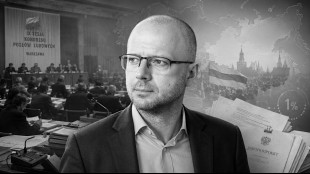
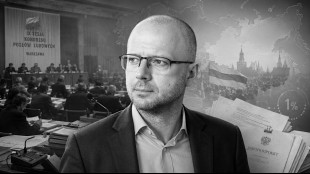
 Russia after Putin: The ‘parliament with a one-per-cent chance’
 Two wildfires merge near Madrid, 19,000 evacuated or confined
 Peaty begins quest for more Commonwealth gold, Aussie swimmers set for bonus
 US singer Chris Brown admits new affray charge, avoids UK trial
 MEXC Expands Ondo Tokenized Stock Offerings with AI Infrastructure and Mining Assets

 At least 17 killed in Russian and Ukrainian long-range strikes
 Wildberries: Russia's Amazon that became a target for Kyiv
 Oil prices retreat after surge, as stock markets diverge
 Volkswagen profits skid on one-off costs, China competition

 Spain coach blasts 'unacceptable' behaviour of Argentina after World Cup final
 India's youth-led 'Cockroach' movement holds new round of talks with govt
 Some 40,000 people evacuated due to wildfire in southwest France: minister

 Philippines says ship hit by Chinese water cannon at disputed reef
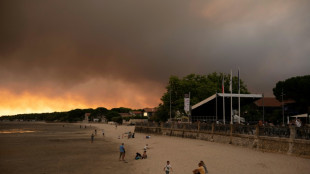 Fires in Europe: latest developments
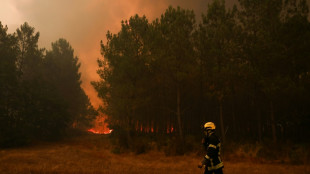
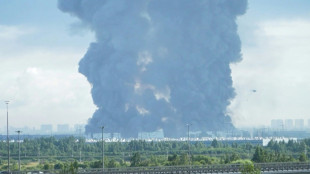 Ukraine hits 'Russia's Amazon' warehouses outside St Petersburg

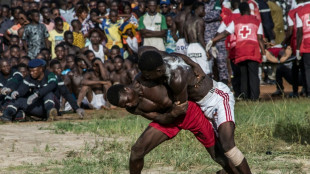 Wrestling to become a man in Togo's ancestral rite of passage
 WAFCON favourites Nigeria eye World Cup slot and record prize money

 Socceroos star Volpato allegedly tests positive for cocaine
 Ukraine drone attack hits 'Russia's Amazon' warehouse
 US imposes new tariffs on 60 partners as Trump rebuilds trade agenda
 Stocks suffer fresh blow as markets hit by perfect storm
 Trump under pressure from all sides over Chinese AI surge
 ICC member states decide fate of embattled prosecutor Karim Khan
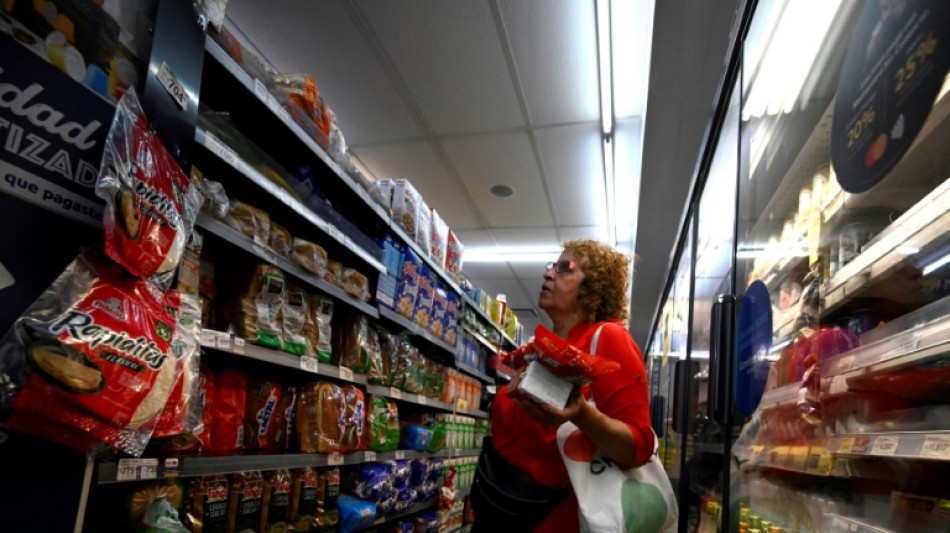
Maria Mamani carries a fistful of new price stickers around a supermarket after Argentina's government slashed the value of the peso in half as part of "shock" therapy to the ailing economy.
"After the measures put in place by the government, we are increasing prices," she told AFP, as annual inflation hit 160 percent Wednesday.
"Many things are starting to skyrocket and unfortunately that can last six to 12 months," she said.
Miguel, the manager of another shop who did not want to give his surname, said price increases ranged from 20 to 60 percent, with some goods even doubling in value.
"We have to pass it on to the client. There is no other choice. Next week it will go up again," he said.
President Javier Milei, with three days on the job, has warned the country's economic crisis is likely to get worse before it gets better.
His government on Tuesday unveiled a raft of measures to revive an economy that spokesman Manual Adorni said was "in intensive therapy on the point of death."
These range from the devaluation of the strictly controlled peso to a cut in generous transport and fuel subsidies. New public construction projects have been halted and all government advertising pulled.
The goal is to slash 25 billion dollars in spending, five percent of the country's GDP, in a bid to turn around a chronic fiscal deficit in Latin America's third-biggest economy.
- 'Some really rough months' -
Argentines, while worried, appear resigned to a fate Milei warned them of when he took to the campaign trail with a powered-up chainsaw to symbolize the cuts he planned to make.
"Obviously it's going to be complicated for everyone because we can barely make ends meet," said student Camila Heig, 18, who said she has three jobs.
"We're going to have to endure some really rough months and trust that the country will be better."
At a teeming bus stop in the capital, passengers wait in the sticky heat for a subsidized trip that currently costs them 52 pesos (0.065 dollar cents).
Argentina boasts a vast and efficient public transport network, from buses to the underground Subte, and users are bracing for the impact on their pockets as the government eases subsidies from January.
"I was angry about the increase, but sooner or later it had to happen," said Sebastian Medina, 48, a postal worker waiting for his bus.
"I read on the internet (the ticket) could be around 700 pesos. But no one has said anything.
"We are already used to crises, even if it will be more complicated," Medina said of the coming months.
"You have to have hope."
Another passenger Ryan Jimenez, 27, a car salesman, said an increase in the price of a bus ticket was going to "affect Argentines a lot" but that he agreed with the new government's measures.
"We knew it was coming," he said.
- 'Dynamite purchasing power' -
Milei won a resounding election victory in November surfing a wave of fury over decades of recurrent economic crises, marked by debt, rampant money printing, inflation and fiscal deficit.
His new government has repeated loudly and often that the country is on the brink of hyperinflation as a result of mismanagement by its predecessors, and is completely "out of money."
However, in line with his promise to maintain welfare to the poorest, his government increased a child allowance and food card by 50 percent.
While the International Monetary Fund (IMF) welcomed the belt-tightening measures, the main General Confederation of Labor union slammed austerity moves it said "fall on the people."
The CGT said the cuts would "put millions of Argentines in a desperate socio-economc situation" and "dynamite the purchasing power" of workers.
Milei is facing his first challenge from the street with annual protests due next week to mark the country's economic meltdown in 2001, when rioting and looting led to about 40 deaths.
Not everyone is able to stay resilient.
"I am scared of the cost of bus tickets rising," said 66-year-old Rosa Cabanillas, who uses the transport to "travel around and go to the doctor."
"It doesn't seem right."
F.Mueller--VB