At UN climate talks, no consensus on what consensus is / Photo: © AFP

 UK PM 'open' to slavery apology but not reparations

 Kimono-clad pets blessed at Japan festival lacking enough kids

 Hakimi bags hat-trick as PSG rip Le Havre to pieces

 In-form Fernandez sets up Tokyo final against Russia's Shnaider

 Scam centres relocated from Cambodia operate in Madagascar

 Marc Marquez on front row at Malaysian MotoGP as Martin ruled out

 Injured Martin out of Malaysian MotoGP in big title blow
 US, S.Korea, Japan vow 'complete' N.Korea denuclearization

 Nations commit to get nature goals back on track

 US oil companies aim to squeeze more out of refineries

 Leclerc quickest in Mexico GP practice
 Polish riot police deployed as deposed court chief sets off crisis

 Young Canadians focus on mental health at key climate trial
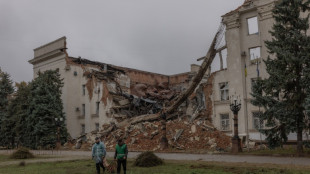 'Breath of fresh air' truce brings hope to Ukraine's ravaged Kherson

 British king reflects on colonial atrocities in Guyana

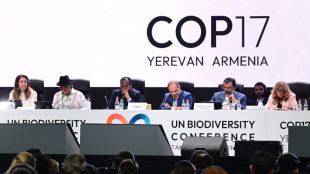 Nations agree crucial texts in overtime at UN nature summit

 NBA Trail Blazers lose guard Morant for four weeks
 UN nature summit in extra time as nations grapple for deal
 Complaints upheld against Swiss TV commentary on Israeli bobsleigher

 Tielemans glad Man Utd sticking with Carrick

 Scottish police probe Andrew, Epstein stay at royal castle: UK media
 Medvedev into Vienna semis and books ATP Finals place

 UN nature talks in extra time as nations struggle to reach deal

 Meta settles, leaving Snap sole defendant in new social media trial

 Chelsea manager Alonso dismisses talk of Estevao loan deal

The world's climate negotiators meeting in Dubai have spent sleepless nights in an elusive quest for consensus, but there is no consensus on what consensus means.
The United Arab Emirates, citing the need in the UN process for consensus, in a draft agreement for the COP28 summit stopped short of backing historic calls for a "phase-out" of fossil fuels.
Saudi Arabia, the world's largest oil exporter, has led objections to strong action against fossil fuels, the main culprit behind the planet's climate crisis.
But COP, as the annual Conference of the Parties meetings are called, takes no votes and there is no requirement of unanimity.
"It's a matter of interpretation," said Alden Meyer, a veteran watcher of climate negotiations at the E3G climate think tank.
He recalled that Saudi Arabia and Kuwait objected during the original United Nations vote in 1992 that established the UN Framework Convention on Climate Change (UNFCCC) but the session president, from France, simply brought the gavel down.
Ever since, Saudi Arabia has blocked a proposed rule that would allow decisions by a two-thirds majority if there is no consensus.
In 2012 in Doha, host Qatar ignored a request by Russia to take to the floor with concerns related to the landmark Kyoto Protocol, prompting Moscow angrily to hold up work in talks the following year, Meyer said.
A UNFCCC official said that any objections needed to be "explicit" for there to be no consensus.
- Ignoring dissent -
One of the most successful summits took place in Paris in 2015 with an agreement for countries to seek to limit warming to within 1.5 degrees (2.7 Fahrenheit) from pre-industrial levels.
But the delegate from Nicaragua initially refused to sign on, leading to an extraordinary pressure campaign on the small, single country that reportedly involved intervention by Pope Francis.
Laurent Fabius, then France's foreign minister and COP21 president, said: "I can no long recall whether it was me myself or via the pope, but we inquired to know if he was really representative" of Nicaragua's government position.
"The reply was no and that gave us more freedom," Fabius said.
Objections from Latin American leftists were more successful in the outcome of one of the most anticipated COPs, the 2009 summit in Copenhagen.
In a scene that stunned the sleep-deprived room, the Venezuelan representative, Claudia Salerno, raised her hand with a stigmata-like bloody palm, saying she was speaking on behalf of countries ignored by a deal brokered by US president Barack Obama with other major powers including China.
Denmark's prime minister, Lars Lokke Rasmussen, was ready to give up and declare the summit a failure, until the United States and Britain quickly asked for a break and Rasmussen came back to declare the agreement "noted" rather than approved or rejected.
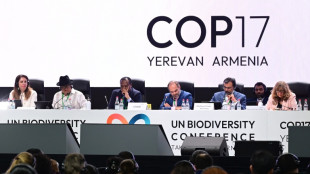
In a parallel COP process, biodiversity talks in Montreal last year reached a major agreement on protecting species when the Chinese president of the meeting ignored objections by the Democratic Republic of Congo, which sought greater assistance from wealthy countries.
In Dubai, it remains to be seen if the Emirati president would brush aside the interests of Saudi Arabia, his country's larger neighbour and fellow oil producer.
Fellow Arab oil producers Kuwait, Iraq and Bahrain have also raised objections to phasing out fossil fuels.
"It comes down to the judgment of the presidency," Meyer said. "Ultimately it's more of a political question."
T.Germann--VB