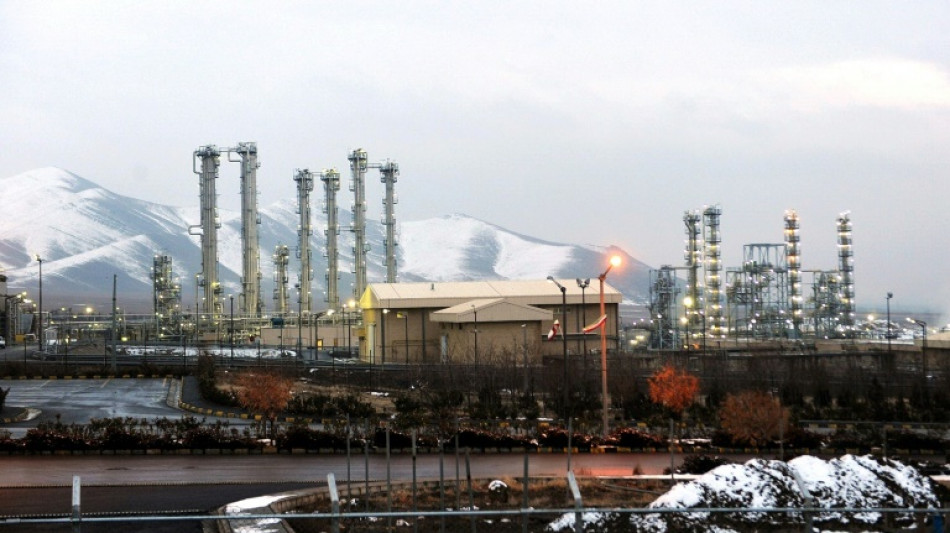
British-Iranians release helped by nuclear talks, Ukraine: analysts / Photo: ©

 Arteta coy over Lewis-Skelly's Arsenal future after 'emotional' celebration
 Romania shuts down nuclear plant as Danube drops

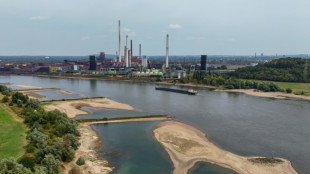 German steel giant Thyssenkrupp weighs options as Rhine drops

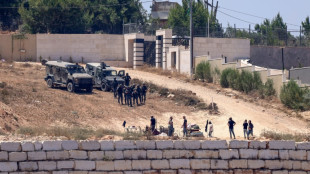 US ambassador denounces settler siege as Israel dispatches troops
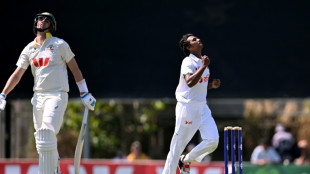
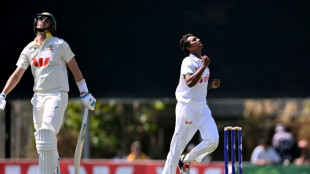 Hasan takes 6-55 as Bangladesh claim opening day of Australia Test

 Taiwan says AI agents used in cyberattacks targeting island

 Japan protests Putin's first visit to disputed islands
 Kiss wants fit-again Wallabies playmaker Gordon to 'open up' Japan

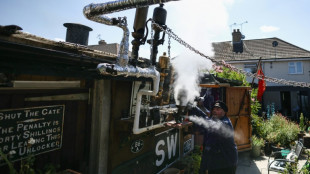 British eccentrics push humble garden shed to new heights
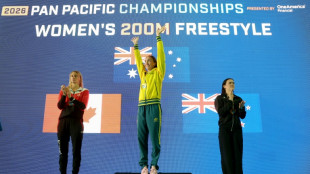
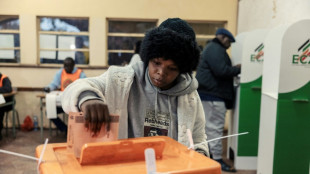 Zambia votes with president's economic record on the line
 Germany's dry rivers spark battle on engineering vs restoration
 Senators demand inquiry into conditions aboard USS Abraham Lincoln

 All Blacks' Proctor out of South Africa series, Mo'unga called up

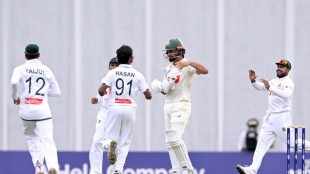 Bangladesh quick Hasan reduces Australia to 74-4 at lunch
 Seoul tech leads Asian stock gains as traders cheer US inflation
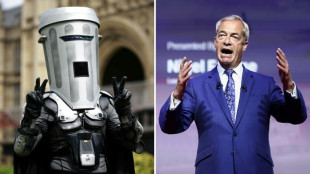 Farage and Count Binface go head-to-head in snap UK poll
 Afghan students divided over smartphone ban at universities
 Japan go back to school for second Australia Test
 Matthew McConaughey on his sweet return to the big screen

 President's economic record on the line as Zambia votes
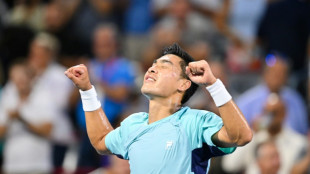
 U.S. Polo Assn. Takes No. 1 Spot for All Sports Brands and Climbs to No. 22 Overall on License Global's 2026 'Top Global Licensors' Ranking

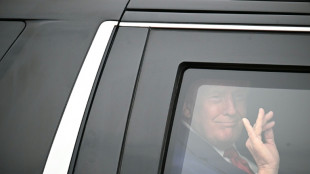 Trump 'low-key' bets on economic pressure against Iran
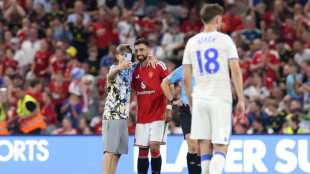 Pitch invaders take selfies with Fernandes during Man Utd friendly
 No-stress Sabalenka won't fret over lackluster 2026 results
 Hometown hero Hudson-Smith basks in Euro glory
The deal to release British-Iranian detainees was given vital impetus by nuclear talks in Vienna and the West's evolving energy needs in the face of Russia's war in Ukraine, analysts said on Thursday.
Tehran's high-profile release of Nazanin Zaghari-Ratcliffe and Anoosheh Ashoori on Wednesday came as the UK paid nearly £400 million ($523 million, 474 million euros) to settle a debt dating back to the 1970s amid sign of a potential thaw in Iran's relations with the West.
At the same time, talks in Vienna to renew a 2015 pact with Iran to relieve sanctions in exchange for curbs on Tehran's nuclear programme "made this deal possible", said Ali Vaez, Iran analyst with the International Crisis Group.
"Without it, it was hard to imagine that, when Iran and the West are at daggers drawn, these kind of deals could take place," he told AFP.
"This was purely a bilateral problem between Iran and the UK... but (a deal) was only possible in the broader context of constructive engagement.
"In fact a lot of stars would have to align for an agreement like this to be executed."
The detainee-debt deal required regional cooperation, including with Oman where the UK debt payment is being held, and "there was a need for a US greenlight and there was a need for constructive engagement between Iran and the UK," Vaez said.
Allan Hassaniyan, from the University of Exeter's Institute of Arab and Islamic Studies, said the Shah-era debt paid by London will be particularly useful in sanctions-hit Iran.
Tehran is "quite desperate" to access funds, Hassaniyan told AFP.
"It's a matter of desperation but it's also a window for Iran to operate differently," he said.
Russia's invasion of Ukraine "has provided Iran with a new opportunity because the West is very desperate for access to new energy resources in the absence of Russia."
By releasing the two detainees, the Iranians are "sending a signal that they want to commit into this new international system".
- 'Pragmatic policy' -
Iran expert Seyed Ali Alavi from London's SOAS said the deal signifies a change in British strategy rather than from Iran, which has always simply wanted the debt repaid.
The UK government has said it could not repay the debt because of US-led sanctions, but Alavi said that when the first nuclear deal was signed in 2015, sanctions were removed and the UK government could then have legally repaid.
"This should have been sorted out ages ago... The moment Britain decided to pursue a pragmatic policy, then immediately we did see the result in this regard," he told AFP.
"The war in Ukraine, and the shock in the energy market might be a wake up call for us, in the UK and in the West, that there is a country called Iran that is very rich in terms of oil and gas," said Alavi.
The ICG's Vaez said that when, as now seems likely, a new nuclear deal is inked, "there will be a psychological impact on the oil market in anticipation of Iran's return".
"And when additional Iranian oil exports eventually hit the market, the prices will come down."
The irony is that while Iran has bigger gas reserves than Russia, it cannot export them as its gas fields are underdeveloped because of Western sanctions.
"I think this is one of the short-sighted Western policies towards Iran over the past two decades as a result of sanctions -- Europe deprived itself of an alternative to Russian gas," said Vaez.
L.Janezki--BTB