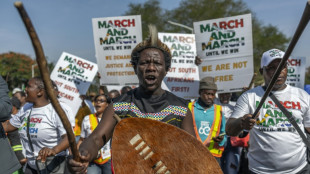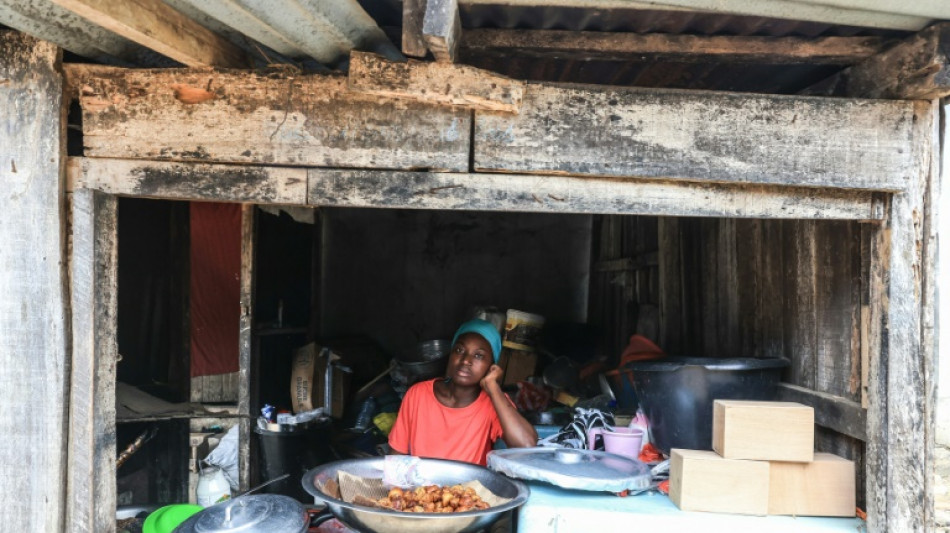
Gabon's squandered oil wealth under 55 years of Bongo rule / Photo: © AFP/File

 UK TV comedy star and naturalist Bill Oddie dies at 85
 AstraZeneca profit rises on strong cancer drug sales
 Olympic triathlon champ Beaugrand to sit out European athletics
 Spain races to contain blazes before temperatures rise
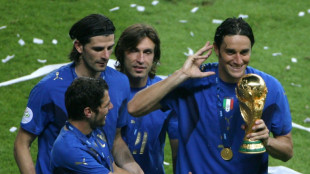 Pirlo bitter over debate that cost him Italy coaching job
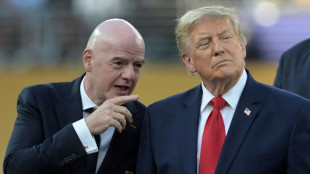 Infantino slams World Cup critics for 'spreading hate'
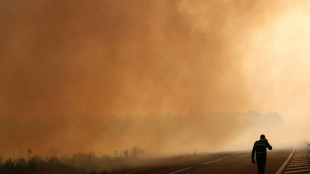 France, Spain race to contain 'monster' fires ahead of new heatwave
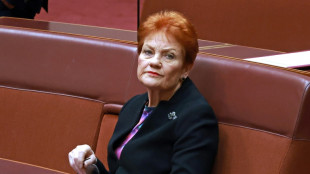
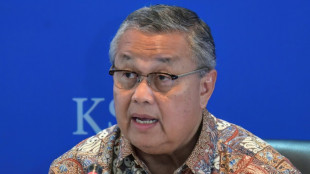 Indonesia bank chief quits, adding uncertainty to struggling economy
 Vita Hydrokultur Opens £1.5m Series A Round to Scale Plant-Grown Skincare Ingredients
 Chinese chipmaker CXMT soars 500% on debut as AI fuels shortages
 Alonso says 'great signing' Rogers can rejuvenate Chelsea
 Oil prices sink as US-Iran pause fuels fresh Hormuz hopes
 Indonesia central bank chief steps down early: govt
 Gaza teen triumphs despite war, loss and displacement
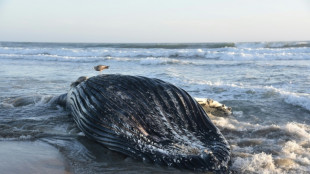 Whales at risk, hungry pelicans: Marine heat wave hits California

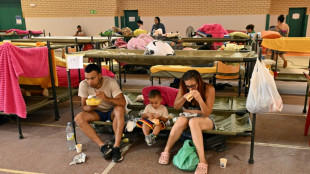 With minutes to flee, Spain fire evacuees grab what they can
 Ioane, Holland back for All Blacks' blockbuster South Africa tour

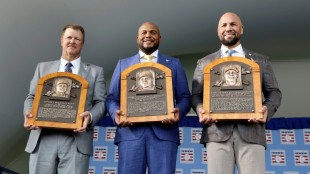 Beltran, Kent and Jones join Baseball Hall of Fame
 New pro Koivun holds off Scheffler to win PGA 3M Open

 Masood leads Pakistan to 199-3 against West Indies

 UK's Burnham to welcome Zelensky in first foreign leader visit
 Pogacar looking to enjoy 'small things' after 5th Tour de France win
 Ramsay-Peaty hatches 'battle plan' to bounce back from Commonwealth Games tears

 Lucas Museum to display unseen 'Star Wars' pieces, curator says
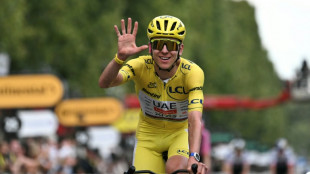
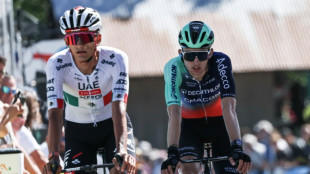 Del Toro, Seixas show glimpse into Tour de France future
The toppling of Ali Bongo Ondimba brought the curtain down on 55 years of rule by a family accused of extracting fabulous wealth from Gabon's major oil reserves.
Moments after being declared the winner in disputed elections, Bongo was abruptly ousted on August 30.
Many saw it as an act of liberation rather than a military coup.
Gabon, one of Africa's richest countries in terms of per-capita GDP, boasts abundant oil and other natural resources.
A small fraction of the 2.3 million population live opulently while a third survives below the poverty line, according to the World Bank.
Once known as "central Africa's little emirate", experts, military leaders, the former opposition and even some within the ex-ruling party agree that more than half a century of Bongo rule marked a huge loss for Gabon.
- Run like 'a private property' -
In the affluent Libreville neighbourhood of Sabliere, many of the luxury villas belong to the extensive Bongo clan.
The distant suburbs, however, have no running water, little electricity and insanitary open sewers.
Ali Bongo, 64, who was seeking a third term in the election, took over when his father Omar died in 2009 after nearly 42 years in power.
"The big weakness of this regime was its bad distribution of wealth," Axel Auge, a sociologist specialising in central Africa, said.
Wealth was in the hands of just one fifth of the population -- the ruling elite, he said, adding there had been vast "mismanagement".
"Ali Bongo's mistake was to play down the economic and social frustrations of the population."
Thierry Vircoulon, from the French Institute of International Relations, described a kind of "family autocracy" with Gabon "managed like the private property of a family".
- Defunct schools, hospitals -
Travel from one town to another is virtually impossible due to the poor state of the roads.
There is only one private airline which operates several flights at prohibitive prices.
The sole train line is often out of bounds for passengers, monopolised and regularly damaged by constant heavily loaded trains carrying manganese.
Gabon is either the second or third biggest manganese producer depending on the mineral's concentration.
Used in steelmaking and batteries, the manganese is mined almost exclusively by a local subsidiary of France's Eramet group.
Public hospitals lack equipment and medicine and the school system is in ruins -- the new military rulers say the two issues are among their priorities.
Gabon has failed to develop a real production or manufacturing sector.
It lives off imports, including fruit and vegetables, despite plentiful rainfall and fertile land.
Independence from France in 1960 was followed by an oil boom but today, "the country is struggling to translate large natural wealth into sustainable and inclusive growth", the World Bank says.
Gabon has one of Africa's highest unemployment rates, with one fifth of the active population out of work, rising to a third for under-25s, the United Nations said in 2020.
Under Omar Bongo, a close ally of France, Gabon was a pillar of "Francafrique" -- a policy whereby Paris furthered its interests through cronyism.
- 'Ivory tower' -
French investigators in 2016 zeroed in on properties owned by Omar Bongo's family in France.
They suspected several of his relatives knowingly benefitted from a fraudulently acquired real-estate empire worth at least 85 million euros ($87 million).
Ten of Omar Bongo's 54 children have been charged with allegedly concealing the misappropriation of public funds, a Paris-based legal source told AFP.
As a sitting head of state, Ali Bongo had immunity.
The empire includes property in Paris and the Mediterranean resort of Nice, alongside a fleet of luxury cars.
An investigating judge last year determined that much of the money came from "undue commissions" paid by French energy giant Elf, now a part of TotalEnergies.
Omar Bongo's children also have properties in Britain and the United States, bequeathed or acquired after his death.
Nostalgia for life under the elder Bongo remains strong among a small number of Gabonese who hark back to when at least some oil revenues trickled down.
But that has since dried up.
His son enjoyed no such boon as oil revenue fell from 2014, experts and coup leaders say, noting Bongo was surrounded by "traitors" and "profiteers" while locked in an "ivory tower".
burs/emd/kjm/bp
G.Schmid--VB