China's allies lead Pacific criticism of Fukushima water release / Photo: © AFP

 Fritz takes 250th hardcourt win in ATP Washington opener

 US singer D4vd to stand trial in killing of teenage girl

 Sudan RSF leader 'unleashes' fighters after army gains in Kordofan

 Ramsay-Peaty to learn lessons for LA after missing out on Commonwealth gold

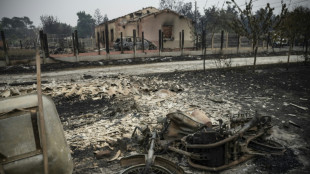
 Spain wildfire burns campsite to ash, leaving tears and despair

 'Thrilled' 76ers sign James with eyes on NBA title run
 Brazil's Amazonia theaters earn UNESCO World Heritage status

 Fury of fire-ravaged French village at being 'sacrificed' for millionaires' peninsula
 Border crossings shut as heavy snow coats Argentine Andes

 Singer Carly Simon diagnosed with Parkinson's: statement

 Burnham meets Zelensky, pledges new 'Stone Cloak' for Ukrainian drones
 Newcastle winger Barnes signs long-term contract extension
 Iran, US hold fire as Saudi Arabia intercepts drones
 Chad says will withdraw from the International Criminal Court

 UK funeral director faces jail over bodies left 'on racks'
 German authorities criticised after Pride attack

 Flooding forces residents to flee homes by boat in Pakistan

 Polish village puts faith in Europe's tallest Virgin Mary statue

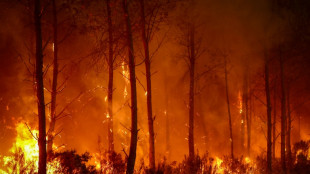
 Farmers help battle French forest inferno before new heatwave
 Heat, overcrowding, pushes Italian prison guard union to sue

 UK TV comedy star and naturalist Bill Oddie dies at 85

 AstraZeneca profit rises on strong cancer drug sales
 Olympic triathlon champ Beaugrand to sit out European athletics
 Spain races to contain blazes before temperatures rise

 Pirlo bitter over debate that cost him Italy coaching job

China's Pacific allies -- from Solomon Islands' government to Fiji's opposition -- on Friday echoed Beijing's criticism of Japan releasing wastewater from its disaster-hit Fukushima nuclear plant.
More than 500 Olympic swimming pools' worth of treated wastewater will be released into the Pacific over decades in a plan endorsed by the International Atomic Energy Agency.
But China has issued a furious response, and its allies in the Pacific have backed that criticism despite safety assurances from Japan and the IAEA.
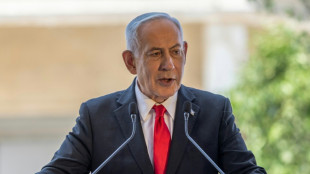
Solomons' Prime Minister Manasseh Sogavare -- who has delayed elections and scolded Western powers while embracing Beijing's chequebook diplomacy -- issued a "strong statement against Japan's decision".
The water release, he said, "has an impact on our people, ocean, economy and livelihood."
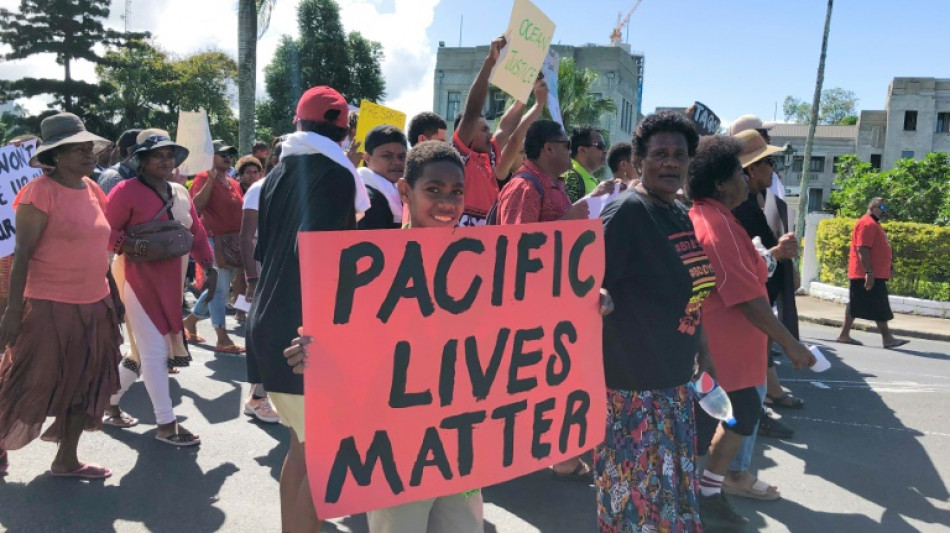
There was a similar message in the Fijian capital Suva on Friday, where a rare protest attracted hundreds.
Demonstrators carried placards saying "Nuclear-free sea!" and "Pacific Lives Matter".
The protest was promoted by FijiFirst, an opposition party whose leader, ousted prime minister Frank Bainimarama, courted closer ties with China while in office.
The party accused Fiji's government of "failing future generations by allowing Japan to dump its nuclear waste into our ocean".
Other leaders appeared convinced by the safety assessments.
"Japan has reassured the region that the water has been treated," said Cook Islands Prime Minister Mark Brown, who is currently chair of the Pacific Islands Forum, a regional bloc.
"I believe that the discharge meets international safety standards."
- An opening for Beijing -
China has repeatedly and strongly criticised the release plan, banned Japanese seafood imports and cast doubt on the expert assessments that concluded the operation poses no harm to the environment.
Nigel Marks, a physics professor at Australia's Curtin University, said the released water contains negligible amounts of radioactive tritium.
"The Pacific Ocean contains 8,400 grams of pure tritium, while Japan will release 0.06 grams of tritium every year," he said.
"The minuscule amount of extra radiation won't make the tiniest jot of difference."
Regardless of the science, the Fukushima release has created a political opening for Beijing, according to Mihai Sora, a former Australian diplomat who is now with the Lowy Institute in Sydney.
Japan has "done a lot of diplomacy to win over as many Pacific leaders as they can", he said, but "almost universally this will be an unpopular decision among Pacific communities".
"You can imagine Beijing using its diplomatic access to encourage some of its partners to speak out about this strongly, because it serves Beijing's interests."
As well as fears about damaging vital fish supplies and sensitive marine ecosystems, the Fukushima water release has caused disquiet in a region where nuclear issues are highly sensitive.
For decades, major powers including the United States, Britain and France used the sparsely populated South Pacific to test atomic weapons -- with consequences that linger to this day.
H.Seidel--BTB