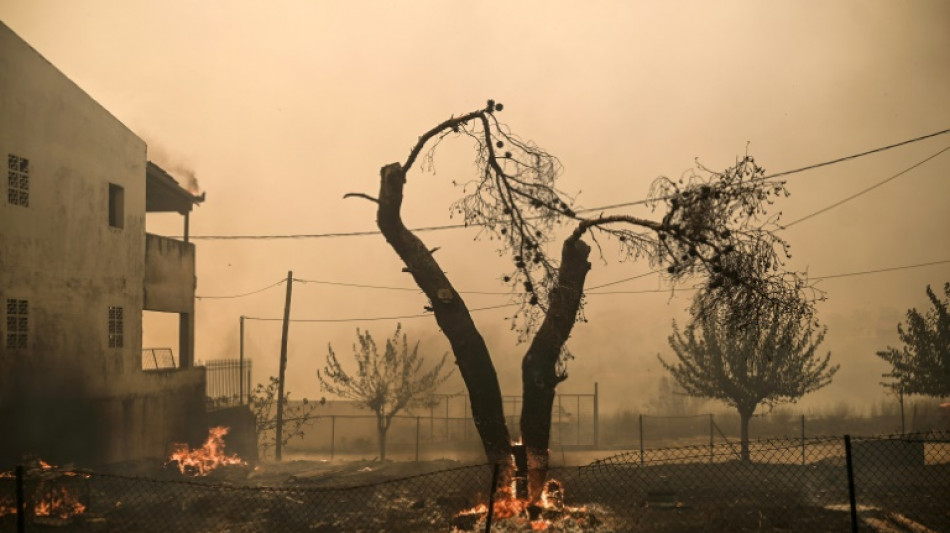
Climate change could bring year-round heatwaves: UN researcher / Photo: © AFP

 Netanyahu heads to US for first Trump meeting since Iran war

 Documentary on Stan Lee's final years faced industry opposition, filmmaker says

 Fritz takes 250th hardcourt win in ATP Washington opener

 US singer D4vd to stand trial in killing of teenage girl

 Sudan RSF leader 'unleashes' fighters after army gains in Kordofan

 Ramsay-Peaty to learn lessons for LA after missing out on Commonwealth gold

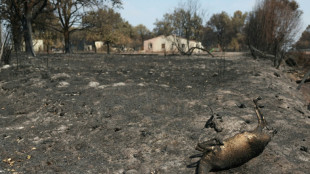
 Spain wildfire burns campsite to ash, leaving tears and despair

 'Thrilled' 76ers sign James with eyes on NBA title run

 Brazil's Amazonia theaters earn UNESCO World Heritage status

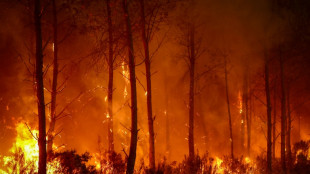
 Fury of fire-ravaged French village at being 'sacrificed' for millionaires' peninsula

 Border crossings shut as heavy snow coats Argentine Andes

 Singer Carly Simon diagnosed with Parkinson's: statement

 Burnham meets Zelensky, pledges new 'Stone Cloak' for Ukrainian drones
 Newcastle winger Barnes signs long-term contract extension
 Iran, US hold fire as Saudi Arabia intercepts drones

 Chad says will withdraw from the International Criminal Court

 UK funeral director faces jail over bodies left 'on racks'

 German authorities criticised after Pride attack

 Flooding forces residents to flee homes by boat in Pakistan

 Polish village puts faith in Europe's tallest Virgin Mary statue

 Farmers help battle French forest inferno before new heatwave
 Heat, overcrowding, pushes Italian prison guard union to sue

 UK TV comedy star and naturalist Bill Oddie dies at 85

 AstraZeneca profit rises on strong cancer drug sales

 Olympic triathlon champ Beaugrand to sit out European athletics
As Europe and other regions swelter, a UN researcher cautioned that climate change was enabling increasingly intense and long-lasting heatwaves, which in some areas could soon begin to hit year-round.
Extreme heat has dominated the headlines in recent weeks, from the current "heat dome" cooking much of Europe, to heat-fuelled wildfires raging in Greece, Spain, Canada and Hawaii, and soaring temperatures in the middle of the South American winter.
Heatwaves are beginning earlier, lasting longer and becoming more intense, John Nairn, a senior extreme heat advisor at the UN's World Meteorological Organization (WMO), told AFP in an interview.
"It's the most rapidly emerging consequence of global warming that we are seeing in the weather systems," he said, stressing that this was in line with scientific predictions.
"People are far too relaxed about the signs," he lamented.
"The science has been saying this is coming your way. And this is not where it stops."
"It will only get more intense and more frequent."
- 'Parked' heat -
One reason, he explained, was that global warming appears to be leading to a weakening of the global jet streams -- air that flows high in the Earth's atmosphere.
As the jet stream waves grow slower and wavier, they allow weather systems to "become parked" in one spot for longer.
"You can get a summertime situation where you get persistent heatwaves, and the heat just builds and builds and builds, because the wave is not moving on," Nairn said.
If you look at the planet as a whole, he said you could see that "these heatwaves are appearing in each of those same wavelengths around the globe".
"The slowing down and parking of the weather patterns is setting us up so that North America, parts of the Atlantic ocean, Europe and Asia are simultaneously sitting in the (wave) ridges, getting caught."
Heatwaves are among the deadliest natural hazards, with hundreds of thousands of people dying from preventable heat-related causes each year.
- 'More dangerous' -
Nairn called for the conversation around heat to become "smarter".
Among other things, he said, there should be far more focus on rising overnight minimum temperatures than on the maximum day temperatures that grab headlines.
Repeated high nighttime temperatures are particularly dangerous for human health, since the body is unable to recover from the heat it suffers through during the day.
Higher overnight temperatures also mean that the energy accumulated during the day has nowhere to go, pushing temperatures even higher the next day.
The fact that minimum temperatures are rising faster than maximums is thus pushing excess energy "into longer periods of higher temperatures", Nairn said.
"It's cumulative... So heatwaves are becoming much more dangerous."
And as the climate continues to change, the situation is due to get worse, Nairn said.
He voiced particular concern over the situation in the tropics and subtropics, pointing to the record heat seen in South America, with temperatures up towards 40 degrees Celsius in the middle of what is supposed to be their winter.
Looking forward, he cautioned that "we're going to see a lot more heatwaves across a much longer period of the year".
In the tropics and subtropics, "unfortunately, the indications are that severe and extreme heatwaves are likely to be able to occur anytime (of year) before the end of the century".
Less sunlight means year-round extreme heatwaves are not expected at other latitudes, but Nairn stressed that there too we will be seeing more "unseasonably warm periods" even in winter.
Asked what could be done to rein in the rampant heat, Nairn stressed that "all of us have the capabilities to actually turn this around".
"We need to electrify everything... and stop burning fossil fuels. It's not harder than that."
F.Müller--BTB