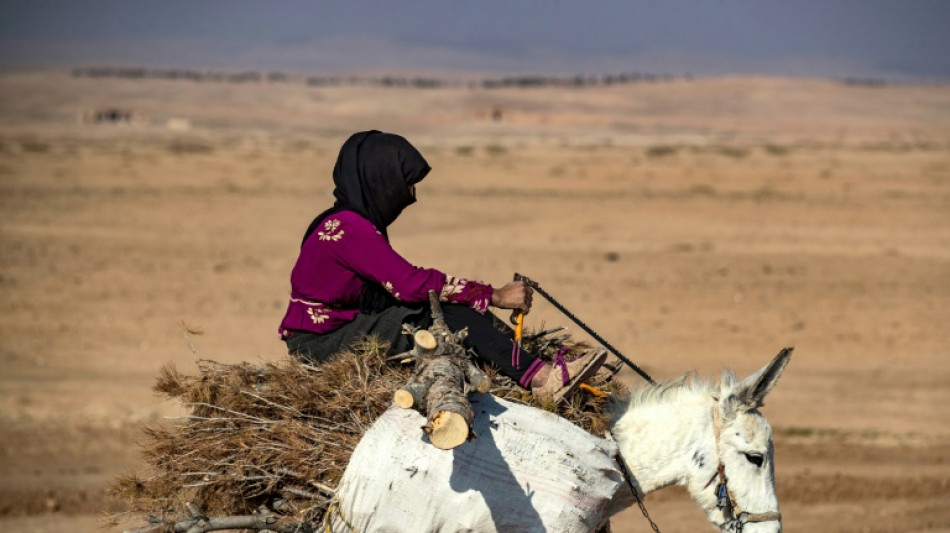
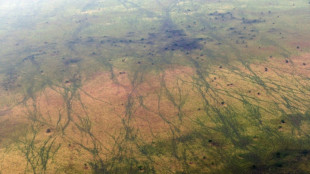
Illegal logging turns Syria's forests into 'barren land' / Photo: © AFP

 Myanmar approves death sentence for cyberscam offences

 Spurs' Maddison says De Zerbi is the right coach for his game

 Fritz takes 250th hardcourt win in Washington, Draper pulls out
 'Appy marriages: AI helps hundreds of Japanese wed

 Netanyahu heads to US for first Trump meeting since Iran war
 Documentary on Stan Lee's final years faced industry opposition, filmmaker says

 Fritz takes 250th hardcourt win in ATP Washington opener

 US singer D4vd to stand trial in killing of teenage girl

 Sudan RSF leader 'unleashes' fighters after army gains in Kordofan
 Ramsay-Peaty to learn lessons for LA after missing out on Commonwealth gold

 Spain wildfire burns campsite to ash, leaving tears and despair

 'Thrilled' 76ers sign James with eyes on NBA title run
 Brazil's Amazonia theaters earn UNESCO World Heritage status

 Fury of fire-ravaged French village at being 'sacrificed' for millionaires' peninsula

 Border crossings shut as heavy snow coats Argentine Andes

 Singer Carly Simon diagnosed with Parkinson's: statement

 Burnham meets Zelensky, pledges new 'Stone Cloak' for Ukrainian drones
 Newcastle winger Barnes signs long-term contract extension
 Iran, US hold fire as Saudi Arabia intercepts drones
 Chad says will withdraw from the International Criminal Court
 UK funeral director faces jail over bodies left 'on racks'
 German authorities criticised after Pride attack

 Flooding forces residents to flee homes by boat in Pakistan

 Polish village puts faith in Europe's tallest Virgin Mary statue

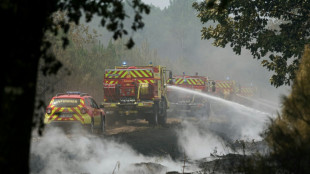 Farmers help battle French forest inferno before new heatwave
On a riverbank in war-ravaged Syria's north, felling has reduced what was once a lush forest to dispersed trees and decimated trunks poking out from dry, crumbly soil.
Twelve years of conflict that led to a spike in illegal logging, along with the effects of climate change and other factors, have eroded Syria's greenery.
The dwindling forest on the shores of the Euphrates river "is shrinking every year", said Ahmed al-Sheikh, 40, a supermarket owner in the village of Jaabar, in the Kurdish-held part of Syria's Raqa province.
Before, "the forest would attract tourists, birds, purify the air and protect the area from dust storms", he said.
But fuel shortages and rampant poverty during the war have pushed many Syrians to chop the trees to sell or use for heating, dealing a blow to the nature surrounding Jaabar.
Its ancient citadel had made the village a popular pre-war tourist attraction, with a reforestation project launched in the mid-1990s offering rare respite from the searing heat.
"Some people cut down the trees to sell them and earn money, others to keep warm during the winter," Sheikh said.
"If this goes on, desertification will follow."
Residents told AFP they hear loggers riding motorbikes into the forest at night to cut down trees.
Even in broad daylight, young men sneak into the woods to chop trees, evading the handful of forest guards patrolling the vast, green spaces.
- 'No shade left' -
Syria's war has killed more than 500,000 people and displaced millions.
It has also devastated the environment, triggering an "alarming" loss of forest cover across the country, Dutch peacebuilding group PAX warned in a report earlier this year.
The country has witnessed a "26-percent decrease in tree cover since 2000", according to data from Global Forest Watch.
Ten kilometres (six miles) from Jaabar, the same fate has befallen the trees of Tuwayhina.
"In my childhood, we used to come here with friends to sit under the shade of eucalyptus and pine trees," said Mohammed Ali, surrounded by tree trunks scattered across the sun-scorched earth.
"But now it is a barren land," said the 30-year-old nurse. "Now, there is no shade left, only the heat of the sun everywhere."
"The dust storms never stop, the lake is drying up and there are no trees left," Ali said, referring to Lake Assad, Syria's largest freshwater dam reservoir.
Water levels have dropped and pollution has worsened in the Euphrates and the reservoir it feeds, with the river's flow further impacted by upstream dams in Turkey.
Deforestation in Syria is largely attributed to logging and thinning for firewood, according to the PAX report.
"Soaring fuel prices combined with massive displacement form the main driver for large-scale deforestation throughout Syria," it said.
"Civilians are cutting down trees for cooking and heating, while there are clear indications that armed groups also use illegal logging and wood sales as a source of income."
- 'Blanket of greenery' -
The once-dense forests of Syria's west "have suffered the most degradation caused by the war", mostly from tree felling and wildfires, PAX said.
Latakia, Hama, Homs and Idlib provinces lost at least 36 percent of their trees in the decade following 2011, when the conflict erupted, according to PAX.
In the northeast, authorities have "no precise data" about the damage but its impact is "obvious", Ibrahim Asaad, who co-chairs the Kurdish semi-autonomous administration's environment body, told AFP.
The area was the country's breadbasket in pre-war times, but has witnessed severe droughts and reduced rainfall in recent years.
On the outskirts of Hasakeh, a city further east, the Mount Abdulaziz reserve has been plagued by dry spells and some illegal logging.
The trees had provided a "blanket of greenery", said Hussein Saleh al-Helou, a 65-year-old resident of the village of Al-Naseri.
But now "there is no water, the trees near the village have withered... and people have started cutting them", he told AFP, surrounded by vast barren lands and hills.
"Logging has had a huge impact on the village," Helou said.
"The temperature has risen, and the weather is not the same any more."
M.Ouellet--BTB