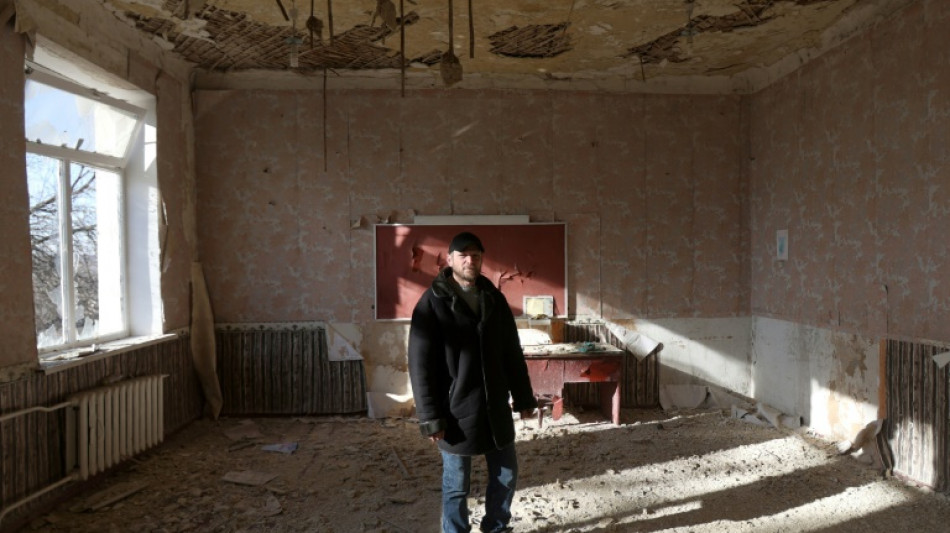
Teacher's home becomes school in destroyed Ukraine village / Photo: © AFP

 TRON DAO Joins Blockchain Application Stanford Summit at the Science of Blockchain Conference as a Sponsor
 Rockets, Starlink, AI: SpaceX faces its first Wall Street grilling
 After sparring over Ceuta, EU states seek lessons from crisis
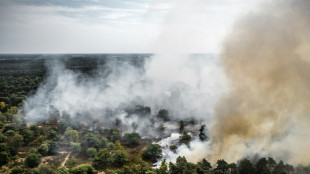 Forest fire spreads in Dutch nature reserve
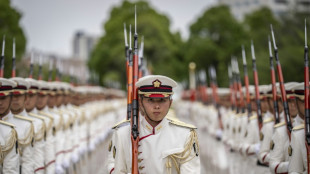 Japan sees 'urgent' need to boost military

 Myanmar ex-junta chief set for first Thailand visit as civilian leader
 New Zealand hooker Bell out of South Africa tour with calf strain
 Trump attorney general pick looks set to clear US Senate hurdle
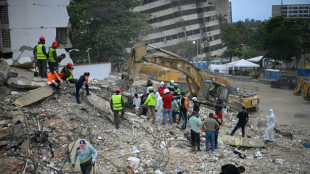 Death toll from Venezuela quakes rises past 6,000
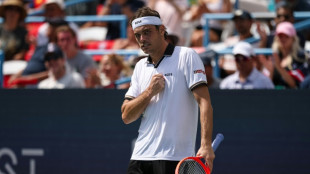
 Shafique, Babar lead strong Pakistan reply against West Indies

 Defending champ Shelton finding tournament sweet spot in Montreal
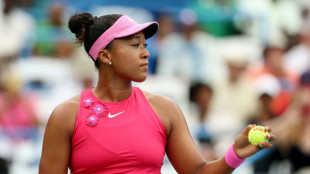
 Democratic-led US states sue in latest challenge to Trump's tariffs
 Trump says Iran facing 'last chance before decapitation'
 US northwest battles wildfires after Spokane neighborhoods scorched
 Iran denies negotiating with US, drawing Trump backlash

 Key dates for the Boeing 737 MAX

 Israel objects to US-backed Gaza plan, defiant on pullout
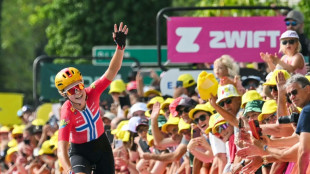 Norway's Haugset wins stage 3 to claim Tour de France Femmes lead
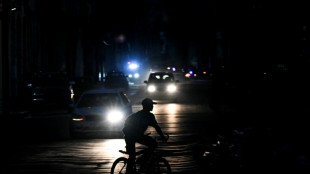 Cuba slowly regains power after latest nationwide blackout

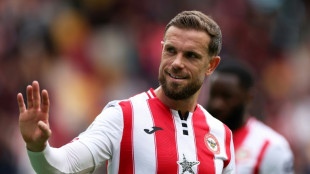 Chelsea sign England midfielder Jordan Henderson
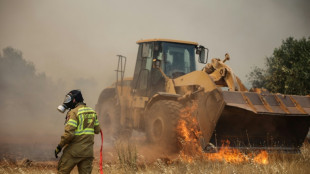 Wildfire flares up again in Greece as water bombers deployed
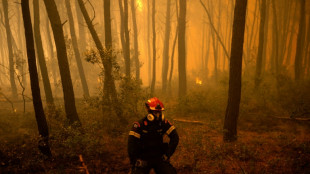 Greece wildfire expert says season 'one of the worst' in a decade
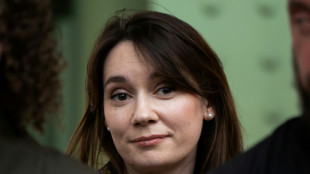
 Sandoz strikes US settlements to resolve generic drug price dispute
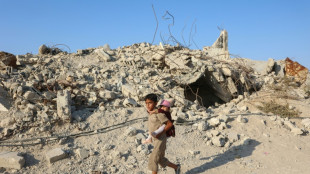 Israel conveys 'concerns' to US on Gaza plan, keeps up strikes on territory
 Inside Capital Regency's Market Expansion and User Acquisition
Teacher Oleksandr Pogoryelov occasionally strolls up the sloping road to the school in his village in the eastern Donetsk region of Ukraine where he taught for more than two decades.
But instead of pupils and colleagues filling the brightly-coloured classrooms with lessons, discipline and chatter, there is now only quiet ruin.
The school building was destroyed in April when the hamlet and the surrounding industrial region became the frontline between Russian and Ukrainian forces.
Now, the 45-year-old only returns to the school to gather materials that survived the shelling to teach the handful of children who remain from a makeshift classroom in his living room.
"What can a teacher feel when you see that everything is destroyed?" Pogoryelov said, standing outside the schoolhouse, split open by blasts like dozens of other buildings in the village where he grew up.
The school was one of hundreds across Ukraine that the United Nations children's agency UNICEF says have been damaged or destroyed since Russia invaded in February.
Russia has claimed that Ukraine's forces use civilian infrastructure to shelter troops and store ammunition. It says its forces do not attack schools or residential buildings.
Ukraine denies those claims, pointing to attacks like those in Shandrygolove.
Millions of children in Ukraine and abroad now rely on online and distance learning, according to UNICEF.
But the small village -- now emptied of almost all its former 1,000 residents and all but 15 children -- has no electricity, let alone internet.
That poses a challenge for Pogoryelov, who is unable to supplement lessons with online content or have students connect remotely.
But he thinks "it's better to provide lessons in person".
"A doctor has to treat patients and a teacher has to teach children," he said.
"When the school was destroyed, I decided to provide lessons for pupils at home, so they can interact."
- 'I only teach Ukrainian' -
Every day, a handful of students gather in the living room of Pogoryelov and his wife Larisa's home, working by a column of light from the kitchen window.
Cats curl around each other next to the wood-burning stove and ducks quack in the yard.
The walls of the living room are lined with posters recovered from the school building, showing the Ukrainian alphabet and syntax.
In the corner sits a microscope the pupils have used to examine cells for a biology lesson. Books, some pulled from a cellar near the schoolhouse where they were stored amid the fighting, are stacked on shelves.
Pogoryelov instructs 11 students aged from four to 16 in Ukrainian language and literature, world literature, biology, geography and mathematics.
"In the higher grades it would be hard for me to teach mathematics -- I would have to teach myself the material first," he said with a laugh.
Russian language and literature used to be in the curriculum but not anymore.
Asked why, he simply said: "I don't know. I only teach Ukrainian language and literature now."
Parents have been supportive, he said, but the village is emblematic of tensions in many communities in the Donetsk region, where pro-Russian separatists had been fighting Ukrainian forces for years.
The roughly 120 pupils who once attended the village's school are now spread out between Europe, other parts of Ukraine and Russia.
"I can't speak for others. Everyone has his or her own views," said Pogoryelov of the conflict.
"I can't even speak for myself right now. I'm not sure of my own thoughts, let alone those of anyone else."
The five youngsters in class on Tuesday, who spoke a mix of Ukrainian and Russian, all quickly declared "Ukrainian language and literature" were their favourite subjects.
- Hopes for the future -
Their village was retaken by Ukrainian forces in September last year, but the war is still ever-present.
Oleksandr, 15, travels three kilometres (about two miles) to get to class. He makes sure to only walk on paved roads.
"I'm afraid of stepping on a mine and being blown up," he said.
His neighbour and classmate Dmytro added darkly that in a nearby village two people recently activated a booby trap walking in the forest.
"And that was it," he said.
Pogoryelov hopes some normality will return to the village, with funding secured to rebuild the school.
But for now, he is the only teacher helping to the children attain their goals.
Oleksandr wants to be a police officer while another pupil, 13-year-old Daria, hopes to work in a bank. Pogoryelov worries for their futures.
"I wouldn't be doing this if I didn't worry," he said.
F.Pavlenko--BTB