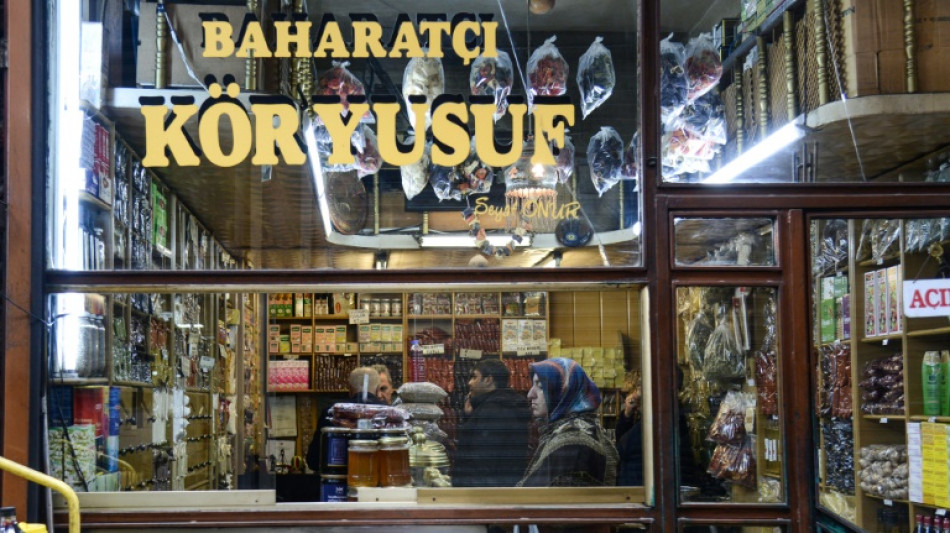
Joseph the Blind's healing balms for Turkey's troubled city / Photo: © AFP

 TRON DAO Joins Blockchain Application Stanford Summit at the Science of Blockchain Conference as a Sponsor

 Rockets, Starlink, AI: SpaceX faces its first Wall Street grilling
 After sparring over Ceuta, EU states seek lessons from crisis

 Forest fire spreads in Dutch nature reserve

 Japan sees 'urgent' need to boost military

 Myanmar ex-junta chief set for first Thailand visit as civilian leader

 New Zealand hooker Bell out of South Africa tour with calf strain
 Trump attorney general pick looks set to clear US Senate hurdle
 Death toll from Venezuela quakes rises past 6,000

 Shafique, Babar lead strong Pakistan reply against West Indies

 Defending champ Shelton finding tournament sweet spot in Montreal

 Democratic-led US states sue in latest challenge to Trump's tariffs

 Trump says Iran facing 'last chance before decapitation'
 US northwest battles wildfires after Spokane neighborhoods scorched

 Iran denies negotiating with US, drawing Trump backlash

 Key dates for the Boeing 737 MAX

 Israel objects to US-backed Gaza plan, defiant on pullout

 Norway's Haugset wins stage 3 to claim Tour de France Femmes lead
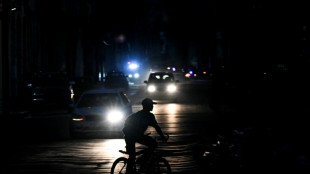 Cuba slowly regains power after latest nationwide blackout

 Chelsea sign England midfielder Jordan Henderson

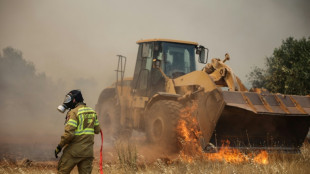 Wildfire flares up again in Greece as water bombers deployed
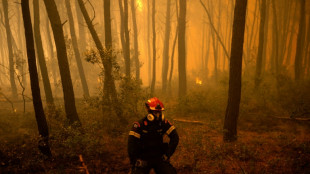 Greece wildfire expert says season 'one of the worst' in a decade

 Sandoz strikes US settlements to resolve generic drug price dispute

 Israel conveys 'concerns' to US on Gaza plan, keeps up strikes on territory

 Inside Capital Regency's Market Expansion and User Acquisition

The Kurdish herbalist reaches for a sachet as fragrant as a wild meadow, garnished with linden, rosehip, slivers of dried ginger, cinnamon stick and a touch of mystery.
It is the tea his mother, Haci Nahide, makes to fight flu and colds.
"It's the mixture she made for me when I was a kid. Winters were harsh," Suleyman Onur recalled with a smile, surrounded by hundreds of herbal teas, spices and aromatic herbs.
Each is bagged or tied in bouquets piled high on the shelves of the oldest herbal shop in Diyarbakir, a restless predominantly Kurdish city in Turkey's southeast, not far from Syria, Iraq and Iran.
The shop "Joseph the Blind" established in 1891 has kept the nickname of its founder, a Chaldean Catholic of the Syriac rite whose descendents moved to Istanbul in the 1950s, ceding the shop to Onur's parents.
Its black lacquered cabinet drawers are from that period but its walls are relatively new.
"The first store was destroyed in 1977," said Onur. The Turkish government of the time decided to open up the streets of the historic quarter to traffic, which once had to wind through a mesh of alleys hugging the ancient black basalt wall running along Diyarbakir's central Sur district.
The city centre had to be rebuilt yet again in the wake of violent clashes between Kurdish militants and government forces in 2015-16.
- Herbal treasures -
Now 57 years old, Onur no longer remembers the original shop.
When he took over with his brother Seyyaf after their father's death, the shop was already here, reinstalled in a new alley, far too cramped for its wealth of herbal treasures.
A window counter serves customers directly on the street, saving space for Onur -- belly tucked and shoulders hunched -- to scoot around piles of thyme and jars of chilli paste.
But the shopkeeper is expansive about the virtues of the potions made from the herbs collected around Diyarbakir.
The region, framed by mountains and bathed by two rivers that defined ancient Mesopotamia -- the Tigris and the Euphrates -- was attached to the Ottoman Empire in the 16th century.
Its granaries, along with those of Egypt, fed Ottoman armies in wars fought over the centuries against the Persian shahs and Russian tsars.
"Diyarbakir has rich flora thanks to its geographical location, geomorphologic structure and influence of various climate types," according to Alevcan Kaplan, a pharmacological botanist at Turkey's southeastern Batman University.
A study by his university of the region's medicinal plants discovered 406 species and 226 genera, 56 of which are endemic to the lands around Diyarbakir.
Many of them offer relief for respiratory, dental and urinary infections, as well as high blood pressure and stomach problems.
- 'Tested and proven' -
"We have our own pickers," Onur proudly explained, adding that he sells "nothing that has not been tested and proven" to work.
From morning to night the shop is bustling with activity.
Among the first customers, an elegant sexagenarian, sent by his wife, unfolded an impressive shopping list.
A young man walked in to ask about the price of saffron ($1,350 per kilo) and left shocked. Then an elderly woman waddled in to ask about a kidney problem.
The neighbourhood's young and impeccably dressed butcher, Hurrem Yalcin, came in to pick up spices for her sucuk -- a dry Turkish sausage.
"We come here because we trust them. They are the only ones who know our recipe," she laughed.
T.Bondarenko--BTB