'Total torture': Sick Ukrainians gasp for oxygen amid blackouts / Photo: © AFP

 BP profit soars as Mideast war roils energy prices

 Most stock markets gain, while oil prices edge up after plunge

 Most stock markets gain, while oil prices edge up after latest plunge
 Weak yen helps auto giant Toyota raise forecasts
 TRON DAO Joins Blockchain Application Stanford Summit at the Science of Blockchain Conference as a Sponsor

 Rockets, Starlink, AI: SpaceX faces its first Wall Street grilling
 After sparring over Ceuta, EU states seek lessons from crisis
 Forest fire spreads in Dutch nature reserve

 Japan sees 'urgent' need to boost military

 Myanmar ex-junta chief set for first Thailand visit as civilian leader
 New Zealand hooker Bell out of South Africa tour with calf strain

 Trump attorney general pick looks set to clear US Senate hurdle

 Death toll from Venezuela quakes rises past 6,000

 Shafique, Babar lead strong Pakistan reply against West Indies

 Defending champ Shelton finding tournament sweet spot in Montreal

 Democratic-led US states sue in latest challenge to Trump's tariffs
 Trump says Iran facing 'last chance before decapitation'
 US northwest battles wildfires after Spokane neighborhoods scorched
 Iran denies negotiating with US, drawing Trump backlash

 Key dates for the Boeing 737 MAX

 Israel objects to US-backed Gaza plan, defiant on pullout

 Norway's Haugset wins stage 3 to claim Tour de France Femmes lead

 Cuba slowly regains power after latest nationwide blackout

 Chelsea sign England midfielder Jordan Henderson
 Wildfire flares up again in Greece as water bombers deployed

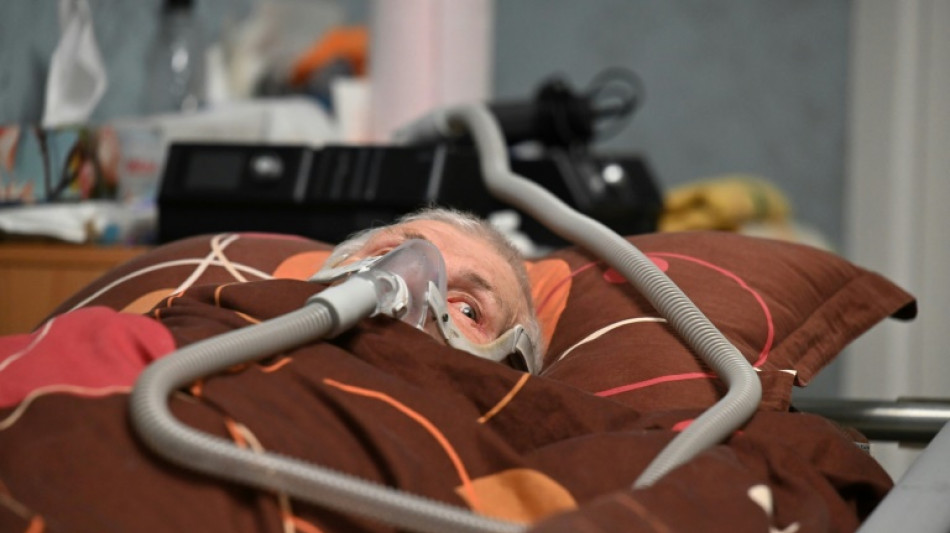
Valentyn Mozgovy cannot breathe on his own, and keeping his ventilator powered during Ukraine's blackouts has become a matter of life or death.
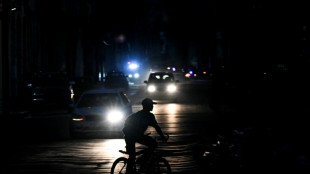
Regular power outages caused by Russian missile strikes have terrified tens of thousands of Ukrainians who rely on electricity to keep medical equipment running.
Mozgovy suffers from amyotrophic lateral sclerosis (ALS), a degenerative neurological condition that has left him paralysed and unable to breathe without assistance.
"He is alive, you see. That means I figured it out," his wife, Lyudmyla Mozgova, told AFP in their apartment in the capital Kyiv.
Next to her, her husband was wrapped in a patterned duvet in a medically adapted bed, his face barely visible under the ventilator.
The Mozgovys have come a long way since the first long blackout after the targeted wave of strikes on energy infrastructure began in October.
Valentyn had to breathe on his own for ten excruciating minutes.
"The way he breathed was scary... we had no clue what to do!" his wife said.
As the outages became the norm, the Mozgovys adapted.
"His body doesn't move, but his mind is very bright, he gives a lot of advice... he is our captain," she said.
She set up a power storage system and extra batteries for her husband's respiratory unit and medical mattress -- which regulates the pressure felt by bedridden patients.
- Constant anxiety -
However prepared they have tried to be, their situation is precarious.
"I wish there was a bit of stability, so we could understand when there will be electricity... to make a decision on how to cope."
Mozgova realises how lucky they are to be able to afford the equipment needed to keep her husband alive.
"It was very expensive, our children helped us... I don't even know what advice to give to those who don't have money," she said.
In Ukraine, tens of thousands need electricity to stay alive, explained Iryna Koshkina, executive director of the SVOYI charity that provides care to palliative patients.
"If all these people were suddenly unable to use their life-saving devices and went to the hospital at the same time, our medical system would simply break."
Tetyana Venglinska had no choice but to hospitalise her 75-year-old mother, Eva, after three months of exhausting outages.
Eva, who has been diagnosed with lung cancer, needs to be linked to a device delivering supplementary oxygen at all times, her daughter Tetyana explained, sitting on the corner of her mother's bed in a Kyiv hospice.
To ensure the oxygen concentrator's battery would last during the interminable outages at home, the family had to reduce the amount of oxygen it provided.
"For my mom, it was total torture," Venglinska said.
"Imagine cutting your oxygen intake three times."
- 'Drink to victory' -
The battery would last up to eight hours, which left the family in a constant state of anxiety.
"(My husband) was afraid to enter her room every time, he didn't know if my mom was alive... or if she had suffocated," Venglinska said.
On the night of December 17, the outage lasted more than 10 hours, longer than usual.
With all power sources exhausted and 40 minutes left on the respirator's battery, Tetyana called a private ambulance to hospitalise her mother.
The decision was a life-saver: Venglinska's home was without power for the next four days.
"She would have died for sure," Venglinska said.
Since then, Eva has spent most of her time at the clinic, tending to her bedridden mother.
Her husband remained in their flat, where he is taking care of her 85-year-old father.
"I want to go home as soon as possible," Venglinska said. "Our family is separated."
Back in the Mozgovy home, Lyudmyla is also hoping for better days.
"We will definitely drink to victory... Valentyn will do it his way, through a straw, and I'll pour myself one."
"And (the drink) won't be weak!" she laughs.
R.Adler--BTB