With weak lira, Turkey woos foreign firms / Photo: ©

 Iraola says Isak 'feels the trust' after Liverpool scoring streak
 French media protest manhandling of journalists at far-right party rally

 EU seeks deportation powers for beefed up border agency
 Two charged with UK security offences over airbase plot: police
 Maresca defends Donnarumma, Guehi after Man City defeat

 Nordic leaders call Putin as local truce begins in Ukraine
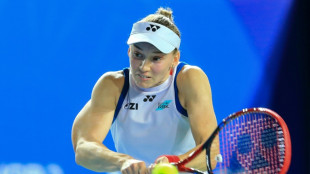
 Osaka unveils crane outfit in Tokyo before win over Paolini
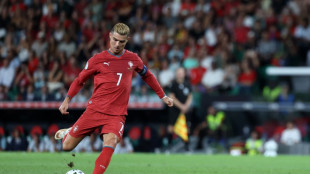 Ronaldo in line for Portugal return after fallout with coach

 Norway media take legal action to block Meta from using content
 Bayern praise 'humble' Kane after Ballon d'Or win
 Colts retain Daniel Jones as starter despite continued offensive struggles
 Madushanka wrecks Pakistan as Sri Lanka press for final slot
 Destructive Abhishek 113 leads India to series win over New Zealand
 Norway, Finland leaders hold 'frank and substantive' talk with Putin
 Wall Street faces earnings and Fed tests after turbulent technology-led week

 Ukraine, Russia say US-brokered truce holding in ravaged city

 Police form SIT after vehicles in Rahul Gandhi convoy collide on expressway

 Delhi grants minimum monthly pay and DA to about 4,000 MCD health workers
 Ather Energy shares climb 14% after quarterly profit and expansion plan

 Gold ETF flows turn negative after 13 weeks as bullion loses 4%

 Pakistan's last antique restorers give old treasures new life
 India braces for Cyclone Arnab with evacuations

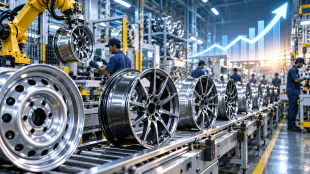 Steel Strips Wheels gains 36% in two sessions on growth outlook

 Cavs edge T'Wolves in overtime despite superb Edwards

 Prescott fires Cowboys to 38-21 win over plummeting Eagles

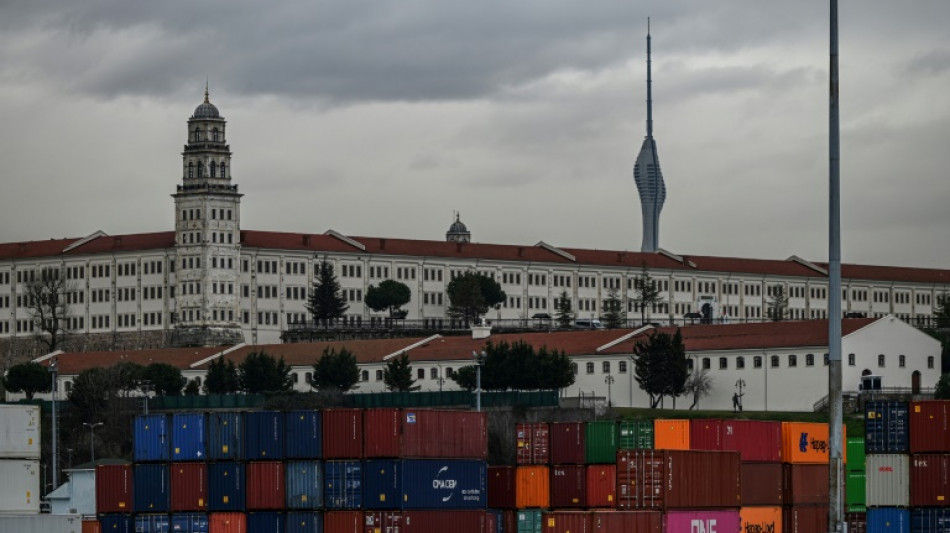
There is a silver lining to Turkey's currency crisis and the global supply chain crunch: The country is becoming an attractive alternative at the gates of Europe for foreign firms.
Turkey is seizing on its geographic advantage to woo companies as the skyrocketing cost of sea freight and pandemic-related disruptions to supply chains push some European companies to reduce their dependence on Asia.
President Recep Tayyip Erdogan, whose policies have contributed to the lira's plunge, has promoted a new slogan for exports: "Made in Turkiye", using the country's language instead of the internationally-known "Made in Turkey".
But his vision must overcome concerns about Ankara's complicated relationship with the European Union, the independence of the judiciary and political uncertainty ahead of elections next year.
Nevertheless, Turkey's exports reached a record $225.4 billion last year, with a target of $300 billion in 2023.
"Many international companies are taking action to supply more from Turkey," Burak Daglioglu, head of the Turkish presidency's investment office, told AFP.
He said the country offers automakers or textile companies a "competitive talent pool, sophisticated industrial competencies, well-developed services industries, perfect geographic location and state-of-the-art logistic infrastructure."
Ikea announced last year it wanted to move part of its production to Turkey.
The Italian clothing group Benetton told AFP it wants to "increase its production volumes in countries closer to Europe, including Turkey."
Peter Wolters, vice chairman of the Netherlands-Turkey Chamber of Commerce, said the business group received "requests from the household and garden sector, textile and fashion and also yacht building industry who search for new partners in Turkey".
- Soaring freight costs-
It has become extremely expensive to ship goods from Asia.
As a result of container shortages, the cost of freight between China and northern Europe has increased ninefold since February 2020, according to the Freightos Baltic Index.
While a cargo ship can take weeks to travel from Asia to Europe, Turkey is only three days away by truck.
A study by the McKinsey consulting group published in November placed Turkey in third position among countries with the best potential for textile supplies by 2025, behind Bangladesh and Vietnam but ahead of Indonesia and China.
"Apparel companies are also looking to change their sourcing-country mix... to secure the supply chain," the global report's authors wrote.
The report said Turkey offers "cheaper production costs due to a declining lira."
The lira has fallen by 44 percent against dollar since 2021 as the central bank -- prodded by Erdogan -- cut interest rates even though inflation was rising.
Turkey's new net minimum wage is now equivalent to $315 -- an amount barely higher than that of Malaysia.
Erdogan, who has been in power for two decades and seeks re-election in 2023, is betting on a weak lira to boost exports and growth, according to some observers, even if it destroys Turks' purchasing power.
- Europe, 'friend' and 'enemy'-
The collapse of the lira is also problematic for several industries due to the country's dependence on imports for energy and raw materials.
"It's not like Russia, for example, which has extensive raw materials," said Roger Kelly, leading regional economist covering Turkey and Russia at the European Bank for Reconstruction and Development.
He said Turkey also faces competition from countries within the EU.
"I don't think we should ignore those countries in southeast Europe like Romania or Bulgaria, which are actually in the EU -- which helps them to a certain degree -- and also have low production costs and strong production bases as well."
Erdal Yalcin, professor of international economics at Germany's Konstanz University of Applied Sciences, said uncertainty over Turkey's judiciary and institutions is also a concern.
"We don't see big investments, even though Turkey from a purely economic perspective would be the perfect place to bring production closer to Europe," Yalcin said.
Another issue is Turkey's difficult ties with the EU, with Yalcin noting that in the rhetoric of Turkish leaders, "one day Europe is a friendly nation, the other day it's an enemy".
He also pointed to Volkswagen's move to postpone the construction of a plant in Turkey after Ankara's Syria operation against a US-backed Kurdish militia in late 2019 before scrapping the plan during the coronavirus pandemic.
"As long as people are being killed, we are not laying the foundation stone next to a battlefield," VW CEO Herbert Diess said at the time.
For Yalcin, no big decisions will be taken by businesses before the 2023 election and "until this uncertainty about the political future of this country is resolved".
M.Ouellet--BTB