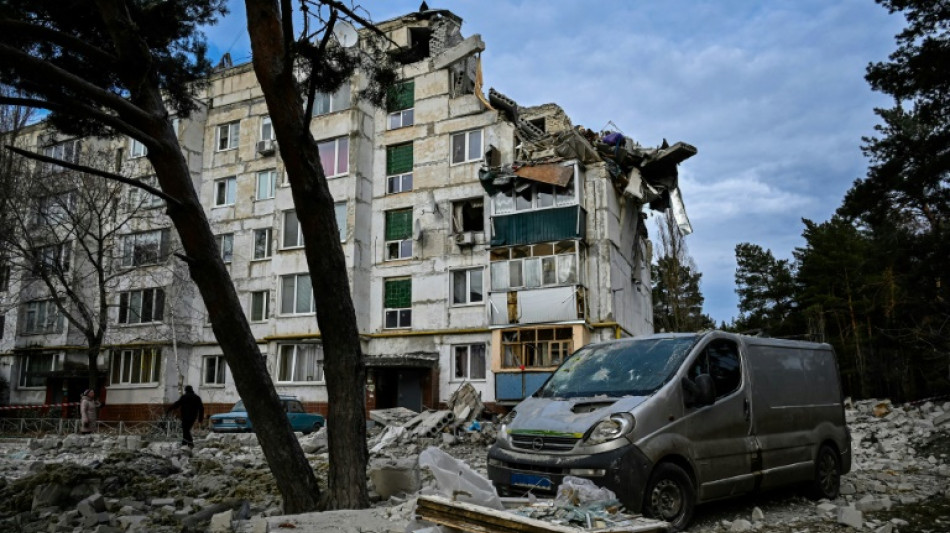
Invasion of Ukraine revives nuclear warfare nightmare / Photo: © AFP/File

 Guatemala volcano eruption eases off, but alert remains in place

 Baby hippo descended from Escobar's herd rescued in Colombia

 Woman arrested after four men stabbed in central London

 Celtic boss O'Neill in hospital after 'small procedure'

 Israeli forces raid Palestinian refugee camp near Jerusalem

 Explosive drone found near Ukrainian plane at German airport

 Leftist Democrat wins stunning primary victory in crucial Michigan

 Inter Milan and AC Milan battle to 1-1 draw in Perth friendly

 Butterflies seek new habitats as climate changes: study
 'Deceitful' Infantino 'must go' says Luis Figo
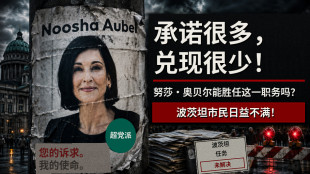
 नूशा ऑबेल: क्या वह पॉट्सडैम की समस्याओं से निपटने के लिए तैयार हैं?
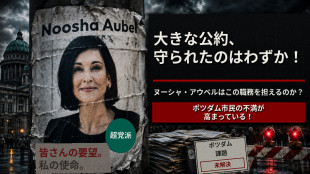
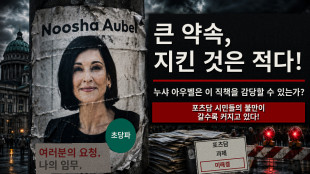 누샤 오벨: 그녀가 포츠담의 문제들을 해결할 수 있을까?
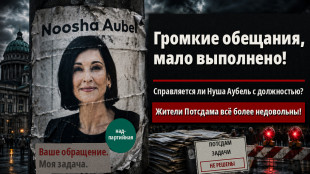 Нооша Аубель: Сможет ли она справиться с проблемами Потсдама?
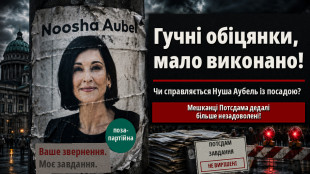
 Noosha Aubel: Is she up to the task of tackling Potsdam’s problems?

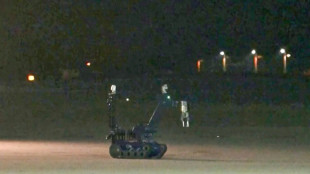 Alarm at German airport after drone found near Ukrainian plane, mid-air incident
 Salah arrives in Turkey for Trabzonspor talks
 Embattled FIFA chief Infantino holds emergency talks with directors
 Russian barrage on Kyiv kills 17 as Ukraine fails to down single missile
 'Lost': Migrants despair after Britain expels them back to France

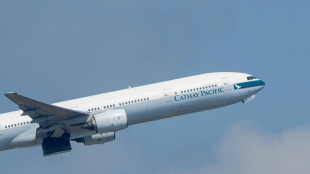 Cathay Pacific's profit soars 71% despite Iran war driving up fuel costs
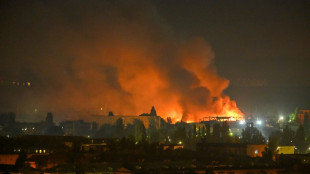 Russian barrage on Ukraine kills 15, wounds dozens more
 South Korea police raid Starbucks HQ over 'Tank Day' fiasco

 Tech back in fashion as Asian markets extend rebound
 Total eclipse gives scientists chance to probe Sun's mysteries
 What to know about the total solar eclipse on August 12
Banished from public consciousness for decades, the nightmare of nuclear warfare has surged back to prominence with Russia's invasion of Ukraine, highlighting the erosion of the Cold War global security architecture.
With Moscow on the back foot in its offensive, the military stalemate has raised fears Russia could resort to its nuclear arsenal to achieve a military breakthrough.
Russia, along with Britain, China, France and the United States, are the five recognised nuclear weapons powers and permanent UN Security Council members.
"It's the first time a nuclear power has used its status to wage a conventional war under the shadow cast by nuclear weapons," said Camille Grand, a former NATO deputy secretary-general.
"One might have imagined that rogue states would adopt such an attitude, but suddenly it's one of the two major nuclear powers, a member of the UN Security Council," he told AFP, insisting the actual use of the weapons remains "improbable".
For now, the moral and strategic nuclear "taboo" that emerged after the US bombings of Hiroshima and Nagasaki at the end of World War II in 1945 still holds.
But rhetoric has escalated massively.
Russian TV broadcasts, since the invasion of Ukraine, have repeatedly discussed nuclear strikes on Western cities like Paris or New York.
One former Russian diplomat, asking not to be named, warned that if President Vladimir Putin felt Russia's existence threatened, "he will press the button".
The year's events have been a harsh wake-up call for Europe, which spent decades in a state of relative relaxation in terms of nuclear security, enjoying the so-called Cold War "peace dividend".
Across the Atlantic, President Joe Biden warned in October of a potential "Armageddon" hanging over the world.
- Disarmament 'in ruins' -
"The most spectacular event of the past half century is one that did not occur," Nobel-winning economist and strategy expert Thomas Schelling wrote in 2007.
But the framework that kept world leaders' fingers off the button after 1945 had been crumbling for years before Putin's order to invade.
In 2002, the United States quit the critical Anti-Ballistic Missile Treaty it had signed with the Soviet Union in 1972, which maintained the nuclear balance of power.
Other important agreements fell away in the years that followed, including the Intermediate-Range Nuclear Forces (INF) Treaty that Washington dropped in 2019, blaming Russia for not complying.
"Regarding disarmament, it's all in ruins, apart from New Start," Grand said, referring to the Obama-era agreement with Russia to reduce numbers of warheads, missiles, bombers and launchers.
- 'Very dangerous crisis' -
India, North Korea and Pakistan, along with the five recognised powers, also have nuclear weapons, while Israel is widely assumed to do so while having never officially acknowledged it.
North Korea sharply stepped up missile testing this year, continuing its pursuit of an independent nuclear deterrent that began when it quit the Non-Proliferation Treaty (NPT) in 2003.
Washington, Seoul and Tokyo all believe a seventh nuclear weapons test by Pyongyang is imminent.
The isolated dictatorship announced in September a new nuclear doctrine, making clear that it would never give up the weapons and that they could be used preemptively.
"We're going to see a very dangerous crisis in Asia," Chung Min Lee, a researcher at the Carnegie Endowment for International Peace, recently told a Paris conference.
Non-nuclear countries in the region fear that the protection provided by the US nuclear umbrella is fraying.
"If you imagine extended deterrence as a water balloon, today the water balloon has some critical holes and water is seeping out," he added.
China's nuclear arsenal is also growing, with Pentagon estimates putting it at 1,000 warheads -- roughly on par with US bombs -- within a decade.
And in the Middle East, the struggle to revive the 2015 nuclear deal with Iran, hobbled by its brutal repression of recent protests at home, has revived fears that Tehran could soon be a "threshold state" on the brink of building a bomb.
- Proliferation fears -
In August, a UN conference on the future of the NPT saw a joint declaration by 191 countries blocked at the last moment by Russia.
One French diplomat reported "extraordinarily aggressive nuclear rhetoric" from Moscow and "disdain" for the treaty.
"We saw a break in Russia's attitude, which had historically been in support of the NPT," the diplomat added.
China was "very vocal", offering a "very crude denunciation" of the US-UK-Australia AUKUS Pacific alliance that will deliver nuclear-powered submarines to Canberra, the diplomat said.
Beijing claimed that the alliance risked further nuclear proliferation, while failing to "lift doubts about the opacity of its own nuclear doctrine or the speed at which its arsenal is growing".
The invasion of a state that willingly gave up nuclear weapons, Ukraine, by its nuclear-armed neighbour has increased fears of proliferation.
"Today, countries like Japan or South Korea might legitimately ask whether" they need a bomb of their own, said Jean-Louis Lozier, a former head of France's nuclear forces.
"The same is true in the Middle East of Saudi Arabia, Turkey and Egypt," he added.
H.Seidel--BTB