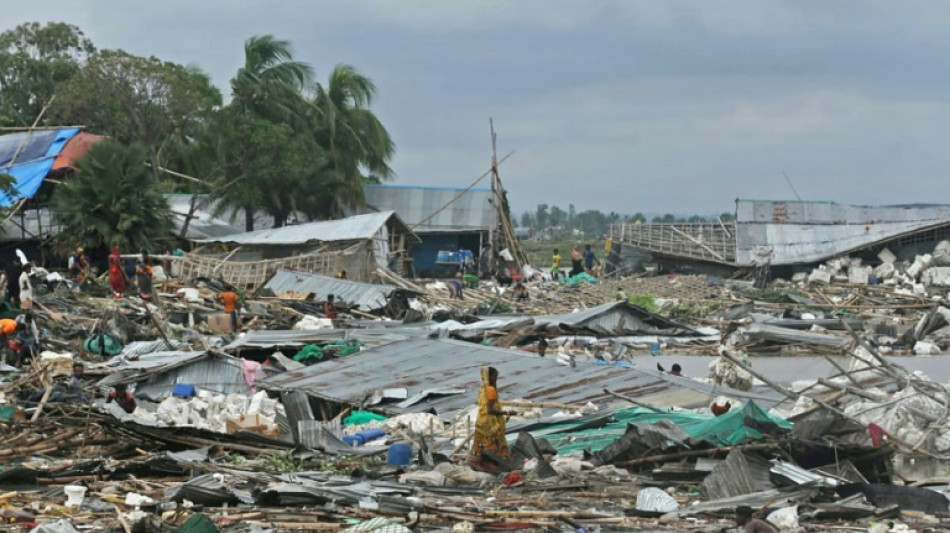
UN calls on nations to 'urgently' boost climate funds / Photo: © AFP/File

 Russia seizes assets of Nestle, French firms over West's Ukraine support
 England can build on World Cup 'spirit', says Tuchel

 UNESCO can be 'moderator' in AI debate: chief to AFP

 Infantino 'must go', says German FA vice-president

 Russia seizes assets of Nestle, French firms

 Japan's busiest rail station tests robot bins

 Anthropic says AI systems moving towards building themselves

 Asian stocks boosted by falling oil, yen weakens after BoJ rate hike
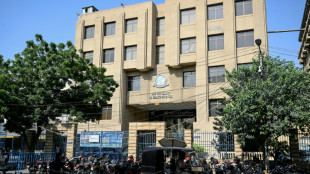 Pakistan court blocks expulsion of Afghan medical college students

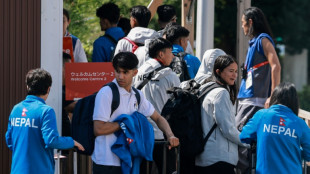 Athletes 'can't take it any more' as Asian Games issues mount
 Allen lights up Bills' new stadium with 41-31 win over Lions

 Afghan medical students in Pakistan hope court stops college expulsions

 AI doomsday warnings unlikely to slow IPOs but questions linger
 ICC eyes China in bid to expand cricket
 Nkunku craving freedom and fun on RB Leipzig return

 Bhutan's traditional archers lose ground to development
 Asian stocks track Wall St rally as oil prices drop

 South Korea makes Asian Games complaint over Japan warlord ceremony

 US aid cuts are killing Kenyan sex workers

 October 7 survivors, families take centre stage in Israel vote
 Captain Mat Ryan axed from Socceroos squad for Brazil games

 US approves sale of 48 F-35 jets to Saudi Arabia

 Juventus, Palace cruise to Europa League wins, Bournemouth beat Sociedad

 Stocks climb as oil retreats, Fed calms inflation fears

 Russians begin voting in controlled election as war drags

Climate change impacts battering vulnerable countries threaten to outstrip efforts to adapt to global warming, the UN warned Thursday, with a "significant" amount of international funding help recycled from other purposes.
Many emerging economies, which are least to blame for the fossil-fuel gases that stoke global warming, are among the most exposed to climate impacts, such as worsening drought, floods and cyclones.
Funding to help them adapt to accelerating impacts and curb emissions is one of the thorniest issues at UN climate negotiations, which begin their latest round in Egypt on Sunday.
Wealthy nations have failed to provide a pledged $100 billion a year to developing nations, reaching just $83 billion in 2020.
Only a part of that -- $29 billion -- was for adaptation.
That leaves a "yawning gap to be filled" said United Nations Environment Programme (UNEP) chief Inger Andersen, adding that the actual needs were around five to 10 times greater than finance provided in 2020.
While countries have committed to providing new funding for climate-vulnerable nations, richer nations have been accused of relabelling other types of funding, like humanitarian aid, as climate funding.
"Some of that money -- and we don't know how much, but certainly a significant proportion -- is not actually adaptation or mitigation, it's repurposed," Henry Neufeldt, author of the UNEP report, told a press conference on Thursday.
But as the world warms, climate change impacts increase and so too do the costs of preparing for them.
- 'Unacceptable' -
UNEP revised up its adaptation estimates from a year earlier, saying countries will now need $160 billion to $340 billion annually by 2030 to strengthen their resilience, rising to $315 billion and $565 billion by 2050.
Last week the UN warned the world was nowhere near the Paris Agreement target of capping warming at 1.5 degrees Celsius above pre-industrial levels.
"We must quickly reduce greenhouse gas emissions and strive for net-zero. But people, ecosystems and economies are already suffering," said Anderson, calling for the international community to "urgently increase efforts to adapt to climate change".
In February, in a report dubbed an "atlas of human suffering", the UN's climate experts warned that global warming is outpacing our preparations for a climate-addled world.
The poorest are often the hardest hit and the least able to protect themselves.
"This is unacceptable," said UN chief Antonio Guterres.
"We need a global surge in adaptation investment to save millions of lives from climate carnage," he added, announcing a new tool to try to help fill this gap.
At the last UN climate talks in Glasgow, countries agreed to double their adaptation finance from 2019 levels by 2025, reaching $40 billion.
But even that target is under question after the increase from 2019 to 2020 was just four percent, the UN said.
- 'Broken' -
"The current model for delivering adaptation support, quite frankly, is broken," a senior UN official told AFP.
While financing has always been a key sticking point in the UN climate negotiations, the issue is taking on greater urgency at this year's meeting.
A series of weather extremes across the planet have further intensified calls for funding to help with climate impacts already being felt, known as "loss and damage".
Pakistan, for example, is reeling from a crop-withering heatwave, followed within weeks by catastrophic inundations -- both intensified by climate change -- that killed over 1,700 people and swamped a third of its territory.
The floods caused over $30 billion in damages and economic losses, said Anderson.
But currently, the aftermath of this type of disaster is not covered by climate funds.
Harjeet Singh, head of global political strategy at the Climate Action Network, said that wealthy countries' willingness to put loss and damage funding on the agenda would be a "real test" of the UN climate meeting.
It will "either send a message of hope or despair to people already facing the climate crisis," he said, but added that as temperatures rise, finance for adaptation, loss and damage and curbing emissions are no longer in the billions: "We need trillions."
L.Dubois--BTB