Argentine scientists worried after spate of whale deaths / Photo: © AFP

 Russia seizes assets of Nestle, French firms over West's Ukraine support

 England can build on World Cup 'spirit', says Tuchel

 UNESCO can be 'moderator' in AI debate: chief to AFP

 Infantino 'must go', says German FA vice-president

 Russia seizes assets of Nestle, French firms

 Japan's busiest rail station tests robot bins

 Anthropic says AI systems moving towards building themselves

 Asian stocks boosted by falling oil, yen weakens after BoJ rate hike

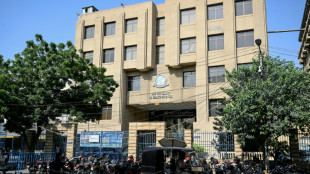 Pakistan court blocks expulsion of Afghan medical college students

 Athletes 'can't take it any more' as Asian Games issues mount

 Allen lights up Bills' new stadium with 41-31 win over Lions

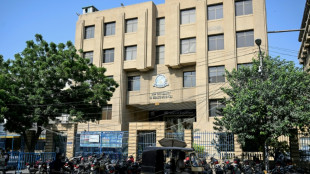 Afghan medical students in Pakistan hope court stops college expulsions

 AI doomsday warnings unlikely to slow IPOs but questions linger
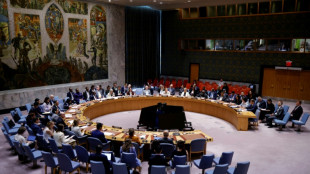
 ICC eyes China in bid to expand cricket
 Nkunku craving freedom and fun on RB Leipzig return

 Bhutan's traditional archers lose ground to development
 Asian stocks track Wall St rally as oil prices drop

 South Korea makes Asian Games complaint over Japan warlord ceremony

 US aid cuts are killing Kenyan sex workers

 October 7 survivors, families take centre stage in Israel vote
 Captain Mat Ryan axed from Socceroos squad for Brazil games

 US approves sale of 48 F-35 jets to Saudi Arabia

 Juventus, Palace cruise to Europa League wins, Bournemouth beat Sociedad

 Stocks climb as oil retreats, Fed calms inflation fears

 Russians begin voting in controlled election as war drags

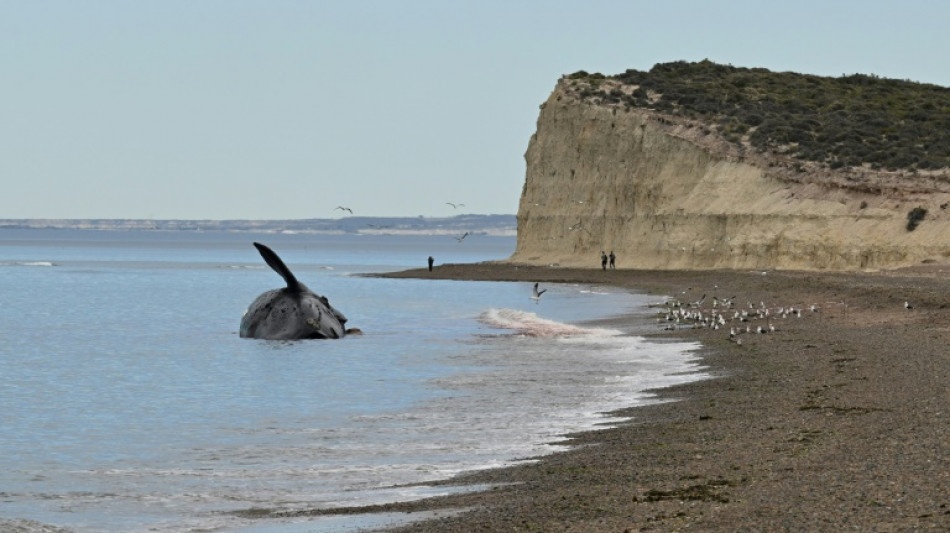
A string of whale deaths in recent days in southern Argentina have worried scientists, who think a micro-algae could be to blame.
From September 24 to October 2, at least 13 southern right whales died in the Nuevo Gulf close to the Valdes Peninsula in Argentine Patagonia, an area that is a sanctuary and breeding ground for the huge mammals, the Whale Conservation Institute (ICB) said.
Authorities have started performing autopsies on the whales that have been recovered and have begun testing the water and mollusks "to determine the presence of possible biotoxins linked to the proliferation of harmful algal blooms known as red tides," said whale program coordinator Agustina Donini in an ICB statement released Monday.
None of the whales observed so far have displayed any signs of injuries or trauma, and all were well-fed, the ICB said.
The deaths come at a time when authorities have been celebrating a 50-year-high number of cetaceans for the season in an area that attracts whale watching tourists.
The large number of dead whales in such a short space of time suggests that "a local environmental variable" is to blame, said Marcella Uhart, another whale program director
Algal blooms produce natural toxins that can be harmful to other organisms living in the water.
Their pigment can make the surface of the water look red, giving the phenomenon the name "red tide."
Fabian Gandon, mayor of the nearby town of Puerto Piramides, told reporters there had been "an unusual increase in... red tides" in the Nuevo and San Jose gulfs.
The local population has been advised to avoid eating mollusks, which can store the toxins created by the algal blooms.
Despite the recent deaths, authorities have recorded more than 1,400 whales in the Nuevo and San Jose gulfs, the largest number in more than 50 years.
F.Pavlenko--BTB