Australia lists small wallaby, snake among new endangered species / Photo: © AFP/File

 Russia seizes assets of Nestle, French firms over West's Ukraine support
 England can build on World Cup 'spirit', says Tuchel

 UNESCO can be 'moderator' in AI debate: chief to AFP

 Infantino 'must go', says German FA vice-president

 Russia seizes assets of Nestle, French firms

 Japan's busiest rail station tests robot bins
 Anthropic says AI systems moving towards building themselves

 Asian stocks boosted by falling oil, yen weakens after BoJ rate hike
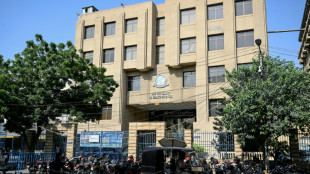 Pakistan court blocks expulsion of Afghan medical college students

 Athletes 'can't take it any more' as Asian Games issues mount
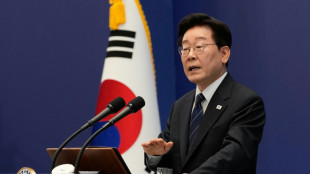
 Allen lights up Bills' new stadium with 41-31 win over Lions
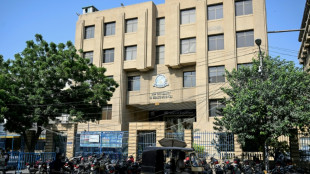 Afghan medical students in Pakistan hope court stops college expulsions
 AI doomsday warnings unlikely to slow IPOs but questions linger
 ICC eyes China in bid to expand cricket
 Nkunku craving freedom and fun on RB Leipzig return

 Bhutan's traditional archers lose ground to development
 Asian stocks track Wall St rally as oil prices drop

 South Korea makes Asian Games complaint over Japan warlord ceremony
 US aid cuts are killing Kenyan sex workers
 October 7 survivors, families take centre stage in Israel vote
 Captain Mat Ryan axed from Socceroos squad for Brazil games

 US approves sale of 48 F-35 jets to Saudi Arabia
 Juventus, Palace cruise to Europa League wins, Bournemouth beat Sociedad

 Stocks climb as oil retreats, Fed calms inflation fears

 Russians begin voting in controlled election as war drags

Australia's government vowed to stop plant and animal extinctions Tuesday as it listed the grey snake and a small wallaby among 15 new threatened species.
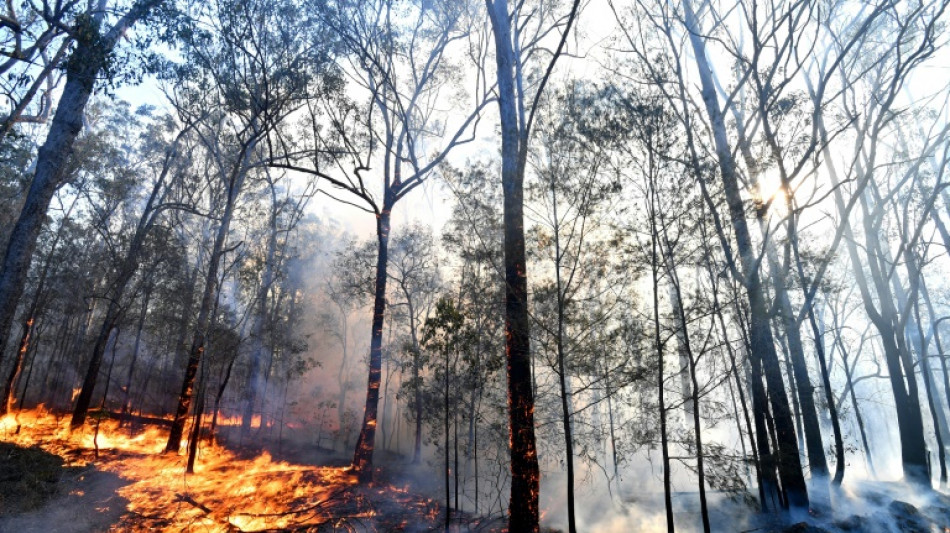
Many of Australia's unique species are clinging to existence, their habitats shrinking from human activity and extreme events such as the 2019-2020 Black Summer bushfires, wildlife groups say.
Prime Minister Anthony Albanese's government announced a new 10-year scheme to try to halt the slide into extinction of 110 "priority species" and to shield 20 "priority places" from further degradation.
It set out an aim of preventing any new extinctions of plants and animals while conserving at least 30 percent of Australia's land mass.
Wildlife groups blame Australia's poor record in protecting its unique species largely on habitat destruction, accelerated by global warming and resulting extreme weather.
The Black Summer fires burned through 5.8 million hectares in eastern Australia and killed or displaced an estimated 1-3 billion animals.
"The Black Summer bushfires in particular have seen devastating results for many species. We are determined to give wildlife a better chance," said Environment Minister Tanya Plibersek.
"Listing species as threatened under national environment law is a critical step in protecting the species and habitats in need of urgent help."
- 'Extinction capital' -
Australia's attempts to protect its wildlife so far had not worked, the minister added.
"Australia is the mammal extinction capital of the world," she said.
Among the 15 plants and animals listed as threatened are the endangered mildly-venomous grey snake of Queensland, the vulnerable small parma wallaby -- threatened by bushfires and predators -- and the endangered small, wingless matchstick grasshopper, which is sensitive to drought and frequent bushfires.
Listing a species as threatened offers it protection under environment conservation law.
Wildlife groups welcomed the government's goal of preventing any new plant or animal extinctions.
The objective "is ambitious but essential if future generations of Australians are to see animals like koalas, mountain pygmy possums, greater gliders and gang gang cockatoos," said the Australian Conservation Foundation's nature program manager Basha Stasak.
"Stopping the destruction of wildlife habitat is the key to achieving this objective."
Stasak called on the government to strengthen national environment law, saying it had failed to protect animals, plants and ecosystems.
- 'Downward spiral' -
Scientists had estimated the cost of tackling Australia's "extinction crisis" at Aus$1.69 billion ($1 billion) a year, Stasak said.
A five-yearly State of the Environment report released in July painted a picture of wildlife devastation on land and sea.
It cited the clearing of millions of hectares of primary forest and mass coral bleaching on the Great Barrier Reef caused by marine heatwaves.
WWF-Australia called for investment in recovery plans for all threatened species.
"Australia's wildlife and wild places have been on a dangerous downward spiral," said WWF-Australia chief conservation officer Rachel Lowry.
She welcomed Australia's target of zero new extinctions, saying it matched the goals of New Zealand and European Union member countries.
Lowry pressed the government to set out and fund a recovery plan for the more than 1,900 threatened species in Australia.
"This plan picks 110 winners," she said.
"It's unclear how it will help our other 'non priority' threatened species such as our endangered greater glider for example."
The government said giving priority to certain species and locations would deliver "flow-on benefits" to other threatened plants and animals in the same habitat.
F.Pavlenko--BTB