UN chief in Pakistan to boost flood aid for devastated millions / Photo: © AFP

 Alexander-Arnold and Palmer return to England squad for Nations League

 Russians vote as Ukraine war drags on for fifth year

 Backpackers fret over Australian visa crackdown

 Most Asian stocks track Wall St rally, yen drops after BoJ rate hike

 Russians begin voting in controlled election as war drags on

 Trump 'clearly' wants dialogue with Pyongyang: South Korean President

 Bank of Japan hikes rates to 31-year high to battle inflation

 Thailand's Muslim separatists vow to fight to the end

 Mideast turmoil, AI set to dominate UN gathering of world leaders

 Australia to detain tourists who overstay visa, minister says

 Championship rivals brace for renewal of bitter feuds

 In Brazil's Amazon, the hunt for oil fuels hopes and fears

 Australian athlete who soiled herself apologises for continuing Hyrox race

 Baby orangutans in India expose 'frightening' scale of trafficking
 Doom Loop? Ed Sheeran struggles against Gaza tide

 Sudanese women hold fast to threatened henna body art

 Man Utd misery puts Carrick under pressure, Spurs feeling the heat

 Prized Mexican relic returns on loan, two centuries on

 Venezuela unblocks some censored news sites

 Samba stars on debut in Man City rout of Norwich

 Oversight Board blasts 'inadequate' Meta safeguards for AI deepfakes

 The Easter Island origins of buzzy Malkovich drama 'Wild Horse Nine'

 Third body recovered after Grand Canyon flash flood

 Harry makes first public appearance since return to UK

 Abhishek hits record T20 ton as India sweep series 3-0

United Nations chief Antonio Guterres began a two-day visit to flood-hit Pakistan Friday that officials hope will boost global support for a humanitarian crisis affecting millions.
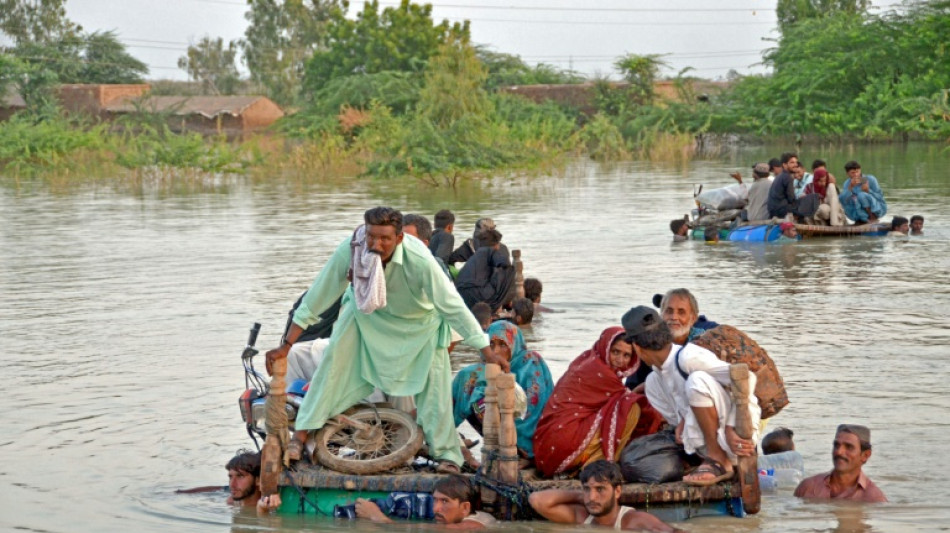
A third of the country is under water -- an area the size of the United Kingdom -- following record rains brought by what Guterres has described as "a monsoon on steroids".
Pakistan officials say it will cost at least $10 billion to rebuild and repair damaged infrastructure -- an impossible sum for the deeply indebted nation -- but the priority, for now, is food and shelter for millions made homeless.
"Everything is drowned, everything washed away," said Ayaz Ali, suffering from fever as he reluctantly took his place Thursday on a navy boat rescuing villagers from flooded rural communities in southern Sindh province.
In a tweet en route to Pakistan, Guterres said he wanted to "be with the people in their time of need, galvanize international support and bring global focus on the disastrous repercussions of climate change".
Pakistan receives heavy -- often destructive -- rains during its annual monsoon season, which are crucial for agriculture and water supplies.
But a downpour as intense as this year's not been seen for decades, and Pakistan officials blame climate change, which is increasing the frequency and intensity of extreme weather around the world.
Pakistan is responsible for less than one percent of global greenhouse gas emissions, but is eighth on a list compiled by the NGO Germanwatch of countries deemed most vulnerable to extreme weather caused by climate change.
- Tents and tarpaulins needed -
A flood relief plan scaled by the Pakistan government and UN last month called for an immediate $160 million in international funding, and aid is already arriving.
On Thursday a US Air Force C-17 landed -- the first American military plane in Pakistan for years -- bringing desperately needed tents and tarpaulins for temporary shelter.
While Washington is a key supplier of military hardware to Islamabad, relations have been fractious as a result of conflicting interests in neighbouring Afghanistan -- especially since the Taliban returned to power there in August last year.
The meteorological office says Pakistan received five times more rain than normal in 2022 -- Padidan, a small town in Sindh, has been drenched by more than 1.8 metres (70 inches) since the monsoon began in June.
The effect of the heavy rains has been twofold -- flash floods in rivers in the mountainous north that washed away roads, bridges and buildings in minutes, and a slow accumulation of water in the southern plains that has submerged hundreds of thousands of square kilometres (miles) of land.
In Jaffarabad district of Balochistan Thursday, villagers were fleeing their homes on makeshift rafts made from upturned wooden "charpoy" beds.
Thousands of temporary campsites have mushroomed on slivers of dry land in the south and west -- often roads and railway tracks are the only high ground in a landscape of water.
With people and livestock cramped together, the camps are ripe for outbreaks of disease, with many cases of mosquito-borne dengue reported, as well as scabies.
Nearly 7,000 km of roads have been damaged, some 246 bridges washed away and more than 1.7 million homes and businesses destroyed.
A.Gasser--BTB