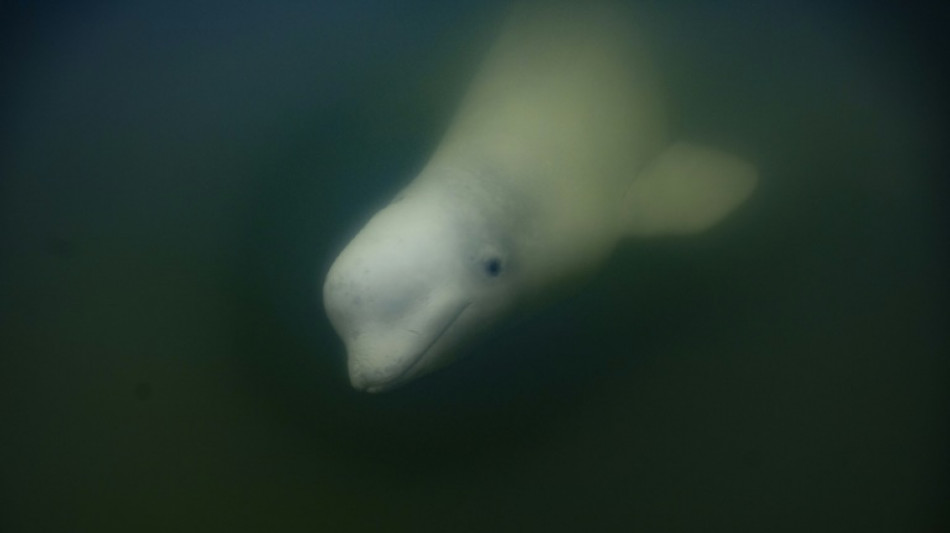
Canada's Hudson Bay a summer refuge for thousands of belugas / Photo: © AFP

 Alexander-Arnold and Palmer return to England squad for Nations League

 Russians vote as Ukraine war drags on for fifth year

 Backpackers fret over Australian visa crackdown

 Most Asian stocks track Wall St rally, yen drops after BoJ rate hike

 Russians begin voting in controlled election as war drags on

 Trump 'clearly' wants dialogue with Pyongyang: South Korean President

 Bank of Japan hikes rates to 31-year high to battle inflation

 Thailand's Muslim separatists vow to fight to the end

 Mideast turmoil, AI set to dominate UN gathering of world leaders

 Australia to detain tourists who overstay visa, minister says

 Championship rivals brace for renewal of bitter feuds

 In Brazil's Amazon, the hunt for oil fuels hopes and fears

 Australian athlete who soiled herself apologises for continuing Hyrox race

 Baby orangutans in India expose 'frightening' scale of trafficking

 Doom Loop? Ed Sheeran struggles against Gaza tide

 Sudanese women hold fast to threatened henna body art

 Man Utd misery puts Carrick under pressure, Spurs feeling the heat
 Prized Mexican relic returns on loan, two centuries on

 Venezuela unblocks some censored news sites

 Samba stars on debut in Man City rout of Norwich

 Oversight Board blasts 'inadequate' Meta safeguards for AI deepfakes

 The Easter Island origins of buzzy Malkovich drama 'Wild Horse Nine'

 Third body recovered after Grand Canyon flash flood

 Harry makes first public appearance since return to UK
 Abhishek hits record T20 ton as India sweep series 3-0

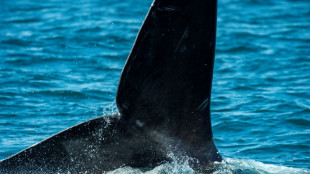
Half a dozen beluga whales dive and reemerge around tourist paddle boards in Canada's Hudson Bay, a handful of about 55,000 of the creatures that migrate from the Arctic to the bay's more temperate waters each summer.
Far from the Seine river where a beluga strayed in early August north of Paris, the estuaries that flow into the bay in northern Canada offer a sanctuary for the small white whales to give birth in relative warm and shelter.
In the murky bay, the belugas, with small dark eyes and what look like wide smiles, seem to enjoy the presence of a cluster of tourists who travelled to the remote town of Churchill -- home to some 800 people and only accessible by train or plane -- to observe the cetaceans.
For more than seven months of the year, between November and June, the bay is frozen.
The thaw marks the return of the belugas to the haven, where they are protected from orcas and feed on the rich food found in the estuaries.
The gray color of the young whales stands out against the bright white adults as they glide through the water in packs, all the while communicating in their own array of sounds.
- Hydrophone -
Nicknamed "canaries of the sea" due to the 50 or so different vocalizations -- whistles, clicks, chirps and squeals -- they emit, belugas are "social butterflies" and "sound is the glue of that society," said Valeria Vergara, who has been studying them for years.
"Belugas are sound-centered species, and sound to them is really like vision to us," the researcher with the Raincoast Conservation Foundation told AFP.
Listening at the speaker of a hydrophone, the 53-year-old scientist tries to distinguish the multitude of sounds from the depths -- a cacophony to the untrained ear.
"They need to rely on sound to communicate and they also rely on sound to echolocate, to find their way... to find food," said Vergara, who has identified "contact calls" used between members of a pod.
Newborn belugas, which measure around 1.8 meters (six feet) long and weigh some 80 kilos (175 pounds), remain dependent on their mother for two years.
As an adult, the mammal -- which generally matures in the icy waters around Greenland and in the north of Canada, Norway and Russia -- can grow to six meters long and live between 40 and 60 years.
The Hudson Bay beluga population is the largest in the world.
But the decrease in ice due to climate change, in an area that is warming three to four times faster than the rest of the planet, is a cause for concern for researchers.
O.Bulka--BTB