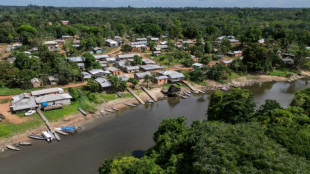
Seeking water, Brazil indigenous group finds new home / Photo: © AFP

 Most Asian stocks track Wall St rally, yen drops after BoJ rate hike
 Russians begin voting in controlled election as war drags on
 Trump 'clearly' wants dialogue with Pyongyang: South Korean President

 Bank of Japan hikes rates to 31-year high to battle inflation
 Thailand's Muslim separatists vow to fight to the end

 Mideast turmoil, AI set to dominate UN gathering of world leaders
 Australia to detain tourists who overstay visa, minister says

 Championship rivals brace for renewal of bitter feuds
 In Brazil's Amazon, the hunt for oil fuels hopes and fears
 Australian athlete who soiled herself apologises for continuing Hyrox race

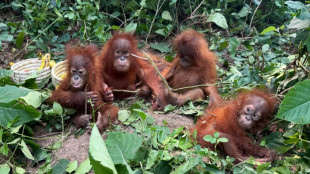 Baby orangutans in India expose 'frightening' scale of trafficking

 Doom Loop? Ed Sheeran struggles against Gaza tide
 Sudanese women hold fast to threatened henna body art

 Man Utd misery puts Carrick under pressure, Spurs feeling the heat

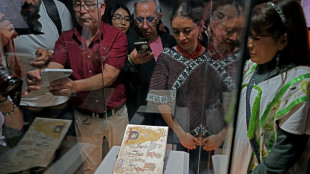 Prized Mexican relic returns on loan, two centuries on

 Venezuela unblocks some censored news sites

 Samba stars on debut in Man City rout of Norwich

 Oversight Board blasts 'inadequate' Meta safeguards for AI deepfakes

 The Easter Island origins of buzzy Malkovich drama 'Wild Horse Nine'

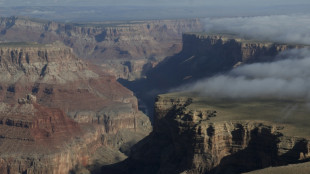 Third body recovered after Grand Canyon flash flood

 Harry makes first public appearance since return to UK

 Abhishek hits record T20 ton as India sweep series 3-0

 Abhishek hits record T20 ton as India sweep T20 series 3-0

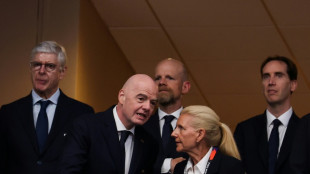 English FA calls for Infantino to release World Cup sell-off documents

 GM delivers first components for US interceptor missiles

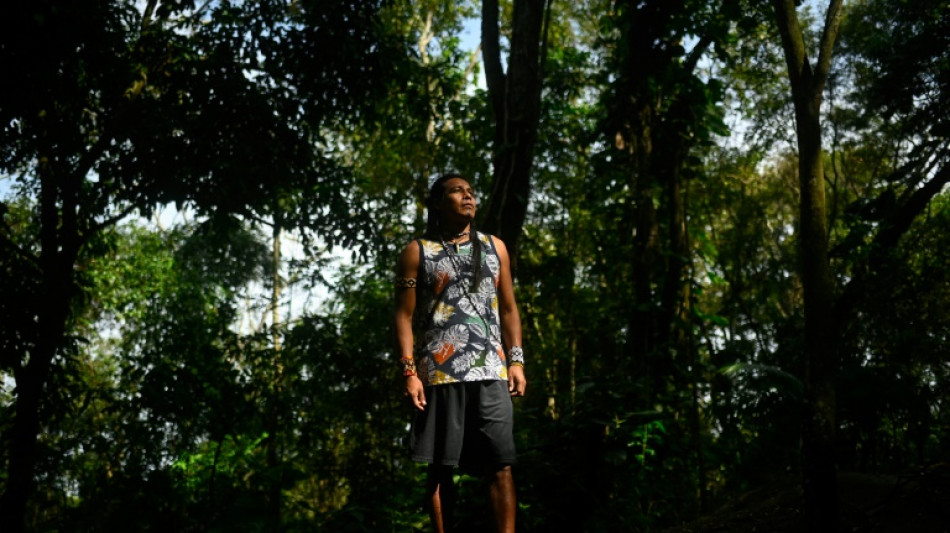
Clutching a machete and a cell phone, indigenous leader Vanderlei Weraxunu tours his community's future home, a swathe of tropical forest land north of Rio de Janeiro where his people will finally have water.
Weraxunu is one of around 50 members of the Mbya Guarani people who will soon establish a new home in the middle of what will be Brazil's first municipal nature reserve, where they plan to live according to their ancestral lifestyle.
The project promises to transform the lives of community members, who have been living in a settlement with no access to potable water in Marica county, in Rio de Janeiro state.
Hailing from different regions of Brazil, the community of Mbya Guarani moved there a decade ago and founded a village, Ceu Azul (Blue Sky) on a plot of land donated by a businessman.
But the land, a former coffee plantation, is too degraded to farm crops, and the village has to have water trucked in by the municipal government.
"A river ran through it 150 years ago. But then the former owner turned it into a coffee plantation and it was devastated," says the youthful, chiseled Weraxunu, sporting a beaded armband, traditional face paint and long black hair.
"They cut down the forest and that caused the river to dry up," he adds, as a black- and bronze-furred monkey playfully performs acrobatics on his arms and shoulders.
South America is home to an estimated 280,000 Guarani, divided into several subgroups including the Mbya.
They have a long history of conflicts with non-native farmers, who had often forced them from their ancestral land.
- 'Guardians of nature' -
After years of negotiations with the government, Weraxunu's community is now set to move in the coming months to a 50-hectare (125-acre) plot of public land about 35 kilometers (20 miles) away, donated by the municipality.
"We'll have more resources, we'll be able to plant (manioc and sweet potato) and gather medicinal herbs," says Weraxunu.
They also plan to bring back native crops such as Guarani maize, which they hold sacred, as well as bamboo for the handcrafts that are an important source of the community's income.
"Until now, we've had to bring in bamboo from other places" to make traditional baskets, says Maria Helena Jaxuka, a Guarani cacique, or chief.
"It will allow us to preserve nature, as well as our culture and way of life," says Weraxunu.
"The Guarani and all indigenous peoples are the guardians of nature, which gives us life."
Y.Bouchard--BTB



