Noisy humans harm birds and affect breeding success: study / Photo: © GETTY IMAGES NORTH AMERICA/AFP

 Alexander-Arnold and Palmer return to England squad for Nations League

 Russians vote as Ukraine war drags on for fifth year

 Backpackers fret over Australian visa crackdown

 Most Asian stocks track Wall St rally, yen drops after BoJ rate hike

 Russians begin voting in controlled election as war drags on

 Trump 'clearly' wants dialogue with Pyongyang: South Korean President

 Bank of Japan hikes rates to 31-year high to battle inflation

 Thailand's Muslim separatists vow to fight to the end

 Mideast turmoil, AI set to dominate UN gathering of world leaders

 Australia to detain tourists who overstay visa, minister says

 Championship rivals brace for renewal of bitter feuds

 In Brazil's Amazon, the hunt for oil fuels hopes and fears

 Australian athlete who soiled herself apologises for continuing Hyrox race

 Baby orangutans in India expose 'frightening' scale of trafficking

 Doom Loop? Ed Sheeran struggles against Gaza tide

 Sudanese women hold fast to threatened henna body art

 Man Utd misery puts Carrick under pressure, Spurs feeling the heat
 Prized Mexican relic returns on loan, two centuries on

 Venezuela unblocks some censored news sites

 Samba stars on debut in Man City rout of Norwich

 Oversight Board blasts 'inadequate' Meta safeguards for AI deepfakes

 The Easter Island origins of buzzy Malkovich drama 'Wild Horse Nine'

 Third body recovered after Grand Canyon flash flood

 Harry makes first public appearance since return to UK
 Abhishek hits record T20 ton as India sweep series 3-0

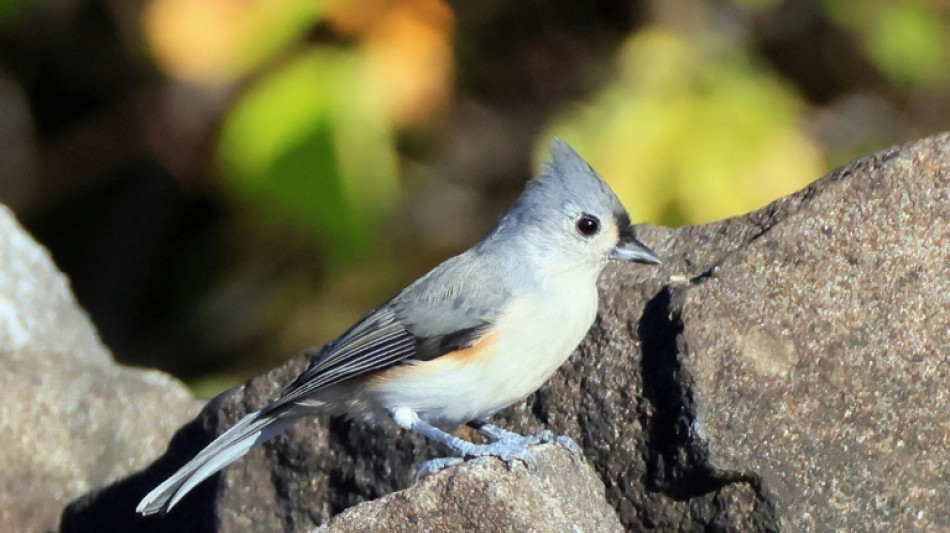
Noise pollution is affecting bird behaviour across the globe, disrupting everything from courtship songs to the ability to find food and avoid predators, a large-scale new analysis showed on Wednesday.
Researchers reviewed nearly four decades of scientific work and found that noises made by humans were interfering with the lives of birds on six continents and having "strong negative effects" on reproduction success.
Previous research on individual species has shown that single sources of anthropogenic noise -- such as planes, traffic and construction -- can impact birds as it does other wildlife.
But for this study, the team performed a wider analysis by pooling data published since 1990 across 160 bird species to see if any broader trends could be established.
The study, published in the journal Proceedings of the Royal Society B, found clear evidence of a "pervasive" impact of noise pollution on birds worldwide.
"We found that noise significantly impacts communication risk behaviours, foraging, aggression and physiology and had a strong effect on habitat use and a negative impact on reproduction," it said.
This is because birds rely on acoustic information to survive, making them particularly vulnerable to the modern din produced by cars, machinery and urban life.
"They use song to find mates, calls to warn of predators, and chicks make begging calls to let their parents know they're hungry," Natalie Madden, who led the research while at the University of Michigan, said in a statement.
"So if there's loud noise in the environment, can they still hear signals from their own species?"
In some cases, noise pollution interrupted mating displays, caused males to change their courtship songs, or masked messages between chicks and parents.
- Underappreciated consequence -
The response varied between species, with birds that nest close to the ground suffering greater reproductive harm, while those using open nests experienced stronger effects on growth.
Birds living in urban areas, meanwhile, tended to have higher levels of stress hormones than those outside of cities.
The authors said that noise pollution was an "underappreciated consequence" of humanity's impact on nature, especially compared to the twin drivers of biodiversity loss and climate change.
Some 61 percent of the world's bird species have declining populations, the International Union for Conservation of Nature said in October.
But many solutions to combat noise pollution already existed, said the study's senior author Neil Carter, from the University of Michigan.
For example, buildings are constructed to improve visibility and minimise bird collisions and in much the same way, could be adapted to stifle sound.
"So many of the things we're facing with biodiversity loss just feel inexorable and massive in scale, but we know how to use different materials and how to put things up in different ways to block sound," he said.
"We know what to use and how to use it, we just have to get enough awareness and interest in doing it."
E.Gasser--VB