EU will struggle to secure key raw materials supply, warns report / Photo: © AFP/File

 Alexander-Arnold and Palmer return to England squad for Nations League

 Russians vote as Ukraine war drags on for fifth year

 Backpackers fret over Australian visa crackdown

 Most Asian stocks track Wall St rally, yen drops after BoJ rate hike

 Russians begin voting in controlled election as war drags on

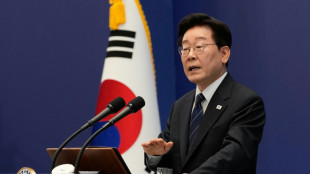 Trump 'clearly' wants dialogue with Pyongyang: South Korean President

 Bank of Japan hikes rates to 31-year high to battle inflation

 Thailand's Muslim separatists vow to fight to the end

 Mideast turmoil, AI set to dominate UN gathering of world leaders

 Australia to detain tourists who overstay visa, minister says

 Championship rivals brace for renewal of bitter feuds

 In Brazil's Amazon, the hunt for oil fuels hopes and fears

 Australian athlete who soiled herself apologises for continuing Hyrox race

 Baby orangutans in India expose 'frightening' scale of trafficking

 Doom Loop? Ed Sheeran struggles against Gaza tide
 Sudanese women hold fast to threatened henna body art

 Man Utd misery puts Carrick under pressure, Spurs feeling the heat
 Prized Mexican relic returns on loan, two centuries on

 Venezuela unblocks some censored news sites
 Samba stars on debut in Man City rout of Norwich

 Oversight Board blasts 'inadequate' Meta safeguards for AI deepfakes

 The Easter Island origins of buzzy Malkovich drama 'Wild Horse Nine'

 Third body recovered after Grand Canyon flash flood
 Harry makes first public appearance since return to UK

 Abhishek hits record T20 ton as India sweep series 3-0

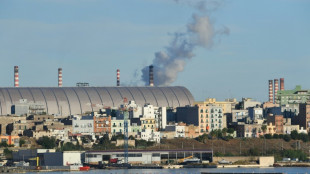
The European Union must step up its efforts to secure supplies of critical raw materials by 2030 if it wants to break its dependence on foreign countries and meet its climate goals, a watchdog warned on Monday.
Raw materials such as lithium, nickel and cobalt are essential for electronic goods such as batteries and wind turbines and needed for the EU's green transition.
Brussels wants more European production to avoid a repeat of the supply shocks seen during the Covid pandemic or after Russia's 2022 invasion of Ukraine. It also seeks to challenge Beijing's stranglehold on critical materials which threatens key EU industries.
But the 27-country bloc is struggling to diversify its imports of the key materials, ramp up domestic production, and recycling is "still in its infancy", according to a report by the European Court of Auditors (ECA).
The EU needs to secure the supply of such minerals to meet its energy and climate goals -- with a target of climate neutrality by 2050.
The study analysed the EU's efforts after the adoption of the Critical Raw Materials Act in 2024, aimed at ensuring the long-term secure supply of 26 minerals necessary for Europe's energy transition.
The law set several non-binding targets:
-- the EU must meet 10 percent of its extraction needs, 40 percent of its processing and 25 percent of its recycling needs for each strategic material
-- the bloc must not rely on any one non-EU country for more than 65 percent of its strategic raw material needs.
The auditors said "there is still a long way to go to meet the targets".
When the law was adopted, domestic mining capacity for the strategic raw materials accounted for around eight percent of the 27-country EU's annual consumption.
Meanwhile EU processing accounted for 24 percent of its needs and 12 percent of its recycling capacity, the ECA said.
For example, China supplies 97 percent of the EU's magnesium, used in hydrogen-generating electrolysers while Turkey provides 99 percent of the bloc's boron, used in solar panels.
Meanwhile, Chile supplies 79 percent of the EU's lithium, used in batteries for electric cars.
"We are now dangerously dependent on a handful of countries outside the EU for the supply of these materials," said the ECA's Keit Pentus-Rosimannus.
"It is therefore vital for the EU to up its game and reduce its vulnerability in this area," Pentus-Rosimannus said.
Brussels has focused on diversifying imports through strategic partnerships on raw materials. But despite signing 14 of them, the ECA found imports fell between 2020 and 2024 for around half of the raw materials examined.
S.Leonhard--VB