More than 20 killed in south Iran floods: state media / Photo: © Iranian Red Crescent/AFP

 Most Asian stocks track Wall St rally, yen drops after BoJ rate hike
 Russians begin voting in controlled election as war drags on
 Trump 'clearly' wants dialogue with Pyongyang: South Korean President

 Bank of Japan hikes rates to 31-year high to battle inflation
 Thailand's Muslim separatists vow to fight to the end

 Mideast turmoil, AI set to dominate UN gathering of world leaders

 Australia to detain tourists who overstay visa, minister says

 Championship rivals brace for renewal of bitter feuds

 In Brazil's Amazon, the hunt for oil fuels hopes and fears
 Australian athlete who soiled herself apologises for continuing Hyrox race

 Baby orangutans in India expose 'frightening' scale of trafficking
 Doom Loop? Ed Sheeran struggles against Gaza tide
 Sudanese women hold fast to threatened henna body art

 Man Utd misery puts Carrick under pressure, Spurs feeling the heat
 Prized Mexican relic returns on loan, two centuries on

 Venezuela unblocks some censored news sites

 Samba stars on debut in Man City rout of Norwich

 Oversight Board blasts 'inadequate' Meta safeguards for AI deepfakes

 The Easter Island origins of buzzy Malkovich drama 'Wild Horse Nine'

 Third body recovered after Grand Canyon flash flood

 Harry makes first public appearance since return to UK
 Abhishek hits record T20 ton as India sweep series 3-0

 Abhishek hits record T20 ton as India sweep T20 series 3-0

 English FA calls for Infantino to release World Cup sell-off documents

 GM delivers first components for US interceptor missiles

Flooding in southern Iran has killed at least 21 people and left others missing following heavy rainfall in the largely arid country, state media reported on Saturday.
"Twenty-one people were killed and two are still missing," in the floods that affected several towns in and around Estahban county in the southern province of Fars, Hossein Darvishi, provincial head of the Red Crescent Society, was quoted as saying by state TV.
Videos posted on local media and social media showed cars caught in the rising waters of the Roodball river and carried away while parents tried to rescue their children from the vehicles.
The governor of Estahban, Yousef Kargar, said "around 5:00 pm yesterday, heavy rains... in the central parts of Estahban County led to flooding," according to state news agency IRNA.
Estahban is 174 kilometres (108 miles) east of the provincial capital Shiraz.
The tragedy happened on a summer weekend in Iran, when families tend to head to cooler areas such as riversides, lakesides and valleys.
"A number of local people and sightseers (from other areas) who had gone to the riverside and were present in the river bed were caught in the flood due to the rise in the water level," Kargar added.
Iran has endured repeated droughts over the past decade, but also regular floods, a phenomenon made worse when torrential rain falls on sun-baked earth.
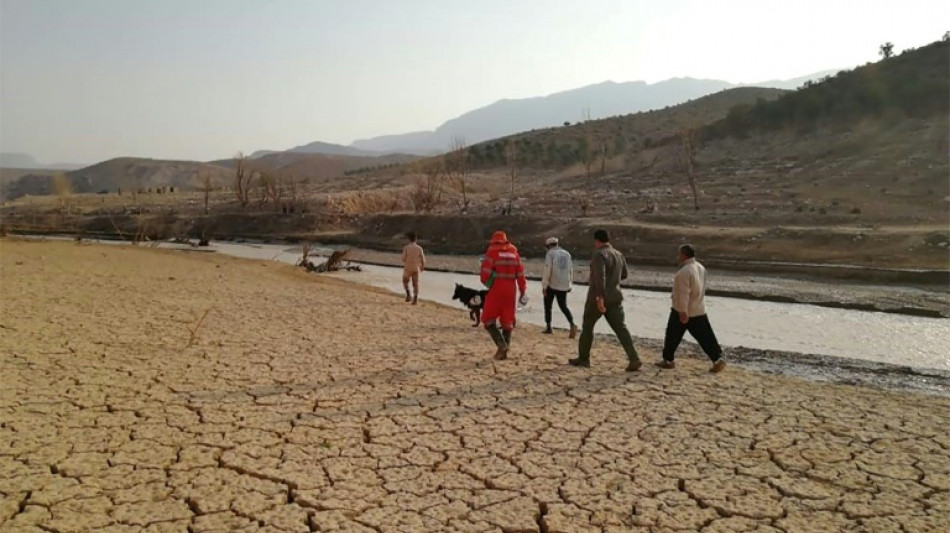
Photos released by Iran's Red Crescent Society showed rescuers walking on cracked dry soil while others worked among reeds.
In 2019, heavy inundations in the country's south left at least 76 people dead and caused damage estimated at more than $2 billion.
In January two people were initially reported killed in flash flooding in Fars when heavy rains hit the area, but the toll rose to at least eight there and elsewhere in Iran's south.
Scientists say climate change amplifies extreme weather, including droughts as well as the potential for the increased intensity of rain storms.
- Drying up -
Like other nearby countries, Iran has suffered chronic dry spells and heat waves for years, and these are expected to worsen.
In the last few months, demonstrations have occurred against the drying up of rivers, particularly in central and southwestern Iran.
Last November, tens of thousands of people gathered in the parched riverbed of the country's Zayandeh Rood river, which runs through the central city of Isfahan, to complain about the drought and blame officials for diverting water.
Security forces fired tear gas when the protest turned violent and said they arrested 67 people.
Last week, official media said Iranian police had arrested several suspects for disturbing security after they protested the drying up of a lake once regarded as the Middle East's largest.
Lake Urmia, in the mountains of northwest Iran, began shrinking in 1995 due to a combination of prolonged drought, and the extraction of water for farming and dams, according to the UN Environment Programme.
In neighbouring Iraq in December, 12 people died in flash floods that swept through the north of that country, despite severe drought.
M.Furrer--BTB