Rivers of salt: life on Bangladesh's climate frontline / Photo: © AFP

 Russia seizes assets of Nestle, French firms over West's Ukraine support

 England can build on World Cup 'spirit', says Tuchel

 UNESCO can be 'moderator' in AI debate: chief to AFP

 Infantino 'must go', says German FA vice-president

 Russia seizes assets of Nestle, French firms

 Japan's busiest rail station tests robot bins

 Anthropic says AI systems moving towards building themselves

 Asian stocks boosted by falling oil, yen weakens after BoJ rate hike

 Pakistan court blocks expulsion of Afghan medical college students

 Athletes 'can't take it any more' as Asian Games issues mount

 Allen lights up Bills' new stadium with 41-31 win over Lions

 Afghan medical students in Pakistan hope court stops college expulsions

 AI doomsday warnings unlikely to slow IPOs but questions linger
 ICC eyes China in bid to expand cricket
 Nkunku craving freedom and fun on RB Leipzig return

 Bhutan's traditional archers lose ground to development
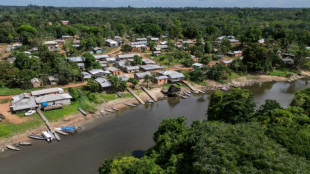
 Asian stocks track Wall St rally as oil prices drop

 South Korea makes Asian Games complaint over Japan warlord ceremony

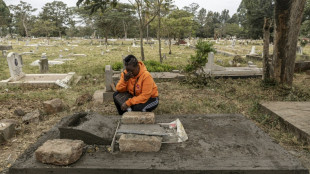 US aid cuts are killing Kenyan sex workers

 October 7 survivors, families take centre stage in Israel vote
 Captain Mat Ryan axed from Socceroos squad for Brazil games

 US approves sale of 48 F-35 jets to Saudi Arabia

 Juventus, Palace cruise to Europa League wins, Bournemouth beat Sociedad

 Stocks climb as oil retreats, Fed calms inflation fears

 Russians begin voting in controlled election as war drags

On Bangladesh's coast, where mighty Himalayan rivers meet the sea, water defines every rhythm of life, and every struggle.
Rising seas driven by climate change are swallowing low-lying areas, while stronger storms push saltwater further inland, turning wells and lakes brackish, according to government scientists.
For the millions living in the ecologically sensitive deltas of mudflats and mangrove forests, finding clean drinking water has become an escalating challenge.
Cyclone Aila in 2009 was a turning point.
Embankments broke and saltwater swept inland, flooding not only homes, but seeping into once-fertile land.
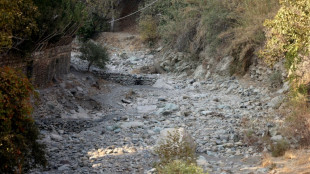
The water that once sustained communities became undrinkable, and the land began to crack under layers of salt.
The people of Khulna and Satkhira districts today live in a fragile balancing act between land and sea.
Many families live in houses built on bamboo stilts to escape tidal floods.
Children bathe in yellow, saline water and grow up in a landscape of constant change, where rivers erode their homes and schools, and displacement has become the norm.
Men migrate for months seeking work.
Women and children walk for hours across parched, cracked soil to fetch water from distant ponds, or harvest rainwater, and store it in tanks supplied by charities.
Each household stores a few thousand litres, rationed carefully until the next monsoon arrives.
The daily act of collecting and storing water has become a quiet ritual of endurance.
This reporting accompanies a photography series carried out by Muhammad Amdad Hossain for AFP's 2025 Marai Photo Grant, an award open to photographers from South Asia aged 25 or under.
The theme for 2025 was "climate change" and its impact on daily life and the community of the photographers who enter.
The award is organised by Agence France-Presse in honour of Shah Marai, the former photo chief at AFP's Kabul bureau.
Shah Marai, who was an inspiration for Afghan photographers throughout his career, was killed in the line of duty at the age of 41 in a suicide attack on April 30, 2018 in Kabul.
N.Schaad--VB