Amazon climate deal a 'win' for global unity but fossil fuels untouched / Photo: © AFP

 Russia seizes assets of Nestle, French firms over West's Ukraine support
 England can build on World Cup 'spirit', says Tuchel

 UNESCO can be 'moderator' in AI debate: chief to AFP

 Infantino 'must go', says German FA vice-president

 Russia seizes assets of Nestle, French firms

 Japan's busiest rail station tests robot bins
 Anthropic says AI systems moving towards building themselves

 Asian stocks boosted by falling oil, yen weakens after BoJ rate hike
 Pakistan court blocks expulsion of Afghan medical college students

 Athletes 'can't take it any more' as Asian Games issues mount
 Allen lights up Bills' new stadium with 41-31 win over Lions

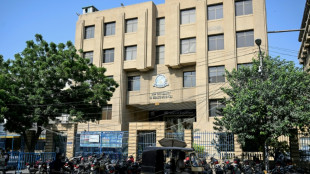 Afghan medical students in Pakistan hope court stops college expulsions
 AI doomsday warnings unlikely to slow IPOs but questions linger
 ICC eyes China in bid to expand cricket
 Nkunku craving freedom and fun on RB Leipzig return

 Bhutan's traditional archers lose ground to development
 Asian stocks track Wall St rally as oil prices drop

 South Korea makes Asian Games complaint over Japan warlord ceremony
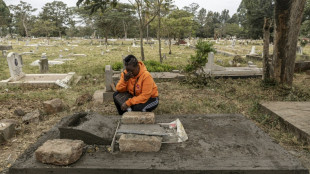 US aid cuts are killing Kenyan sex workers

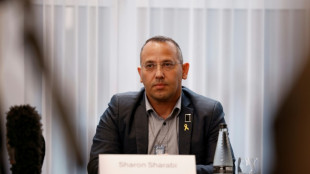 October 7 survivors, families take centre stage in Israel vote
 Captain Mat Ryan axed from Socceroos squad for Brazil games

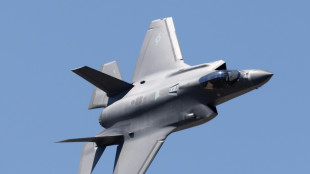 US approves sale of 48 F-35 jets to Saudi Arabia

 Juventus, Palace cruise to Europa League wins, Bournemouth beat Sociedad

 Stocks climb as oil retreats, Fed calms inflation fears

 Russians begin voting in controlled election as war drags

Nations sealed a modest agreement at the UN climate summit in the Brazilian Amazon on Saturday as many countries swallowed weaker terms on a fossil fuel phaseout to preserve unity.
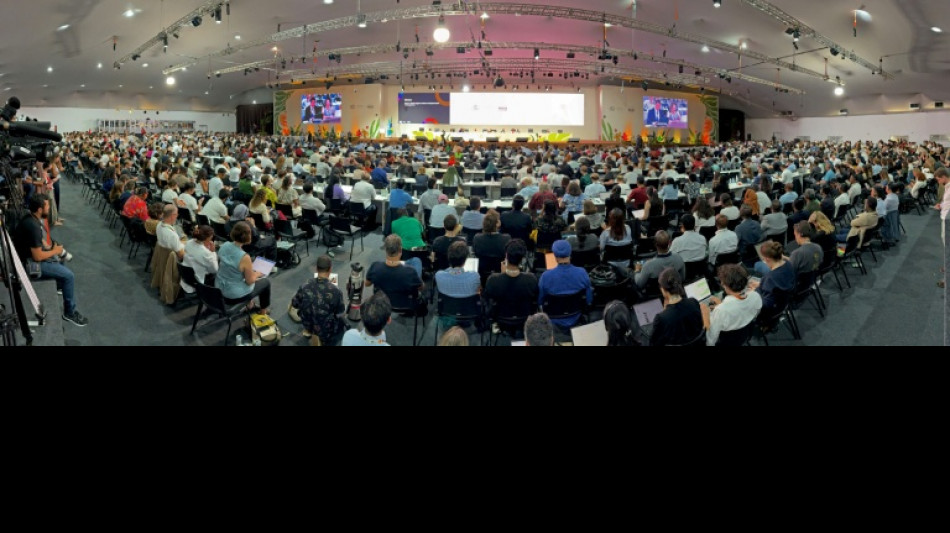
Nearly 200 countries approved the deal by consensus after two weeks of exhaustive negotiations on the fringes of the rainforest, with the notable absence of the United States as President Donald Trump shunned the talks.
Applause rang out as the gavel was brought down in steamy Belem, capping a dramatic summit that witnessed raucous protests, a damaging fire and massive street marches.
Brazilian President Luiz Inacio Lula da Silva, who staked political capital on the success of COP30, said the pact was proof that a fractured world could still unite in crisis.
"The international community faced a choice: to continue or to give up. We chose the first option," Lula said in South Africa, where he was attending a G20 summit. "Multilateralism won."
There was less euphoria in Belem, where defeated European ministers admitted they only took the watered-down deal to keep the entire process from imploding.
"We're not going to hide the fact that we would have preferred to have more," said EU climate chief Wopke Hoekstra.
Later, he added: "I know it's a bit intangible, but there is huge value in doing stuff together."
The head of China's delegation at COP30, Li Gao, told AFP that the summit will go down as a success.
"We achieved this success in a very difficult situation, so it shows that the international community would like to show solidarity and make joint efforts to address climate change," Li said.
India hailed a "meaningful" deal in a statement read on behalf of major emerging markets Brazil, South Africa, India and China.
The Alliance of Small Island States -- a bloc of 39 of the world's most climate-imperiled nations -- said the deal was "imperfect, but necessary progress" for a global body that operates by consensus.
- Fossil fuels flop -
Dozens of countries had threatened to walk away from the talks without an exit strategy from oil, gas and coal -- instead, the deal points to a previous pact on fossil fuels, without explicitly using those words.
"We know some of you had greater ambitions for some of the issues at hand," said COP30 president Andre Correa do Lago, who offered to create a voluntary "roadmap" away from fossil fuels as a consolation.
Colombia "does not accept" the deal, said President Gustavo Petro, whose country is hosting a world-first summit on a fossil fuel phaseout in April next year.
The roadmap idea picked up pace after an early endorsement from Lula, but ran into predictable opposition from oil giants like Saudi Arabia, coal producer India, and others.
"President Lula set the bar high in calling for roadmaps to end fossil fuels and deforestation, but a divided multilateral landscape was unable to hurdle it," said Carolina Pasquali from Greenpeace Brazil.
- Money and trade -
Brazil sought to manage expectations of landing a major deal given the state of geopolitics and a hostile United States.
Even so, optimism took root that Brazil -- a champion of developing nations and home to the world's biggest rainforest -- could pull something out of the bag.
In a coup for developing countries, the world agreed to "at least triple" by 2035 money for poorer nations to adapt to climate change.
But this was the bare minimum, one negotiator from Bangladesh told AFP, vowing the "fight will continue."
Raju Pandit, a negotiator from Nepal, said the summit "had not met the expectations of climate vulnerable countries."
In what was seen as a win for China, strong language around trade measures was also included for the first time in a COP deal.
- COP in the Amazon -
Away from the politics, the summit departed sharply in feel compared to COPs of recent years staged in tightly-controlled authoritarian petrostates.
Tens of thousands of people marched in a carnival-like atmosphere on the streets while inside the venue, protesters chanted in the corridors.
But there were unexpected -- and less welcome -- moments of drama as well.
A large fire erupted inside the venue on the second-to-last day, burning through the fabric ceiling and creating a panicked rush for the exits as smoke filled the halls.
Early in the first week, Indigenous protesters stormed the venue and clashed with security in scenes that drew global attention to their plight.
The humidity could be stifling and most afternoons, the skies would erupt.
Even in the final plenary, an exhausted Correa do Lago spoke of "the wonderful noise of an Amazon rain" as he struggled to be heard above the din.
S.Leonhard--VB