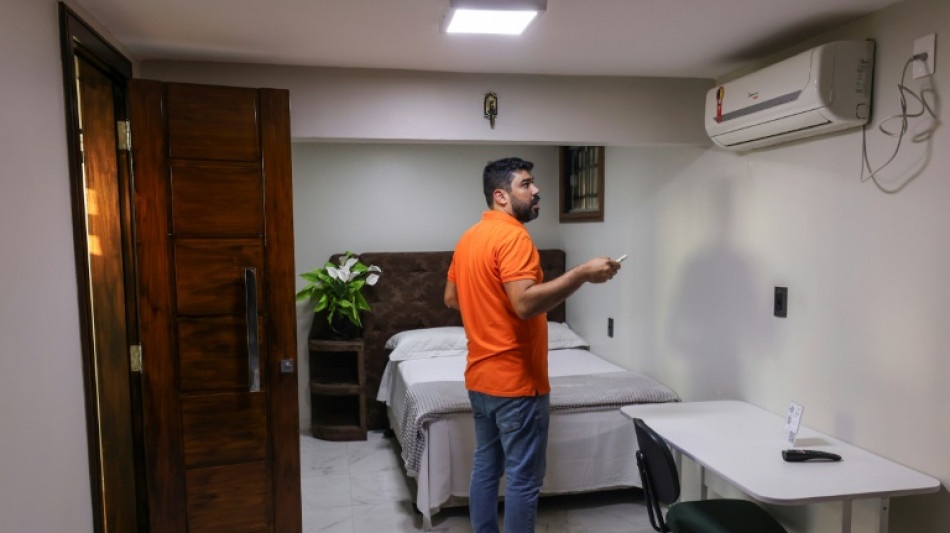
Demand for air con set to triple by 2050, warns UN / Photo: © AFP

 Carrick confident Man Utd can 'work through' tough time

 Mbappe ends Nike partnership to join Swiss brand On

 Liverpool boss Iraola puts Bournemouth love affair on hold

 'A disaster' if Man City do not win says Maresca after flawless start

 Kerry James Marshall: American 'blackness' painter celebrated in Europe

 Spain coach De la Fuente offers 'full support' to people of Ceuta

 Russia seizes assets of Nestle, French firms over West's Ukraine support
 England can build on World Cup 'spirit', says Tuchel

 UNESCO can be 'moderator' in AI debate: chief to AFP

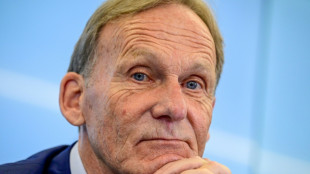 Infantino 'must go', says German FA vice-president

 Russia seizes assets of Nestle, French firms

 Japan's busiest rail station tests robot bins
 Anthropic says AI systems moving towards building themselves

 Asian stocks boosted by falling oil, yen weakens after BoJ rate hike
 Pakistan court blocks expulsion of Afghan medical college students

 Athletes 'can't take it any more' as Asian Games issues mount
 Allen lights up Bills' new stadium with 41-31 win over Lions

 Afghan medical students in Pakistan hope court stops college expulsions

 AI doomsday warnings unlikely to slow IPOs but questions linger
 ICC eyes China in bid to expand cricket
 Nkunku craving freedom and fun on RB Leipzig return

 Bhutan's traditional archers lose ground to development

 Asian stocks track Wall St rally as oil prices drop

 South Korea makes Asian Games complaint over Japan warlord ceremony

 US aid cuts are killing Kenyan sex workers

Global demand for air conditioning could more than triple by 2050, the United Nations warned on Tuesday, calling for more sustainable cooling solutions.
The UN Environment Programme said demand could surge due to increases in population and wealth around the world, combined with more extreme heat.
Rising demand for more polluting and inefficient cooling systems "would almost double cooling-related greenhouse gas emissions over 2022 levels", said UNEP.
UNEP launched its Global Cooling Watch 2025 report on the sidelines of the COP30 UN climate summit in Belem in the Brazilian Amazon.
"Installed cooling capacity is on a trajectory to triple by 2050... Yet billions will still lack adequate protection from heat. We must reimagine cooling -- not as a source of emissions, but as a cornerstone of heat resilience and sustainable development," it said.
The most rapid growth in cooling demand is projected in Africa and South Asia.
"As deadly heat waves become more regular and extreme, access to cooling must be treated as essential infrastructure alongside water, energy and sanitation," UNEP chief Inger Andersen said in a statement.
"But we cannot air condition our way out of the heat crisis, which would drive greenhouse gas emissions higher and raise costs."
UNEP highlighted so-called "passive cooling" options, including better wall and roof designs, shading, solar off-grid solutions and ventilation.
The potential impact on indoor temperatures from passive cooling strategies range from 0.5 to 8 degrees Celsius.
"Passive, energy efficient and nature-based solutions can help meet our growing cooling needs and keep people, food-chains and economies safe from heat as we pursue global climate goals," said Andersen.
The Cooling Report suggested adopting such measures could reduce emissions to 64 percent below the levels otherwise expected in 2050.
G.Frei--VB