
Brazil tries to avoid climate bust up at COP30 summit / Photo: © AFP

 Carrick confident Man Utd can 'work through' tough time

 Mbappe ends Nike partnership to join Swiss brand On

 Liverpool boss Iraola puts Bournemouth love affair on hold
 'A disaster' if Man City do not win says Maresca after flawless start
 Kerry James Marshall: American 'blackness' painter celebrated in Europe

 Spain coach De la Fuente offers 'full support' to people of Ceuta

 Russia seizes assets of Nestle, French firms over West's Ukraine support
 England can build on World Cup 'spirit', says Tuchel

 UNESCO can be 'moderator' in AI debate: chief to AFP

 Infantino 'must go', says German FA vice-president

 Russia seizes assets of Nestle, French firms

 Japan's busiest rail station tests robot bins
 Anthropic says AI systems moving towards building themselves

 Asian stocks boosted by falling oil, yen weakens after BoJ rate hike
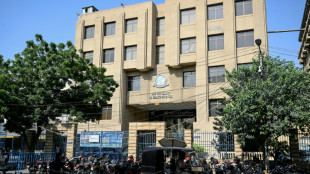 Pakistan court blocks expulsion of Afghan medical college students

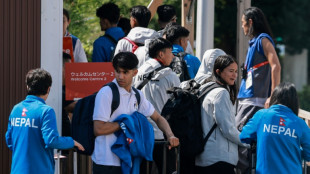 Athletes 'can't take it any more' as Asian Games issues mount
 Allen lights up Bills' new stadium with 41-31 win over Lions

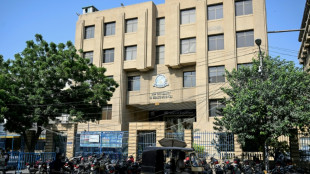 Afghan medical students in Pakistan hope court stops college expulsions
 AI doomsday warnings unlikely to slow IPOs but questions linger
 ICC eyes China in bid to expand cricket
 Nkunku craving freedom and fun on RB Leipzig return

 Bhutan's traditional archers lose ground to development
 Asian stocks track Wall St rally as oil prices drop

 South Korea makes Asian Games complaint over Japan warlord ceremony

 US aid cuts are killing Kenyan sex workers

COP30 hosts Brazil will seek to land a compromise on Wednesday as some nations seek to put ambitious climate action and financial obligations on the summit agenda -- flashpoints that have stalled past negotiations.
The United Nations summit narrowly avoided a so-called "agenda fight" at its Monday opening in Belem only because Brazil promised to hear these demands informally and broker an amenable solution.
Four divisive issues are being considered: trade, transparency and reporting measures, climate finance obligations, and efforts to slash heat-trapping pollution.
The latter two are the most sensitive, with rich countries unenthusiastic about reopening bitter fights over financial aid, and oil-producing giants against any focus on the role of fossil fuels in climate change.
Brazil is expected to reveal Wednesday whether it has been successful in finding a middle ground when it wraps up two days of backroom consultations in Belem.
The rotating hosts of these annual Conference of the Parties do not have decision-making power, but still play a crucial role in forging compromise.
Any decision at the COP summits must be reached by consensus among the 197 countries and the European Union that are members of the UN Framework Convention on Climate Change.
One close observer of the consultations told AFP that a few countries were "still not on board" but the dialogue had been "clearly constructive."
There is a growing sense that Brazil could be warming to the idea of a "cover decision" -- an overarching text, delivered at the COP's close, that provides space for articulating a compromised stance.
One diplomat attending Belem's closed-door discussions expects a "slightly more innovative" format where the specific proposals in question are considered on their own.
- Flashpoints -
The most incendiary of the four comes from the Alliance of Small Island States (AOSIS), which wants countries attending Belem to acknowledge their collective failure to keep global warming to safer levels.
Scientists say a temporary breach of 1.5 Celsius -- the lower limit of the Paris Climate Agreement's goal on global temperature rise -- is inevitable because nations have not cut planet-heating emissions fast enough to meet this target.
Other country blocs -- including the European Union and Latin American states -- support the push by AOSIS, whose members are some of the most threatened by rising seas.
Brazil's presidency had "finally found the courage to tackle this issue head-on," the diplomat told AFP.
This has agitated the Arab Group -- a collection of 22 nations including major petrostates -- which has criticised Brazil for opening this discussion, observers say.
The other major bone of contention is the provision by richer nations of financial support to help poorer ones cope with climate change.
The third issue concerns "unilateral" trade measures -- notably Europe's carbon border tax, which is fiercely opposed by China and India.
A fourth relates to an EU demand for greater transparency around how countries report key climate data.
F.Wagner--VB



