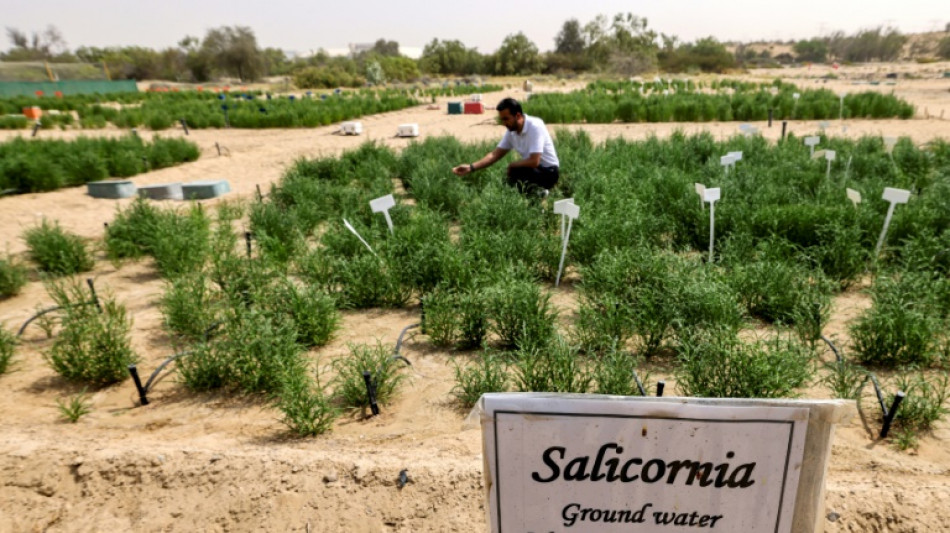
Desert-grown superfood puts 'healthy' burgers on UAE menus / Photo: © AFP

 Athletes 'can't take it any more' as Asian Games issues mount

 Allen lights up Bills' new stadium with 41-31 win over Lions
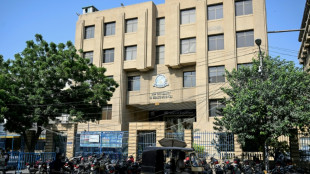 Afghan medical students in Pakistan hope court stops college expulsions

 AI doomsday warnings unlikely to slow IPOs but questions linger

 ICC eyes China in bid to expand cricket

 Nkunku craving freedom and fun on RB Leipzig return

 Bhutan's traditional archers lose ground to development
 Asian stocks track Wall St rally as oil prices drop

 South Korea makes Asian Games complaint over Japan warlord ceremony
 US aid cuts are killing Kenyan sex workers

 October 7 survivors, families take centre stage in Israel vote
 Captain Mat Ryan axed from Socceroos squad for Brazil games

 US approves sale of 48 F-35 jets to Saudi Arabia

 Juventus, Palace cruise to Europa League wins, Bournemouth beat Sociedad

 Stocks climb as oil retreats, Fed calms inflation fears

 Russians begin voting in controlled election as war drags

 Hispanics feel 'betrayed' on immigration, Republican warns Trump

 High-scoring Bears face Vikings in battle of NFL unbeatens
 'In our lane': Fed's Warsh defies Trump but still fighting for credibility

 Trump admin makes major cut to endangered species protections

 Princess Diana's brother makes new explosive claims against Charles

 Ovechkin on Russian political video: 'I support my country'

 Can we shut down AI?

 Teenager Sullivan named in new-look US squad
 Travis Scott and Keith Richards feature on GTA VI soundtrack

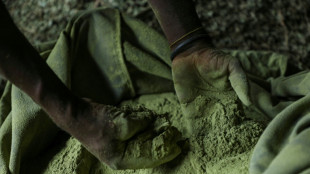
A hardy plant grown using salt water is thriving in the UAE's desert farms and helping create "healthy" burgers, showing sustainable agriculture's potential in the toughest conditions.
Salicornia, a succulent, is already being used as a salt replacement in burger patties -- a rare farming success in the oil-rich United Arab Emirates, which imports nearly all of its food.
"You have the salty flavour with less sodium, but you also have other benefits," said Tina Siegismund, head of marketing and innovation at UAE-based Global Food Industries, a frozen food manufacturer.
The asparagus-like plant reduces sodium content by 40 percent in the company's healthy burgers, which also contain chicken, quinoa and kale.
Native to parts of North America, Europe, South Africa and South Asia, the plant is ideal for the UAE's inhospitable climate, and contains anti-bacterial and anti-inflammatory properties, according to Siegismund.
Agriculture produces less than one percent of GDP in the UAE, a country on the frontline of climate change with temperatures regularly topping 50 degrees Celsius (122 Fahrenheit) and rising rapidly.
Salicornia cultivation began last year in a number of farms across the UAE as part of an experiment using brine run-off from desalination plants by the Dubai-based International Center for Biosaline Agriculture (ICBA).
Augusto Becerra Lopez-Lavalle, chief scientist at ICBA, said research was now underway into generating more of the "high-value crop", which sells for $20 a kilo (2.2 pounds) in France.
"We went from... building this prototype, to piloting at scale with eight farmers, and now the question is how to scale up," Lopez-Lavalle told AFP.
In the future, salicornia could "become a really important food ingredient" he added.
"If there is an economic value and the production system is developed for this, it can become a replacement for salt and any other micronutrients that are added today artificially to processed food."
For now, salicornia remains a niche product, its health benefits unknown to most, admits Siegismund.
"It's not a product that makes big, big profit, but we believe in it and we will continue," she said.
G.Schulte--BTB