Morocco High Atlas whistle language strives for survival / Photo: © AFP

 Stock markets retreat after central bank rate hikes

 Russia labels director of Cannes Grand Prix winner a 'foreign agent'

 Macron warns of Russian 'hybrid' threat after meeting presidential hopefuls

 UN holds third informal poll for new chief

 Kulusevski return can spark Spurs: De Zerbi

 Shakira to cap off world tour with Madrid 12-gig run

 Isolated Syrian-Druze city blames Damascus for shortages

 Isolated Syrian-Druze city shortages

 Dutch drop Depay for Germany match in Xavi's first pick

 Ronaldo named in Portugal squad for Nations League

 Stock markets diverge after central bank rate hikes

 Anti-Assad music star makes triumphant return to Syria

 In-form Fernandez included in Spain Nations League squad

 Arteta buries hatchet with Hurzeler ahead of Brighton clash

 Alexander-Arnold and Palmer return to England squad for Nations League

 Russians vote as Ukraine war drags on for fifth year

 Backpackers fret over Australian visa crackdown

 Most Asian stocks track Wall St rally, yen drops after BoJ rate hike

 Russians begin voting in controlled election as war drags on

 Trump 'clearly' wants dialogue with Pyongyang: South Korean President

 Bank of Japan hikes rates to 31-year high to battle inflation

 Thailand's Muslim separatists vow to fight to the end

 Mideast turmoil, AI set to dominate UN gathering of world leaders

 Australia to detain tourists who overstay visa, minister says

 Championship rivals brace for renewal of bitter feuds

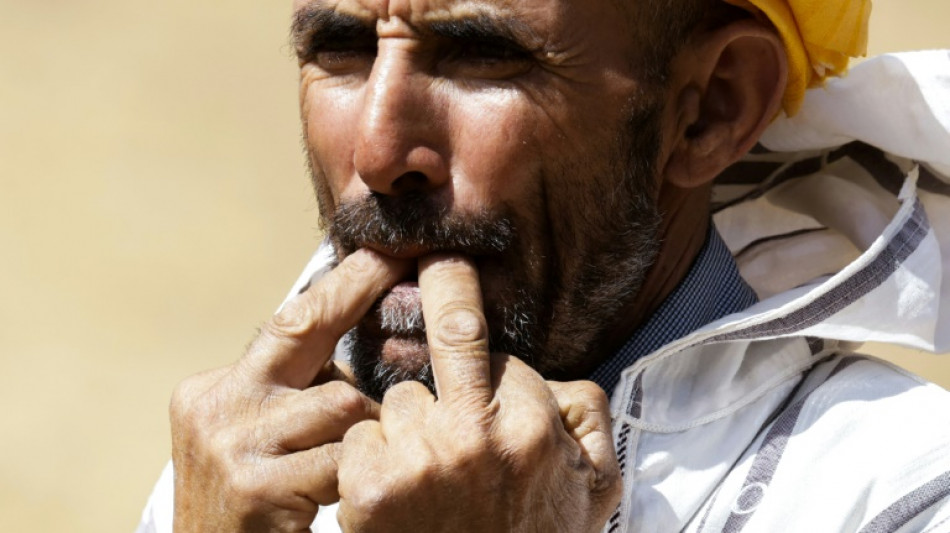
In Morocco's High Atlas mountains, shepherds Hammou Amraoui and his son hardly need words to speak. Across peaks, they whistle at each other in a centuries-old language, now jeopardised by rural flight.
"The whistle language is our telephone," joked Hammou, 59, the elder of a family known for the tradition in Imzerri, a hamlet in the remote commune of Tilouguit, about a two-hour drive from the nearest city.
In Tilouguit, Hammou said people learn it "like we learn to walk or to talk".
The Assinsg language replaces spoken words with sharp whistles that can carry for nearly three kilometres (two miles) in the mountains, according to researchers.
"The principle of the language is simple: the words are said in whistles and the key to understanding it is practice," said Hammou's 33-year-old son, Brahim.
"It makes it easier for us to communicate, especially when we're herding our livestock," he added.
Moroccan heritage researcher Fatima Zahra Salih described the whistle language as a cultural "treasure".
For five years, she has studied it to prepare a case for its recognition and protection by the UN's cultural agency UNESCO.
Whistle communication has been documented on nearly every continent, including the Spanish Canary Islands off Morocco's Atlantic coast.
"A little more than 90 languages have a whistled form, documented in scientific publications," said Julien Meyer, a linguist who specialises in the phenomenon.
In Morocco, it has so far only been documented in the Beni Mellal-Khenifra region of the central High Atlas mountain range, but Salih said she cannot rule out its existence elsewhere.
- Moving away -
Getting to Imzerri requires a climb along a dirt track winding through oak trees.
The village counts roughly 50 houses, none with running water or electricity.
Many families have moved away, threatening the survival of the whistle language.
"Our region is magnificent, but we live in isolation and difficult conditions," said Aicha Iken, 51, who learnt to whistle as a child while tending livestock. "Many of our neighbours have left."
Poverty in Azilal province, where Imzerri lies, has dropped in recent years, but was still double the national average in 2024, at 17 percent.
Yet some families are determined to hold onto their land -- and their whistling tradition.
Brahim Amraoui has made sure his 12-year-old son, Mohamed, was one of the few children in the hamlet who knows how to whistle.
"At first, it was very hard," said Mohamed, who dreams of becoming a pilot. "I could not understand everything, but after two years it's getting better."
His father said it was important to teach him the language, "even if he chooses a different profession".
"My goal is for the whistle language to be preserved," he added.
Since 2022, Brahim has led a small association dedicated to safeguarding the practice.
- Whistle language 'disappearing' -
It isn't just the villagers' migration to urban areas that has put the language at risk of vanishing.
"The whistle language is disappearing little by little because of environmental degradation," said Meyer.
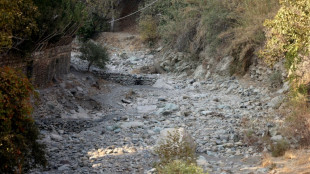
Drought has gripped Morocco for seven straight years.
In November 2024, for the first time in their history, the Amraoui shepherds left their village to take their livestock on a nearly 350-kilometre journey east in search of pasture. They only came home seven months later.
"The move was painful, but we had no choice," Hammou recalled. "We had nothing left to feed our animals."
Salih said it was due to "climate change", which has "disrupted their pastoral way of life", where there used to be fixed seasonal pastures near their home they could travel between.
"For the first time, they had to practice nomadism," she said of the Amraouis.
The shepherd family has pinned its hopes on potential rainfall this fall, hoping they would not be forced to move again.
But while they wonder whether they will have to, Salih insists on the "urgent need to safeguard" the whistle language before more people leave it behind alongside rural life.
S.Gantenbein--VB