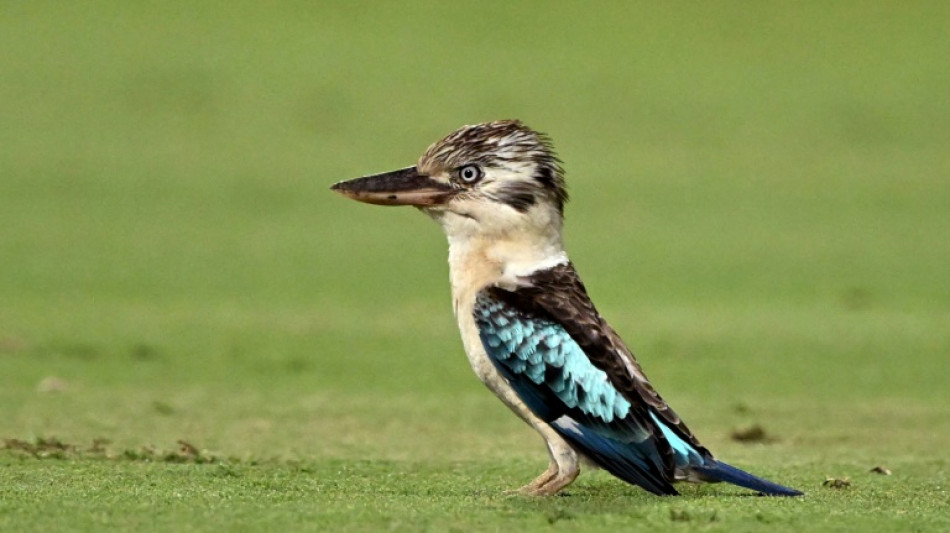
Scientists find surprising sex reversal in Australian birds / Photo: © AFP

 Four dead, 15 injured in Thailand school shooting: deputy minister
 Military shake-up poses little threat to Ukraine's drone revolution
 Camels find unlikely home in outback Australia

 Pacific nations fail to agree on statement condemning China missile test

 Anguish and hope: why a Tibetan set himself on fire in New York

 Oil extends gains and stocks fall on fresh Hormuz worries

 Venezuela's political transition talks wrap first day in Caracas

 South Africa coach Erasmus wary of struggling Argentina

 Actress, engineer, jihadist's widow among Syria's new women MPs

 Battling Norrie survives match point to oust de Minaur

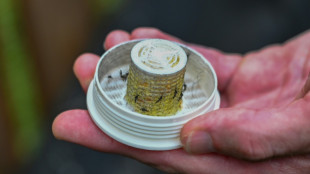 US firm takes on backyard mosquitoes -- with 600,000 mosquitoes
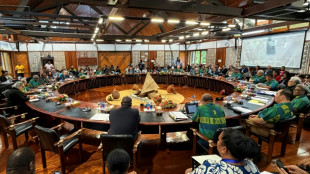
 Thousands protest private property legislation in Argentina

 Battling Norrie survives match point to oust de Minaur at Montreal

 Venezuela's political transition talks start: AFP

 Real Madrid extend Vinicius deal, sign Diomande in title bid boost

 PSG sign France midfielder Akliouche from Monaco

 CONMEBOL 'expresses concern regarding repeated unilateral actions' by FIFA

 Warren coy over whether Fury-Joshua will be in UK or US

 Taiwan blocks key bridge in drill for potential Chinese invasion

 Migrant children risk abuse on streets of Ceuta, aid groups warn

 Oil price shoots up as stocks tread water

 British Grand Prix stays on MotoGP calendar until 2028

 Britain's EasyJet flies into US hands as takeover confirmed

 Real Madrid sign Ivory Coast winger Yan Diomande

 How online disinformation fuelled Ceuta migrant surge

Scientists have documented a surprising rate of sex reversal in wild Australian birds, a phenomenon that could be explained by rising pollution or other environmental triggers.
A study of five common Australian species, including kookaburras, magpies and lorikeets, found around six percent of birds had the chromosomes of one sex but the reproductive organs of another.
The findings indicated a surprisingly high number of birds had reversed their sex after birth, said researchers from the University of the Sunshine Coast.
"This indicates that sex determination in wild birds is more fluid than we thought, and can persist into adulthood," said study co-author Dominique Potvin.
The study performed DNA tests on almost 500 birds.
The overwhelming majority of sex reversals involved genetically female birds growing male gonads.
"We also discovered a genetically male kookaburra who was reproductively active with large follicles and a distended oviduct, indicating recent egg production," said Potvin.
Sex reversal is well known in certain species of reptile and fish but is thought to be rare in wild birds and mammals.
Scientists have documented how pollutants and even warm temperatures can trigger sex reversal in frogs.
The cause of sex reversal in wild birds was not clear, the University of the Sunshine Coast study said.
But it could be due to environmental factors, such as hormone-disrupting chemicals building up in wild areas.
"Understanding how and why sex reversal occurs is vital for conservation and for improving the accuracy of bird research," added Potvin.
The study was published this week in peer-reviewed journal Biology Letters.
J.Marty--VB