-
 Iran fires back at Trump's threat to declare Hormuz a US territory
-
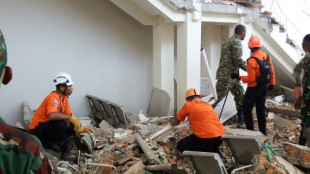
'Like we were on a trampoline': Indonesia quake kills 20, thousands flee
-
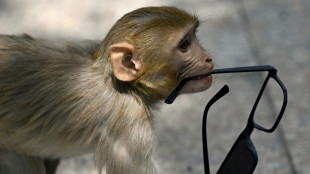 No monkey business: India 'whisperers' guard world championships
-
Australia run riot to crush Japan 56-17 in Townsville

-
 Steady India 101-1 at lunch in first Sri Lanka Test
-
Stolen Matisse works tied to infamous art thief in Brazil

-
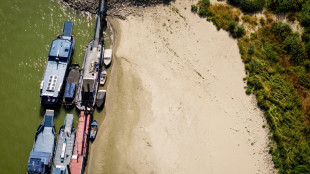 Faced with historic drought, the Dutch rethink water management
-
Hasan strikes twice for Bangladesh to reduce Australia to 51-2
-
 Pallister holds off Ledecky to win Pan Pacs 400m free title
-
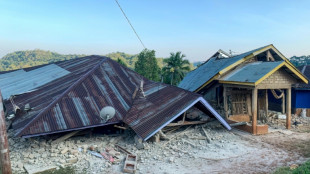
Powerful quake off Indonesia kills 20, sparks mass evacuations
-
 India's Modi woos youth with free coaching, AI training
-
Mehidy half-century steers Bangladesh to 228-run lead in Australia Test
-
 Mehidy half-century steers Bangladesh to big lead in Australia Test
-
Japan defence minister visits war shrine, PM stays away
-
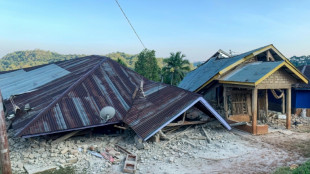 Powerful quake off Indonesia sparks mass evacuations
-
Viennese woman sues city over 'discriminatory' toilet fees

-
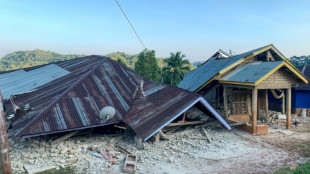 Poweful quake off Indonesia sparks mass evacuations
-
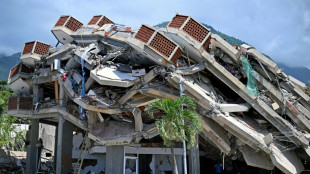
Venezuelan amputees adjust to new life after quakes
-
 LA Olympics has to allow politicians on the bus, just not behind the wheel - Coe
-
Venezuela frees 131 prisoners amid post-Maduro transition talks

-
 No.1 Scheffler fires sizzling 61 to seize PGA St. Jude lead
-
Arteta tells Arsenal fans not to fret over his future

-
 Venezuela frees more political prisoners amid post-Maduro talks
-
Mexico's Indigenous chief justice hits back at discrimination

-
 Werro upstages Hodgkinson to win thrilling Euro 800m gold
-
Werro wins 800m race for the ages, Warholm and Tamberi hit four

-
 Werro upstages Hodgkinson to win Euro 800m gold
-
Jimenez rescues dramatic Wolves draw in Championship opener

-
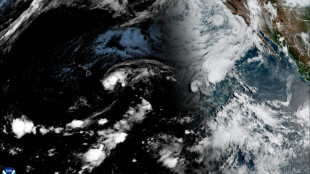 Hurricane poised to hit Hawaii as El Nino stirs Pacific
-
Taliban govt to mark five years ruling Afghanistan

-
 Ex-Cambridge professor at centre of plagiarism scandal found dead
-
Stocks slip in cautious trading after weak US retail sales data

-
 Wildfire threatens Canada wine region
-
Gramercy Networks Announces New Global Ultra-Low Latency Financial Network Connecting Major Trading Hubs

-
 'Normal guy' turned killer over US insurance industry grievances
-
NFL bans Falcons defender Pearce eight games for domestic violence

-
 Norway's hurdles king Warholm wins fourth European title
-
US says 19 million recalled eggs pose deadly risk

-
 Liverpool deal with Bezos consortium raises stakes in US battle for Premier League power
-
Former Cincinnati contenders suffer contrasting first-round fates

-
 Colombia hopes for miracles as search for quake victims goes on
-
Argentina's Romero confirms Tottenham exit as Atletico move looms

-
 Popovici, Quadarella mine more gold at Europeans as Marchand flexes in butterfly
-
Homeless, jobless: Colombia quake survivors 'left with nothing'
-
 'I shot Mr Thompson': Stunning confession in US health exec's slaying
-
Cubans find rest on rooftops as blackouts drive them from home

-
 San Francisco to host 2028 MLB All-Star Game
-
World champ McIntosh crashes out of Pan Pacs 400m free

-
 Trump dismisses concerns over conditions on US aircraft carrier
-
T'Wolves set Garnett celebration for Celtics clash

Rock and ice prevent rescue work after Swiss glacier collapse
Swiss authorities said Thursday that rock and ice piles from a collapsed glacier that destroyed a village were preventing emergency services from working, but that they were cautiously optimistic no more homes were at risk.
The Birch glacier in Switzerland's southern Valais (Wallis) region collapsed on Wednesday, sending a mass of rock, ice and scree hurtling down the mountain slope and into the valley below.
The barrage largely destroyed the most of Blatten, which had been home to 300 people and was evacuated last week due to the impending danger.
One 64-year-old man, believed to have been in the danger zone at the time, remains missing. A police spokesman said the difficult conditions had forced the search to be called off Thursday.
The unstable mountain face and thousands of tonnes of rocky debris also made it impossible for emergency workers to intervene to stabilise the zone and contain the risk of flooding in the valley below, officials told a news conference.
The huge pile of glacier debris, stretching some two kilometres (1.25 miles), has blocked the river Lonza.
After initially warning of a potentially devastating flood from water trapped above the debris, authorities said expert analysis indicated the risk had eased.
"The information we've received from geologists and other specialists tends to indicate such an event is unlikely," Valais security chief Stephane Ganzer told a news conference.
An artificial dam in the village of Ferden, just below, has been emptied and should be able to contain any downward rush of water if it happens, said Ganzer.
However, he added: "It's unlikely, but we don't really like that word 'unlikely' here since yesterday, because we know that unlikely can become likely."
- 'Terrible catastrophe' -
Authorities are studying evacuation plans and have warned residents who could be affected, Ganzer said.
"We have one person missing, we don't want anyone else missing or deceased from this terrible catastrophe," he said.
As a precaution, 16 more people were evacuated Wednesday from two villages located downstream from the disaster area in the Loetschental valley, known for scenic views and home to around 1,500 people living in villages.
Their views of the valley have definitively changed now.
Where the Birch glacier used to sit, there is now a gaping hole in the mountainside.
What is left of the village of Blatten is being submerged beneath the accumulating water of the Lonza river.
A sunny and warm weather forecast means "lots of snow" will melt in the coming days, meaning "we're still facing colossal water levels" in the artificial lake that has formed, Ganzer said.
- Seismic event -
YouTube footage of the collapse showed a huge cloud of ice and rubble hurtling down the mountainside, into the valley and partially up the mountain slope on the other side.
The force was such that Swiss monitoring stations registered the phenomenon as a seismic event.
According to officials, three million cubic metres of rock fell suddenly onto the glacier, pushing it down into the valley.
Warming temperatures have shrunk the Alps' glaciers and made them more unstable.
Swiss glaciers, severely impacted by climate change, melted as much in 2022 and 2023 as between 1960 and 1990, losing in total about 10 percent of their volume.
In August 2017, approximately 3.1 million cubic meters of rock fell from Pizzo Cengalo, a mountain in the Alps in Graubuenden canton, near the Italian border, killing eight hikers.
Some 500,000 cubic metres of rock and mud flowed as far as the town of Bondo, causing significant damage there but no casualties.
L.Wyss--VB