As Trump declares 'Gulf of America,' US enters name wars / Photo: © AFP

 Greenland parliament approves security agreement with United States
 Qatar envoy meets incoming UN General Assembly president

 Trump Signals Willingness to Work With Democrats After Midterm Defeat

 Galloway accuser could not foresee publishing-sector fallout, lawyer argues

 New York City Center revives In the Heights as a timely community story

 Godzilla Minus Zero shifts focus toward postwar human drama
 Mehbooba Mufti urges dialogue and renewed Central Asia links for Kashmir

 Seacliff Healthcare Seeks Specialist GP in Thirroul

 US stocks fall before midterm Election Day as technology shares weaken

 BLS Polymers makes strong market debut at ₹248 per share

 Petrol and diesel prices remain broadly steady across major Indian cities

 Reliance shares remain in focus after near-12% surge
 2026 Arizona Midterms: Key Races, Ballot Measures, and Voter Deadlines

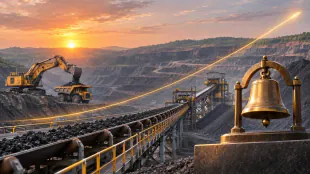 Coal India prepares possible $1 billion Mahanadi Coalfields listing
For years, as disputes over names on the map riled up nationalist passions in several parts of the world, US policymakers have watched warily, trying to stay out or to quietly encourage peace.
Suddenly, the United States has gone from a reluctant arbiter to a nomenclature belligerent, as President Donald Trump declared that the Gulf of Mexico will henceforth be called the "Gulf of America."
In an executive order signed hours after he returned to the White House, Trump called the water body an "indelible part of America" critical to US oil production and fishing and "a favorite destination for American tourism and recreation activities."
The term Gulf of America was soon used by the US Coast Guard in a press release on enforcing Trump's new crackdown on migrants, as well as Florida's Republican governor, Ron DeSantis, when discussing a winter storm.
Deep-sea ecologist Andrew Thaler said Trump's declaration was "very silly" and would likely be ignored by maritime professionals.
A president has the authority to rename sites within the United States -- as Trump also did.
"The Gulf of Mexico, however, is a body of water that borders several countries and includes pockets of high seas," said Thaler, founder of Blackbeard Biologic Science and Environmental Advisors.
"There really isn't any precedent for a US president renaming international geologic and oceanographic features. Any attempt to rename the entire Gulf of Mexico would be entirely symbolic," he said.
- Mexico hits back -
Mexican President Claudia Sheinbaum has cheekily suggested calling the United States "Mexican America," pointing to a map from well before Washington seized one-third of her country in 1848.
"For us it is still the Gulf of Mexico and for the entire world it is still the Gulf of Mexico," she said Tuesday.
The International Hydrographic Organization, set up a century ago, works to survey the world's seas and oceans and is the closest to an authority on harmonizing names for international waters.
The United Nations also has an expert group on geographical names, which opens its next meeting on April 28.
Martin H. Levinson, president emeritus of the Institute of General Semantics, said it was unknown how much political capital Trump would invest in seeking name recognition by other countries.
"Does he really want to strong-arm them for something as minor as this?" Levinson asked.
"I think the political benefit is to the domestic audience that he's playing to -- saying we're patriotic, this is our country, we're not going to let the name be subsumed by other countries," he said.
He doubted that other countries would change the name but said it was possible Google Earth -- a more ready reference to laypeople -- could list an alternative name, as it has in other disputes.
- 'Geopolitics of spectacle' -
Among the most heated disputes, South Korea has long resented calling the body of water to its east the Sea of Japan and has advocated for it to be called the East Sea.
The United States, an ally of both countries, has kept Sea of Japan but Korean-Americans have pushed at the local level for school textbooks to say East Sea.
In the Middle East, Trump in his last term angered Iranians by publicly using the term Arabian Gulf for the oil-rich water body historically known as the Persian Gulf but which Arab nationalists have sought to rename.
The United States has also advocated maintaining a 2018 deal where Greece agreed for its northern neighbor to change its name to North Macedonia from Macedonia, but Athens ulitmately rejected due to historical associations with Alexander the Great.
Gerry Kearns, a professor of geography at Maynooth University in Ireland, said that Trump's move was part of the "geopolitics of spectacle" but also showed his ideological bent.
With Trump also threatening to take the Panama Canal and Greenland, Trump is seeking to project a new type of Monroe Doctrine, the 1823 declaration by the United States that it would dominate the Western Hemisphere, Kearns said.
"Names work because they are shared; we know we are talking about the same thing," he wrote in an essay.
"In claiming the right to force others to use the name of his choosing, Trump is asserting a sort of sovereignty over an international body of water."
D.Bachmann--VB