'Dangerous new era': climate change spurs disaster in 2024 / Photo: © AFP

 Greenland parliament approves security agreement with United States

 Qatar envoy meets incoming UN General Assembly president

 Trump Signals Willingness to Work With Democrats After Midterm Defeat

 Galloway accuser could not foresee publishing-sector fallout, lawyer argues

 New York City Center revives In the Heights as a timely community story

 Godzilla Minus Zero shifts focus toward postwar human drama

 Mehbooba Mufti urges dialogue and renewed Central Asia links for Kashmir

 Seacliff Healthcare Seeks Specialist GP in Thirroul

 US stocks fall before midterm Election Day as technology shares weaken

 BLS Polymers makes strong market debut at ₹248 per share

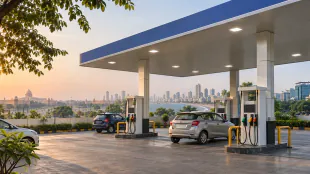 Petrol and diesel prices remain broadly steady across major Indian cities

 Reliance shares remain in focus after near-12% surge

 2026 Arizona Midterms: Key Races, Ballot Measures, and Voter Deadlines

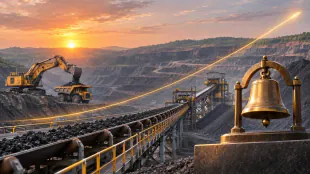 Coal India prepares possible $1 billion Mahanadi Coalfields listing

From tiny and impoverished Mayotte to oil-rich behemoth Saudi Arabia, prosperous European cities to overcrowded slums in Africa, nowhere was spared the devastating impact of supercharged climate disasters in 2024.
This year is the hottest in history, with record-breaking temperatures in the atmosphere and oceans acting like fuel for extreme weather around the world.
World Weather Attribution, experts on how global warming influences extreme events, said nearly every disaster they analysed over the past 12 months was intensified by climate change.
"The impacts of fossil fuel warming have never been clearer or more devastating than in 2024. We are living in a dangerous new era," said climate scientist Friederike Otto, who leads the WWA network.
- Heat -
That was tragically evident in June when more than 1,300 people died during the Muslim hajj pilgrimage in Saudi Arabia where temperatures hit 51.8 degrees Celsius (125 degrees Fahrenheit).
Extreme heat -- sometimes dubbed the 'silent killer' -- also proved deadly in Thailand, India, and United States.
Conditions were so intense in Mexico that howler monkeys dropped dead from the trees, while Pakistan kept millions of children at home as the mercury inched above 50C.
Greece recorded its earliest ever heatwave, forcing the closure of its famed Acropolis and fanning terrible wildfires, at the outset of Europe's hottest summer yet.
- Floods -
Climate change isn't just sizzling temperatures -- warmer oceans mean higher evaporation, and warmer air absorbs more moisture, a volatile recipe for heavy rainfall.
In April, the United Arab Emirates received two years worth of rain in a single day, turning parts of the desert-state into a sea, and hobbling Dubai's international airport.
Kenya was barely out of a once-in-a-generation drought when the worst floods in decades delivered back-to-back disasters for the East African nation.
Four million people needed aid after historic flooding killed more than 1,500 people across West and Central Africa. Europe -- most notably Spain -- also suffered tremendous downpours that caused deadly flash flooding.
Afghanistan, Russia, Brazil, China, Nepal, Uganda, India, Somalia, Pakistan, Burundi and the United States were among other countries that witnessed flooding in 2024.
- Cyclones -
Warmer ocean surfaces feed energy into tropical cyclones as they barrel toward land, whipping up fierce winds and their destructive potential.
Major hurricanes pummelled the United States and Caribbean, most notably Milton, Beryl and Helene, in a 2024 season of above-average storm activity.
The Philippines endured six major storms in November alone, just two months after suffering Typhoon Yagi as it tore through Southeast Asia.
In December, scientists said global warming had helped intensify Cyclone Chino to a Category 4 storm as it collided head-on with Mayotte, devastating France's poorest overseas territory.
- Droughts and wildfires -
Some regions may be wetter as climate change shifts rainfall patterns, but others are becoming drier and more vulnerable to drought.
The Americas suffered severe drought in 2024 and wildfires torched millions of hectares in the western United States, Canada, and the Amazon basin -- usually one of Earth's wettest places.
Between January and September, more than 400,000 fires were recorded across South America, shrouding the continent in choking smoke.
The World Food Programme in December said 26 million people across southern Africa were at risk of hunger as a months-long drought parched the impoverished region.
- Economic toll -
Extreme weather cost thousands of lives in 2024 and left countless more in desperate poverty. The lasting toll of such disasters is impossible to quantify.
In terms of economic losses, Zurich-based reinsurance giant Swiss Re estimated the global damage bill at $310 billion, a statement issued early December.
Flooding in Europe -- particularly in the Spanish province of Valencia, where over 200 people died in October -- and hurricanes Helene and Milton drove up the cost, the company said.
As of November 1, the United States had suffered 24 weather disasters in 2024 with losses exceeding $1 billion each, government figures showed.
Drought in Brazil cost its farming sector $2.7 billion between June and August, while "climatic challenges" drove global wine production to its lowest level since 1961, an industry body said.
T.Egger--VB