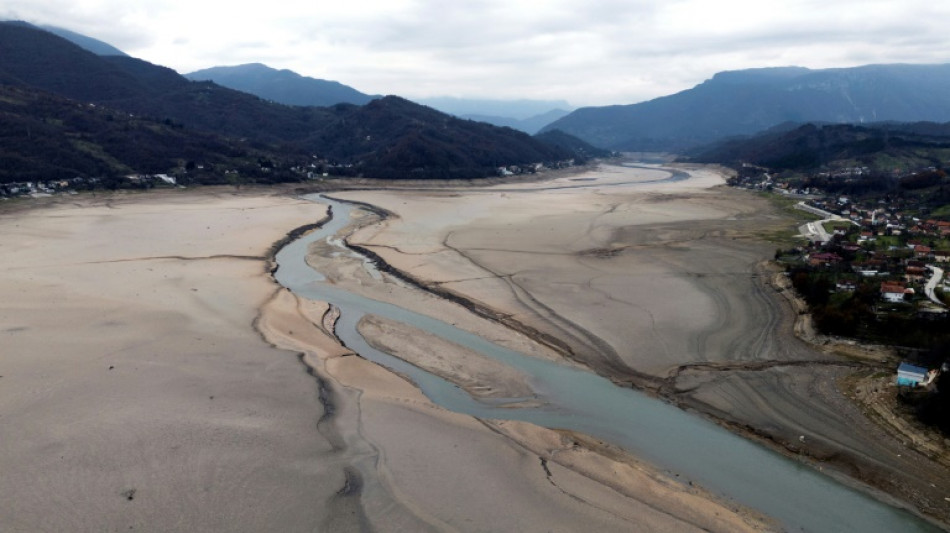
'Scary' drought empties one of Bosnia's largest lakes / Photo: © AFP

 No jet lag for 49ers as Purdy routs Rams in Australia
 Mourinho seeking 'killer' Vinicius as Real Madrid face Rayo

 Vance assails Democratic 'hatred' in fiery US midterm pitch
 Celine Dion: the Quebec star's long and painful road to return

 Stocks tumble as oil and inflation fan rate hike bets

 Philippine Coast Guard battles smoke in search for ferry fire missing

 Researchers eye AI revolution in natural disaster forecasts

 Indian filmmaker Anuparna Roy: blocked at home, feted in Europe

 Appreciation, anger await as Trump heads to Irish golf resort

 Ronaldo takes last crack at Asian glory as Saudi teams set to dominate

 Statecraft or scripture: Why Pacific nations want Jerusalem embassies

 Hong Kong to sentence Tiananmen vigil activists for subversion

 US braces for inflation report that may push Fed to hike rates

 Australia unveil Slingsby-led elite team for America's Cup challenge
 Putin arrives in India for BRICS summit coloured by wars

 Springboks, All Blacks clash in groundbreaking US decider

 Man United, Bayern cruise as Como make dream Champions League start
 Musiala returns to help Bayern sink Bodo in Champions League

 Surging oil prices, higher bond yields weigh on stocks
 Russell admits he needs luck as Antonelli focuses on the job

 Canada pledges support for Ukraine air defense as Zelensky visits

 Latin America fact-check group asks Meta not to replace verification practice
 Seahawks' Darnold gets good news on hip injury: coach

 Evasive Alonso teases reporters on his F1 future
 What to know about Trump's $5,000 'dividend' pledge
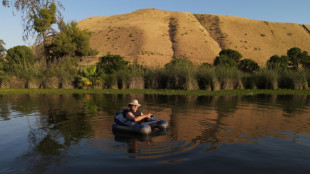
Staring across what was once one of Bosnia's largest expanses of water, all that Saliha Kuljanin can see is boats left high and dry after months of drought emptied Lake Jablanicko.
"The climate has certainly changed, but this is scary!" Kuljanin, 68, told AFP near the lake's receding shores in southern Bosnia.
For years, the village of Ostrozac, where Kuljanin lives, had profited from the tourists attracted by Jablanicko's emerald waters.
But the rain has dried up this year and its water levels have plummeted.
Every year as the summer ends, water is gradually released from the 30-kilometre (18-mile) long lake so that the autumn rains can be absorbed.
"Its levels vary a little -- it goes down and up. But now, I don't know what's going on," said Kuljanin, pointing to the beached boats far from the remaining sliver of water left in the area.
Bosnia may be one of Europe's poorest countries but it has long been rich in one resource: water.
The World Bank estimates Bosnia's resources of renewable fresh water at nearly 10 cubic metres (350 cubic feet) per person per year.
Some of Europe's most pristine rivers run through the country's rugged terrain, making it a paradise for rafters, kayakers and other outdoor enthusiasts.
But the lack of rainfall this year has changed the equation. "The drought has been truly catastrophic," Kuljanin said.
Further upstream, the lake has completely dried out.
The lack of water has also complicated operations for a nearby power plant that relies on the lake's dam for energy.
- Landslides -
"The year 2024 was exceptionally bad for the functioning of the power plants," said Fahrudin Tanovic, an executive at public power company Elektroprivreda BiH.
"As last winter there was no snow, the inflow of water into the lake in spring was perhaps at the lowest level since its existence."
Thermal power plants still produce much of Bosnia's power, accounting for between 55 and 70 percent of the country's electricity at any time, according to the statistics office.
Hydroelectric plants produce most of the remaining power, with just four percent coming from solar or wind.
The drought has made nearby areas more susceptible to landslides, as the soil dries out and loosens.
In the nearby Jablanica area, at least 27 people were killed by sudden heavy rains in October that flooded towns and triggered landslides.
Scientists warn that climate change is making extreme weather events more frequent.
P.Keller--VB